
Reading time: 4 minutes
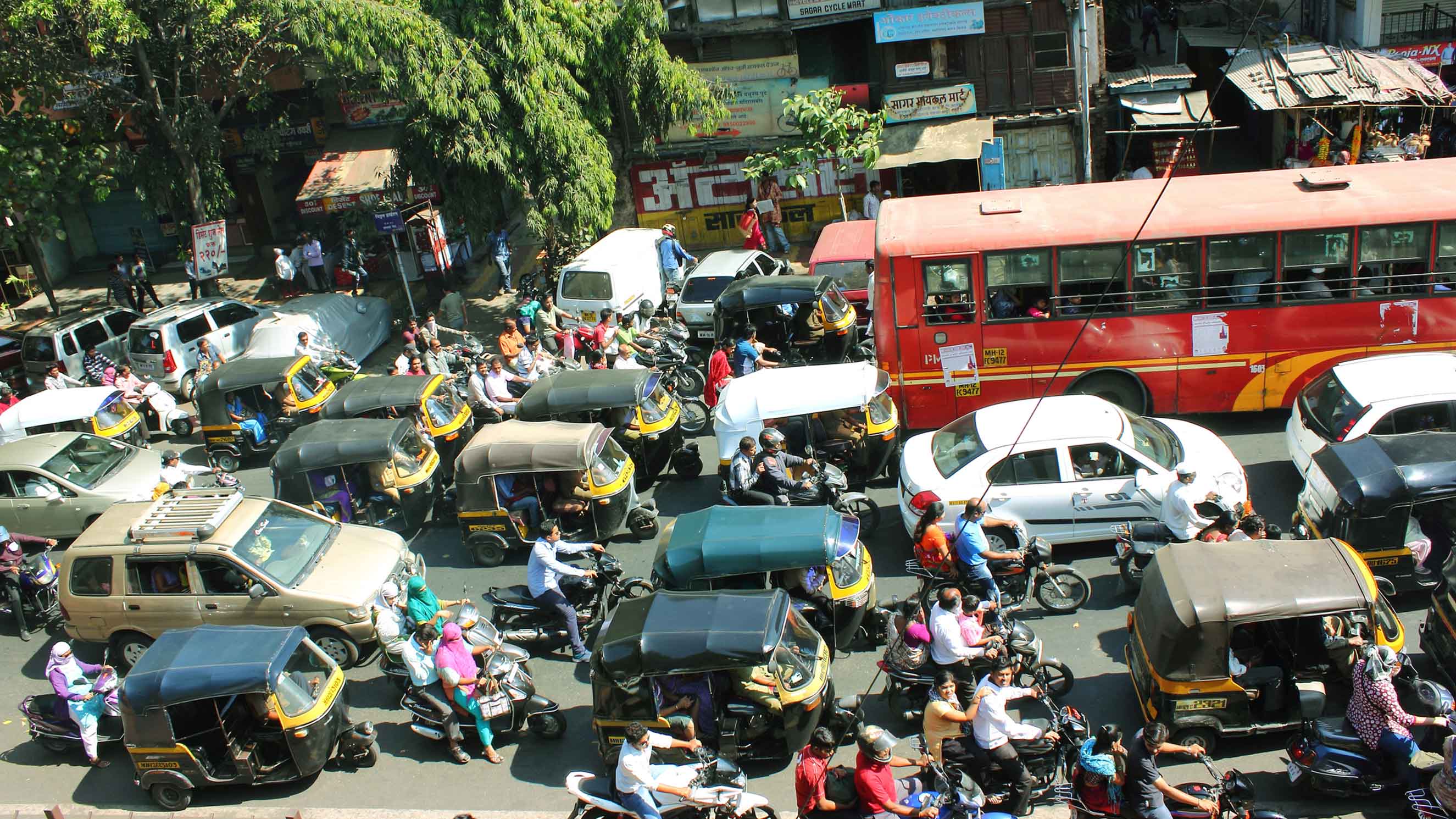
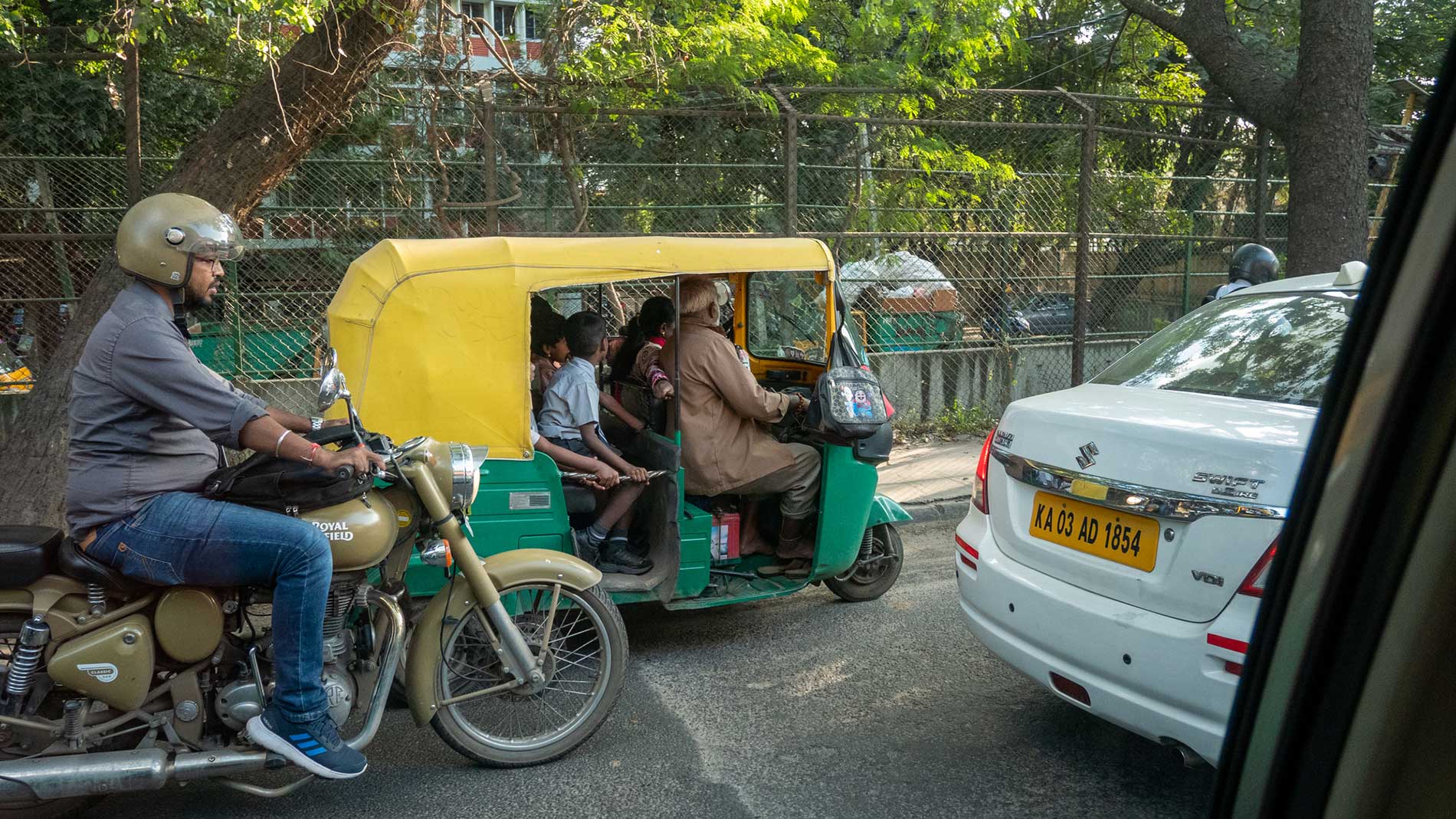
A narrow street in the Indian metropolis of Bangalore. Traffic drives on the left, but it takes the untrained eye a moment to realise this. Road markings, traffic lights and street signs are nowhere to be seen. There is no pavement. Delivery vans, cars and scooters are parked next to each other on both sides of the road. Children are running between them. On the left side of the road four office chairs have come to rest. Too neatly lined up to be bulky waste, yet too far out onto the road to serve as seating.
A car drives past the displaced furniture. It is suddenly overtaken by two scooters. One passes on the right, almost breaching the oncoming traffic. The other squeezes through on the left, between car and office chairs. More scooters follow. They pass the car, only to slow it down again a few metres later. Without making eye contact, indicating or by gesturing, they cut in right in front of it to turn right or left. At the same time, other vehicles from the opposite side drive into the junction and block the way. No one honks their horn; no one stops for longer than necessary.
The drivers work their way through, inch by inch. Eventually, the tangle clears and the car drives on. A few minutes later a cow blocks the road.
The driving school of the future
The scenes described above are captured in a video that can be viewed on YouTube.1 They are nothing out of the ordinary in Bangalore. On the contrary: by local standards, these events are harmless. The metropolis of 12 million inhabitants is considered one of the most congested cities in India. “That’s like the least ‘busy’ streets in Bangalore,” someone comments under the video in question.
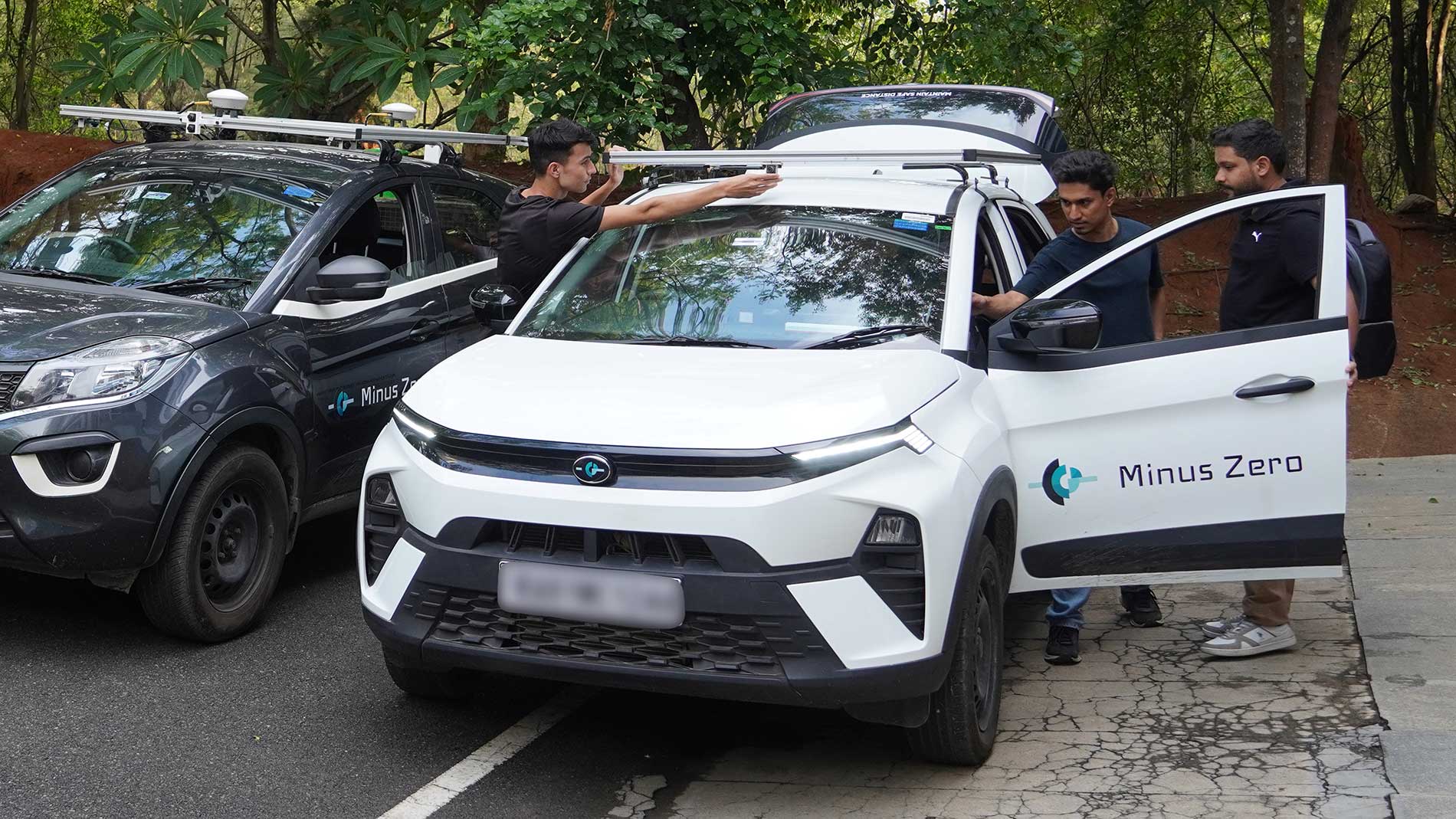
It is not the traffic, but something quite different about this video that is remarkable: The vehicle, out of which the footage was filmed, is driving autonomously. Although there is a person sitting at the wheel, they only use the pedals and steering wheel in an emergency. Cameras film the surroundings. An AI manoeuvres the car through traffic, motorbikes, children and cows. It was developed by Minus Zero, an autonomous driving start-up based here in Bangalore. Since last year, the Minus Zero prototype has been officially permitted to join traffic on – by Bangalore standards – quiet side streets like this one. And the AI can learn.

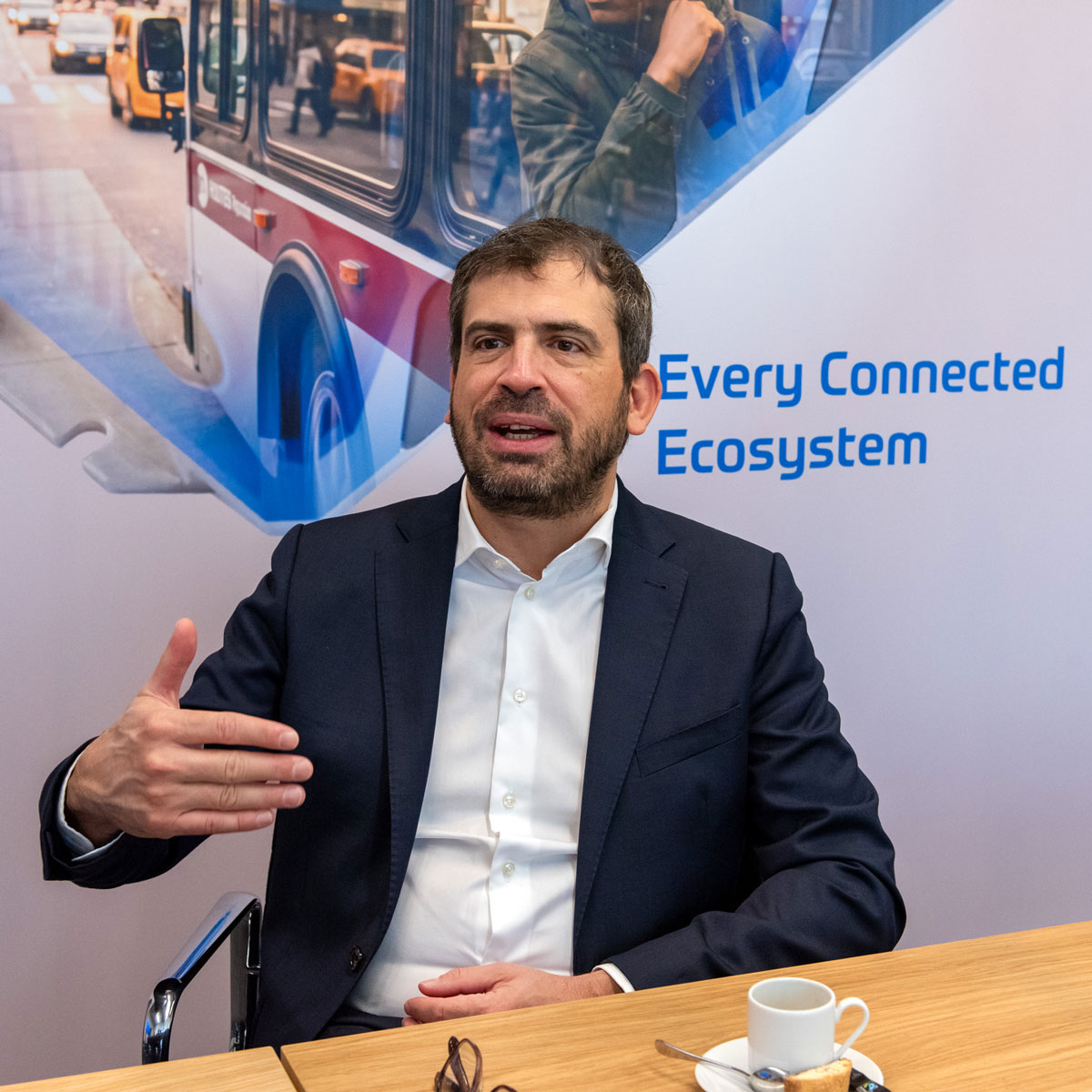
Lukas Wuttke, founder and CEO of the AI start-up tracebloc, explains how this works. tracebloc enables companies to safely develop, test and compare AI models using their own data, without having to share sensitive information. “We don’t tell an AI what it should and shouldn’t learn. We give it a dataset,” explains the expert. From this, the AI is then supposed to build up enough knowledge to draw its own conclusions on how to deal with new situations: “After all, we want AI to be autonomous. That’s the idea behind AI.”
Learning through repetition
To enable artificial intelligence to make its own decisions, the training dataset must be extensive. In the case of autonomous driving, this consists of as many real-world traffic situations as possible. It is important to repeatedly present the same situation and to reward the AI when it acts correctly.
Unlike humans, artificial intelligence cannot draw on childhood experiences when learning, explains Lukas Wuttke: “Children learn: If I jump off a flat roof, my feet will hurt. Humans learn early on that heights can be painful. They generalise individual experiences and apply them to new contexts much better than today’s AI. As an adult, I would therefore never dream of driving off a cliff just because it’s the shortest route.”
AI models do not have this childlike learning curve. “We therefore have to provide the model with frequent feedback: You didn’t drive off the cliff – that’s a success!”
Learning through diversity
Similarly, the AI must experience as many different situations as possible, so that it masters not only the rules, but also the exceptions – for example, when an incorrectly parked car prevents it from continuing in its own lane: “The AI is never told that it must not cross a white line. However, through training, it learns that in most cases it must not do so, and in certain cases it may.” The AI is supposed to work this out for itself – so that, when in doubt, it can allow itself to break the rule it has learnt. Just as a human driver often has to do to prevent traffic from coming to a standstill.
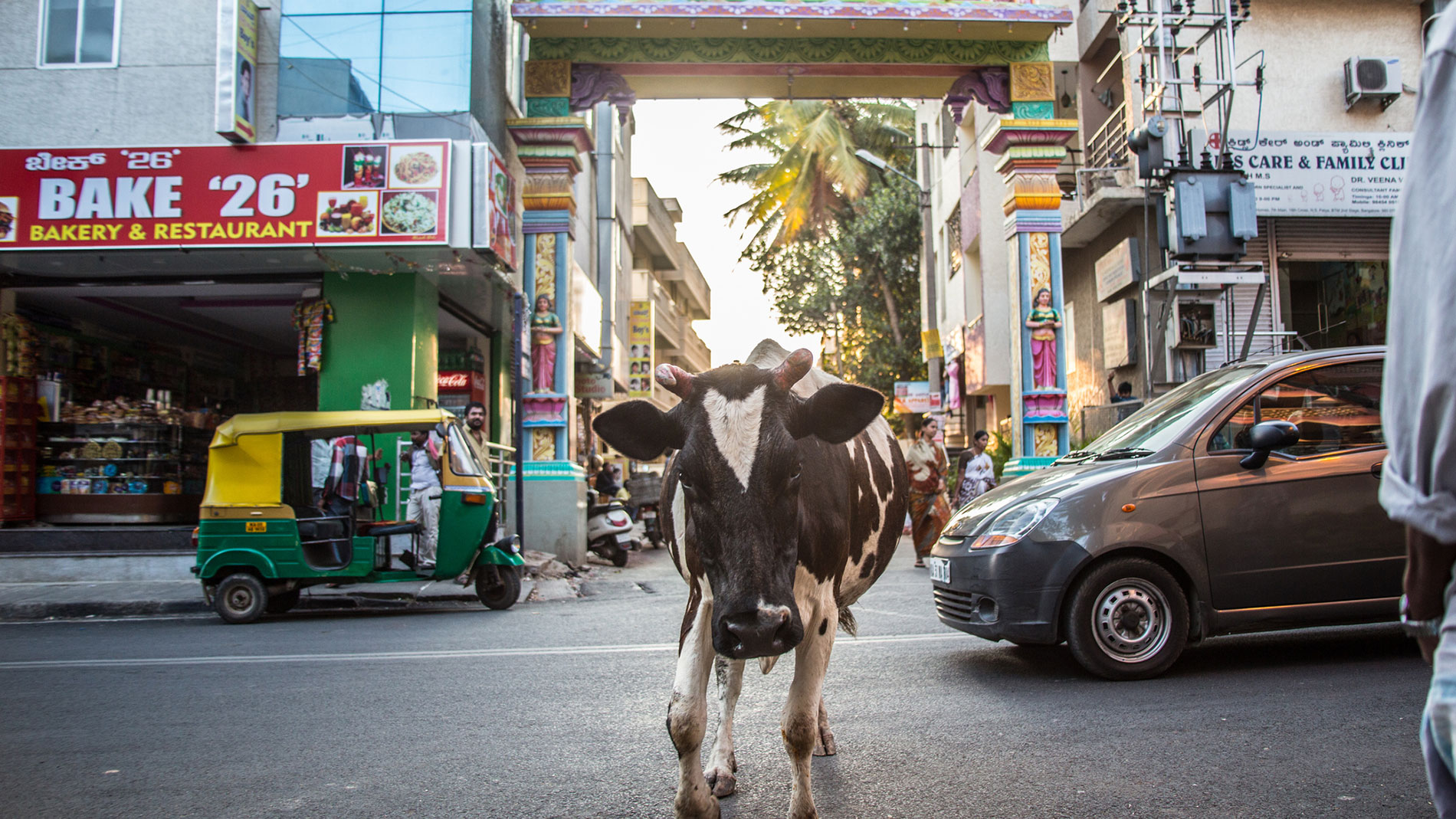
For this, a chaotic traffic system like the one in India becomes a real treasure trove of learning for the AI, according to Lukas Wuttke: “You need a dataset that captures everything, so that the AI has seen it all before.” Even over short stretches, Bangalore’s streets offer significantly more input than a German motorway over distances of several kilometres. Cows, playing children, non-existent road markings, even the office chairs by the roadside: what constitutes an obstacle for us is a wealth of data for artificial intelligence. It requires this data, so it doesn’t falter even when there are deviations from the routine it has learnt. Lukas Wuttke reports on American AI models that were trained for months, but had never been out on the streets during Halloween – and then malfunctioned when faced with costumed children, because they did not identify them as human beings.
Training for the unexpected
It is virtually impossible to account for every contingency. The aim is therefore to create a self-learning system that can handle situations for which it has not been explicitly trained. In the industry, this is referred to as ‘Out-of-Distribution learning’: what happens if a training dataset simply does not cover certain real-world scenarios?
Halloween is not an official public holiday in India. And in other countries, cows do not simply stand around on the streets. It is therefore obvious that an AI model trained here will need to be fine-tuned when rolled out to other countries. Minus-Zero founder Gagandeep Reehal told Spiegel Online that a pilot project with a German car manufacturer is already underway. He did not name the company.2
One thing is obvious: It is not only travellers who differ across markets, but also the way they deal with existing regulations. The threshold for deciding whether or not to drive over the kerbstone to avoid an obstacle is different in Bangalore or Berlin. AI must learn that sort of thing, too.
The future is already here
Lukas Wuttke is certain that this will succeed. If Minus Zero doesn’t make it, another provider will. The self-driving taxis from Google’s Waymo project, for example, are already established in several US cities. Lukas Wuttke has even ridden in them himself in San Francisco: “The technology is here. It is now being rolled out, and over the next five to six years our cityscape will change completely.” Many people are not yet aware of the scale of this application of AI: “Autonomous driving will be one of the greatest transformative forces that will turn our mobility on its head,” predicts the expert.
In India this transformation will likely take longer than in other countries, speculates Gagandeep Reehal in the Spiegel Online report. He does not predict self-driving cars in his home country within the next ten years: hiring a driver is simply much cheaper here than purchasing an autonomous vehicle. Nevertheless, a partnership with the Indian commercial vehicle manufacturer Ashok Leyland is already in place3. The self-driving trucks are initially supposed to be developed for ports, factories and company premises. The automation of the mobility sector has therefore already begun in the world’s most populous country.
1 Navigating with autopilot in busy streets of Bengaluru | Minus Zero 23.03.2026
2 Autonom durch Indien: KI trifft Kuh 23.03.2026
3 India’s Ashok Leyland partners with Minus Zero to develop self-driving trucks 23.03.2026