Reading time: 1 minute
Traditionally centered on highway deployment, NOA - an advanced L2+ assisted driving capability - is now expanding rapidly into urban environments, where increasing technical sophistication and consumer demand are unlocking the next wave of growth.
Between 2025 and 2032, this shift is expected to redefine competitive dynamics across the automotive ecosystem. Adoption is broadening beyond premium electric vehicles into mid-range segments, supported by modular system architectures and cost-efficient, scalable platforms. At the same time, China’s tightening regulatory landscape is reinforcing compliance, standardization, and lifecycle management, while shaping monetization models through software integration and subscription-based services.
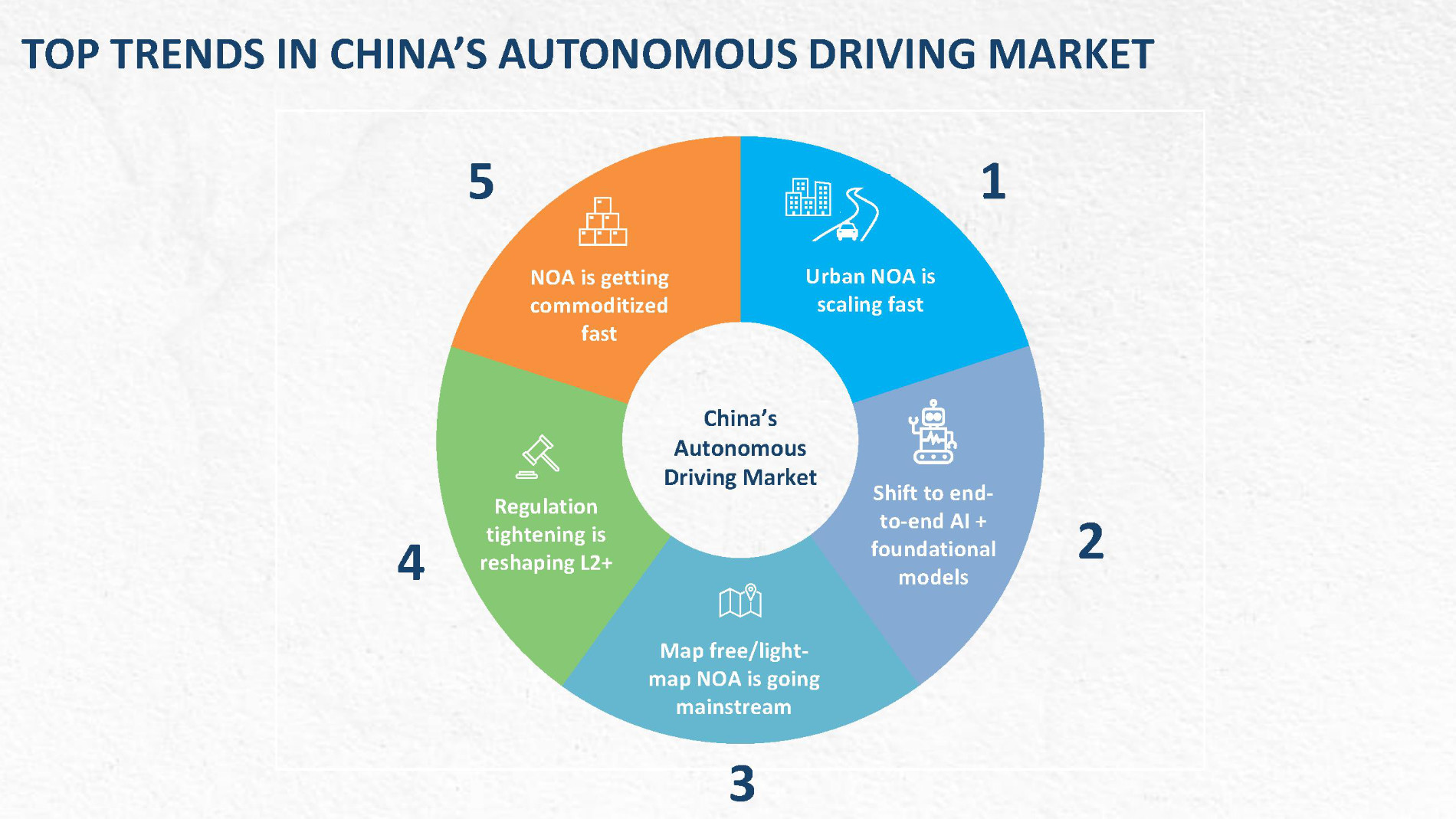
Against this backdrop, NOA is emerging as a critical battleground for OEMs, Tier I suppliers, and technology providers, with success increasingly determined by the ability to navigate urban complexity, align with regulatory frameworks, and deliver differentiated yet scalable solutions.