
Reading time: 6 minutes
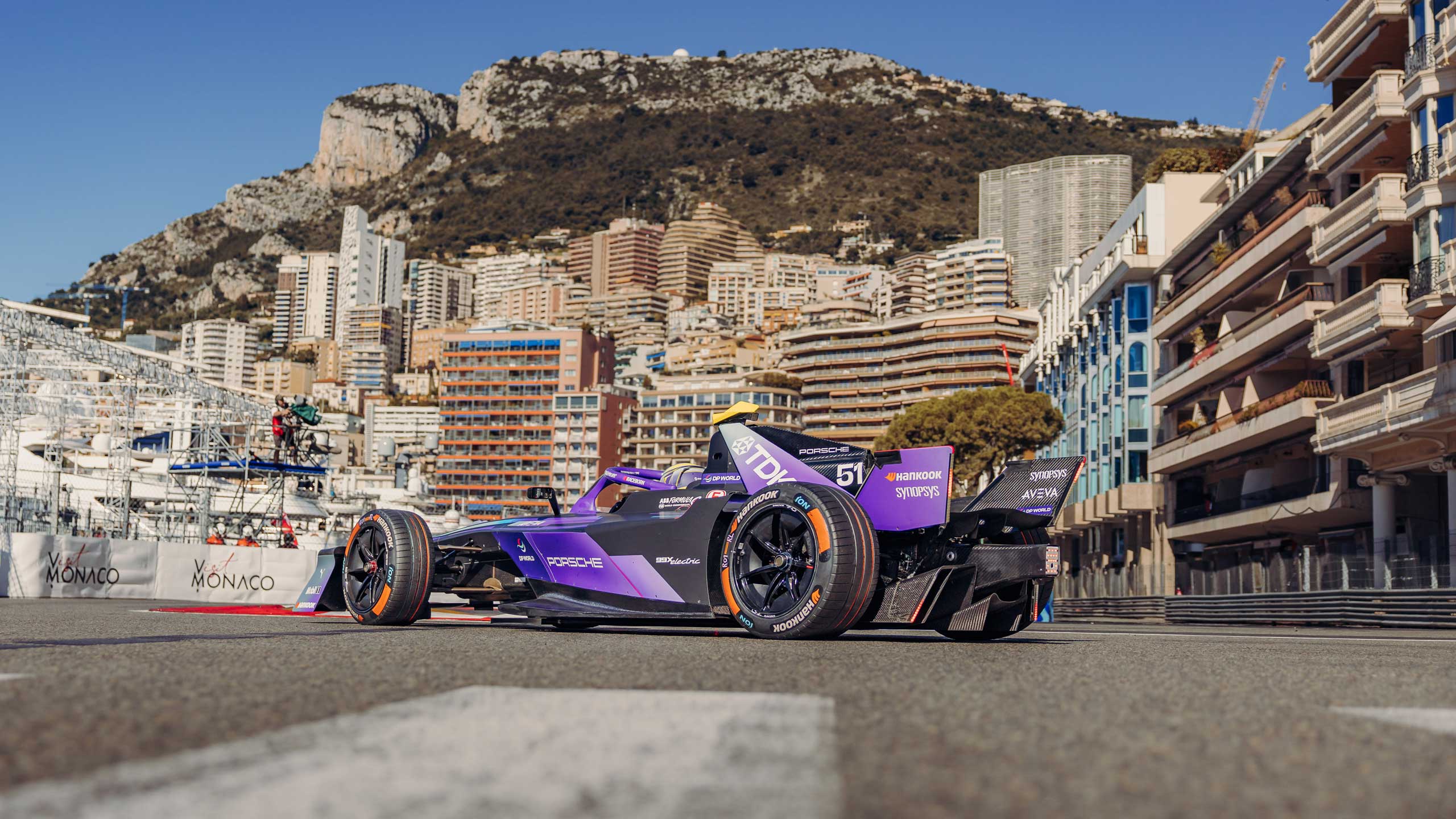
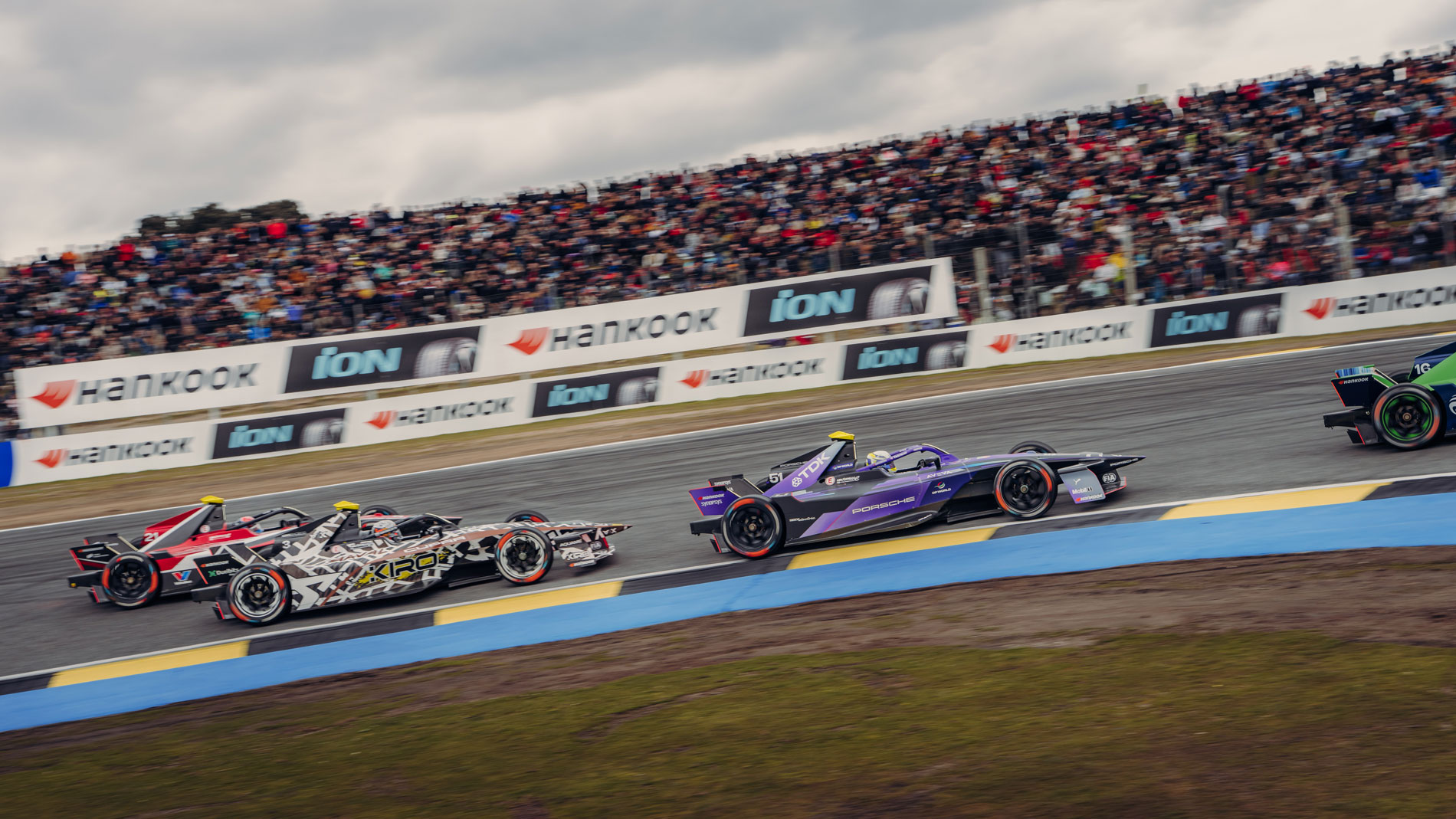
Formula E comes to cities such as Berlin, Monaco and Tokyo, bringing the action close to spectators on compact circuits with short laps, heavy braking zones and quick decisions. For spectators, this means that the cars pass by frequently thanks to the short lap lengths, making the Attack Mode, energy management, overtaking maneuvers, and tactical decisions easy to follow.
A race day consists of practice and qualifying with a group stage and knockout duels, and the E-Prix itself - a race in the Formula E World Championship. The E-Prix features a standing start, meaning that the cars begin from a complete stop and only accelerate once the starting lights go out. The number of laps is not fixed; depending on the circuit, there are often around 30 to 40 laps, with additional laps possible in the event of a safety car or full course yellow (FCY).
During an FCY, which is a race interruption following an accident or hazardous situation, a no-overtaking rule and a set speed limit apply across the entire circuit. Between practice, qualifying and the race, the batteries are charged, the systems are cooled, the data is analysed and the set-ups are adjusted. Charging is prohibited during the race itself, except during the ‘Pit Boost’ - a pit stop that can charge the cars by 3.85 kWh in 30 seconds — with a massive charging power of 600 kW. The chassis, battery and tyres are standardised, and manufacturers are primarily permitted to develop the powertrain, inverter, gearbox and software. Porsche’s GEN3 Evo can reach speeds of up to 275 km/h and accelerate to 100 km/h in just 1.86 seconds. In Season 12 (2025/26), the series will feature 17 races across ten countries on four continents. Porsche currently leads the team standings, ahead of Jaguar.
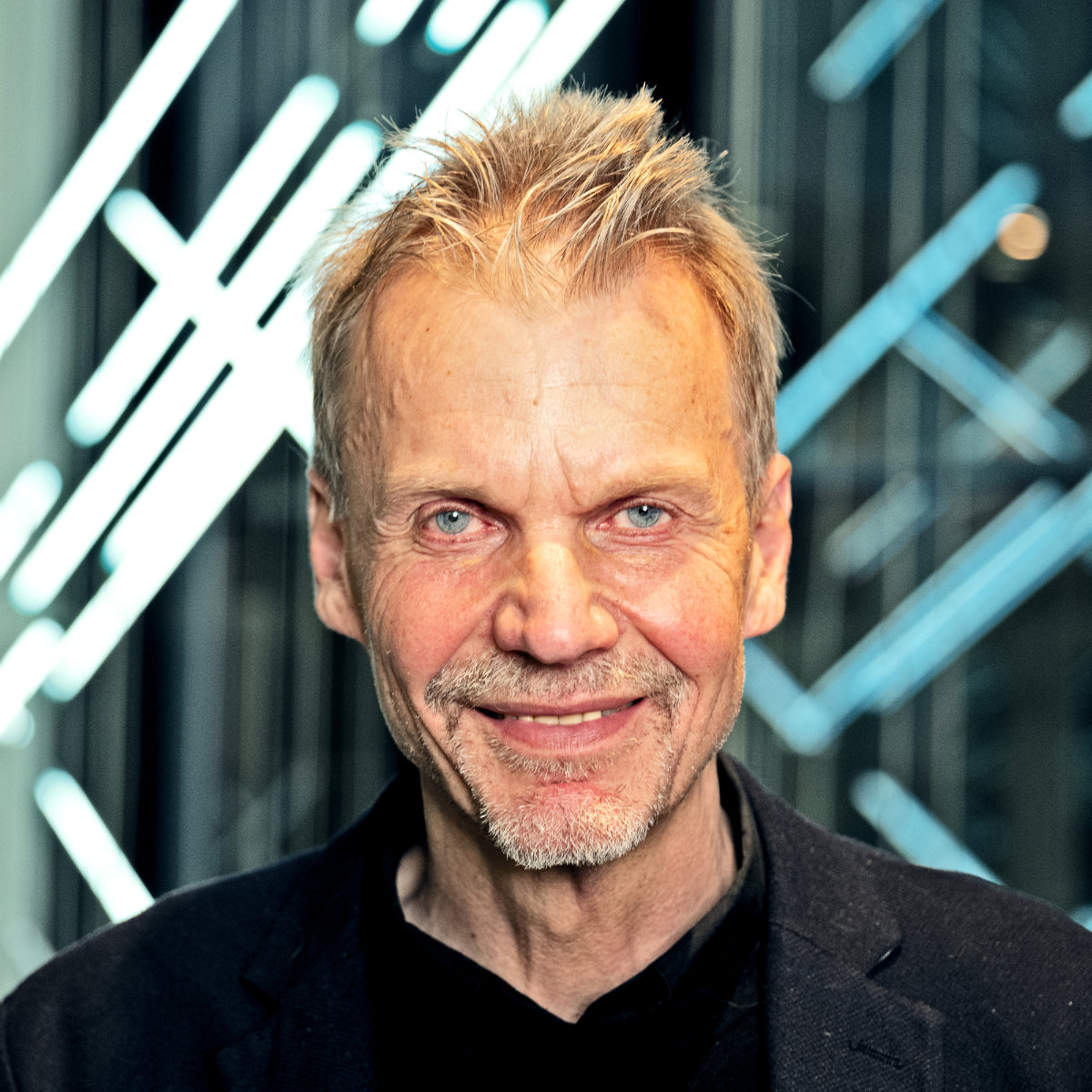
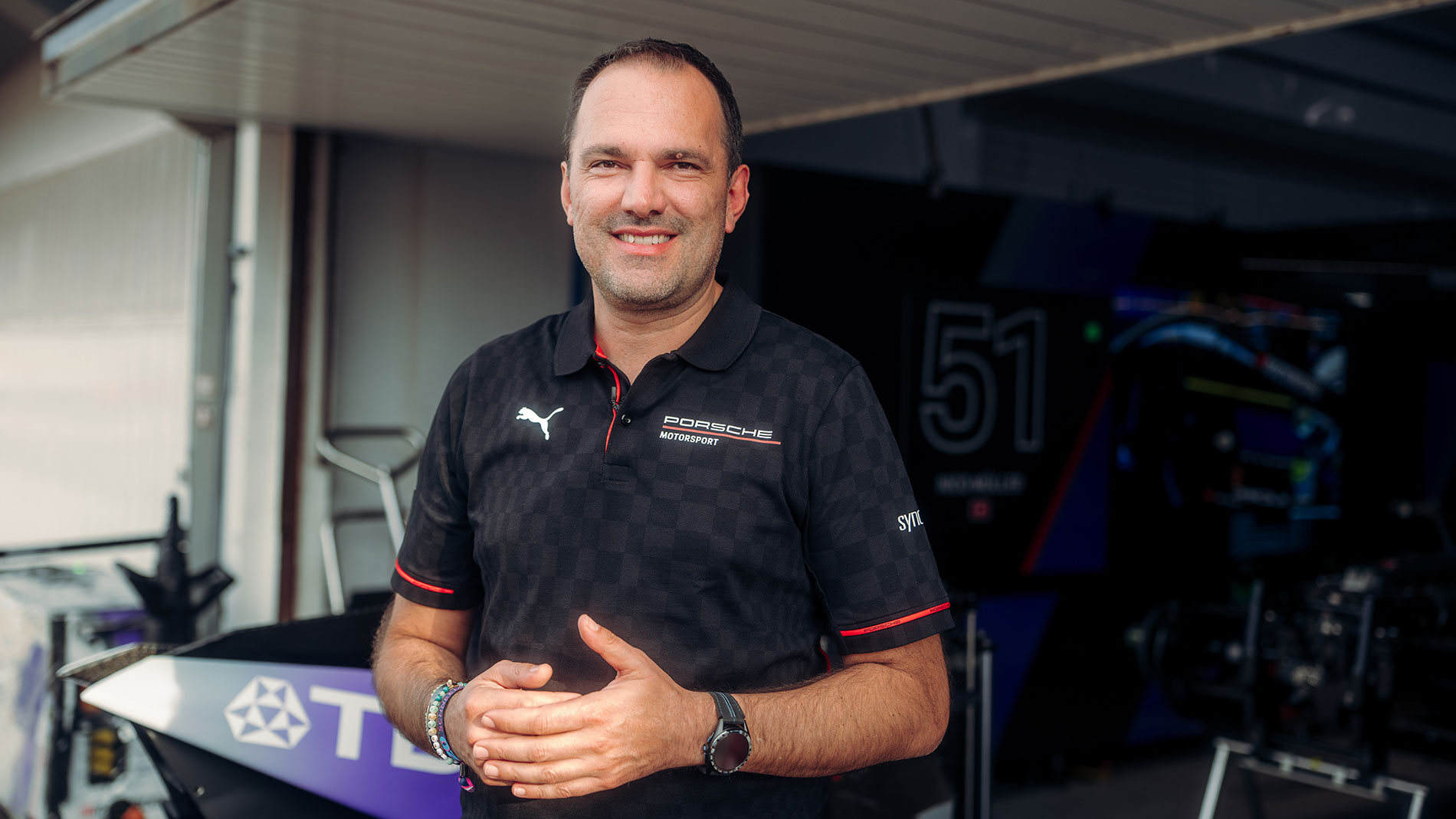
In an interview with GATEWAY, Florian Modlinger — Formula E project manager at Porsche Motorsport and head of Porsche's Formula E team — explains how victories and production-relevant technology emerge from this strict set of regulations.
Hailing from Asbach near Friedberg in Bavaria, Florian Modlinger studied mechanical engineering at the Technical University of Munich. Before joining Porsche, he worked for BMW, Audi and ABT, and is therefore familiar with Formula E from a competitor’s perspective. Since 2022 he has led the Porsche Formula E project in Weissach. Under his leadership, Porsche has evolved from an ambitious newcomer into a title-winning team. He must now defend the championship lead while preparing for the transition to the even faster Porsche GEN4 era.
What is Porsche demonstrating in Formula E that it cannot show in the showroom?
Motorsport shows how vehicles perform in extreme conditions. In Formula E, we showcase the capabilities of electric mobility to a wide audience. The focus is on performance and resilience, and on proving that electric vehicles can be exciting and high-performing as well as emotional.
Porsche only joined the series in late 2019. What was the biggest challenge?
I found a strong team of highly skilled experts and excellent facilities in Weissach, as well as the full support of the Executive Board. However, for many, Formula E was a world away from endurance racing, where Porsche actually has its roots. There, 24-hour races, whereas here it's all about sprints, energy management, software and hundredths of a second. The detailed work then began: further reducing errors, building on our strengths and identifying and addressing weaknesses in processes and hardware. There isn’t just one lever to pull. Many pieces of the jigsaw have to fit together. Ultimately, I was – and still am – just one small piece of that puzzle. By Season 10 (2023/24), we had established ourselves as a top team.
You once compared Formula E to lightning chess. Where does this complexity become apparent during a race?
The races unfold at an extremely fast pace, with lap times typically ranging from one minute to 1 minute 20 seconds. At the same time, we have to monitor energy usage, temperatures, the battery, Attack Mode and Pit Boost. Drivers who activate Attack Mode gain additional power, but lose time by taking the activation zone off the racing line. The key question is: who do they rejoin behind? Does a gap open up? Do they give up the lead? Situations like these can change within just 200 metres. That is why very fast decisions are required, based on data arriving in real time.
How much of that is decided by software, and how much by people?
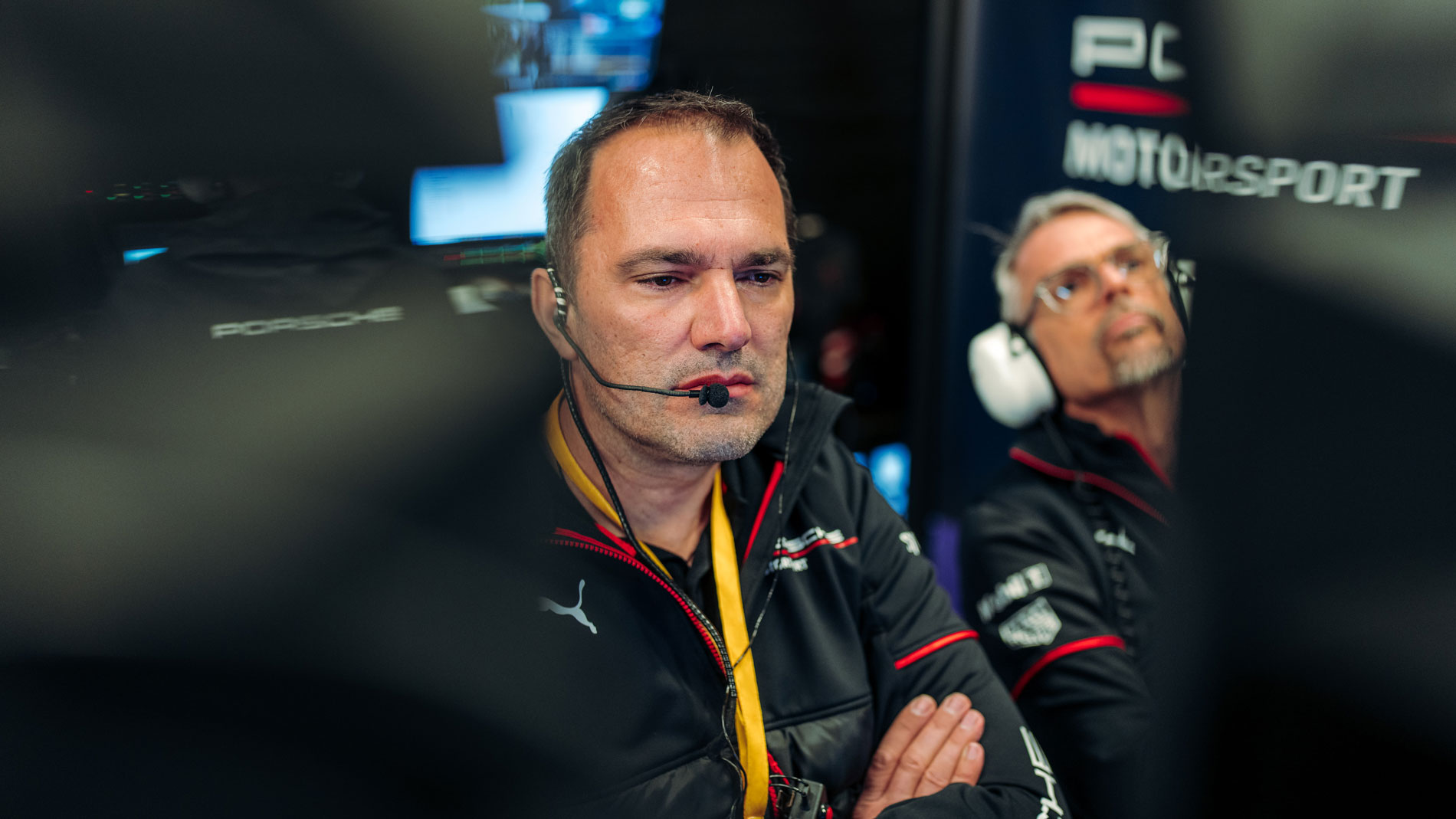
The information comes through various tools, live timing systems, and data-processing platforms. Drivers communicate energy levels and other values, such as temperatures, via radio using a coded language; we are not allowed to access that information through telemetry. However, the final decision is always made by a person. For key race decisions, the chain of responsibility ultimately leads to me. The driver has to think strategically as well, but at our team, they do not make those decisions on their own. If a driver wants to do something, we have a veto right for a few seconds.
Is Formula E more of a development laboratory or a communications platform for Porsche?
Both, but the development aspect is hugely important. What matters is that Formula E allows us to develop components ourselves that are also relevant for our production vehicles. The bodywork and aerodynamics are standardised, as the target parameters for road cars and race cars differ significantly in these areas.
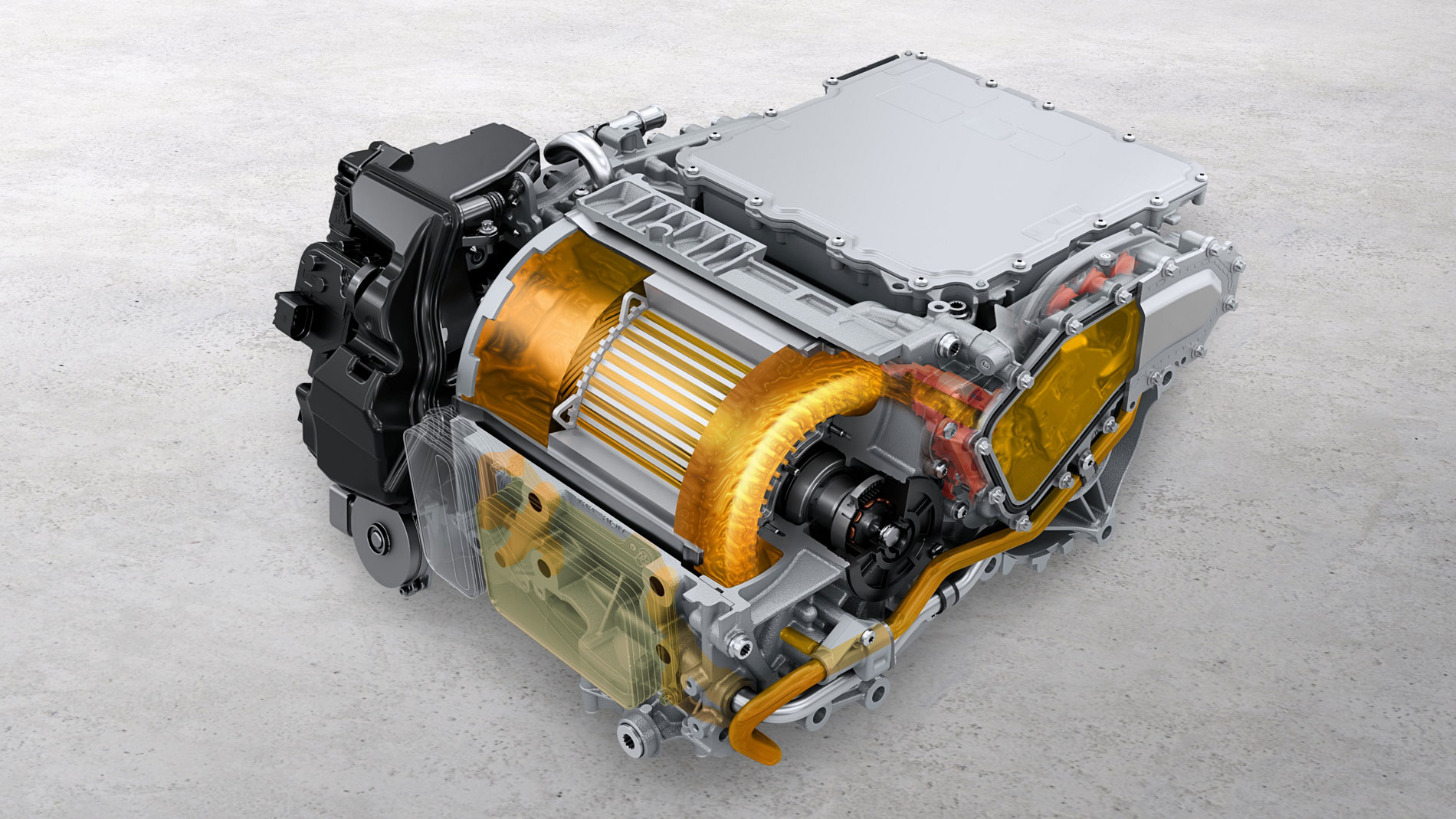
We are allowed to develop DC/DC converters, inverters, the electric motor, gearbox, electronic systems and wiring harnesses, front and rear differentials including their control units, driveshafts and further rear-axle drivetrain components, as well as cooling, structural and suspension components on the rear axle. In addition, we develop the brake-by-wire system and the vehicle’s complete operating software.
Software functions for vehicle dynamics and energy recuperation are particularly important. Working within the constraints of a cost cap, we are therefore developing components that are also highly relevant for future production vehicles.
What does the exchange between motorsport and series development in Weissach look like in practice?
Porsche Motorsport is organised in a matrix structure, meaning employees belong to specialist departments and work across different projects. As a result, Formula E engineers sit alongside colleagues involved in road-car programmes. This creates a natural exchange of knowledge. Sometimes the series development teams ask us how we approach certain challenges, and at other times we seek input from them.
Can you give a specific example of where Formula E expertise has found its way into a production vehicle?
One example is the directly cooled electric motor. With this technology, heat is dissipated directly at its source rather than through a cooling jacket surrounding the housing. This allows the component to be made smaller while maintaining the same continuous power output, reducing both weight and packaging space. We have been using direct cooling in Formula E for years, and it is now featured in the Cayenne Turbo Electric.
Formula E places a strong emphasis on sustainability. Motorsport, however, remains resource- and logistics-intensive. How do you respond to sceptics?
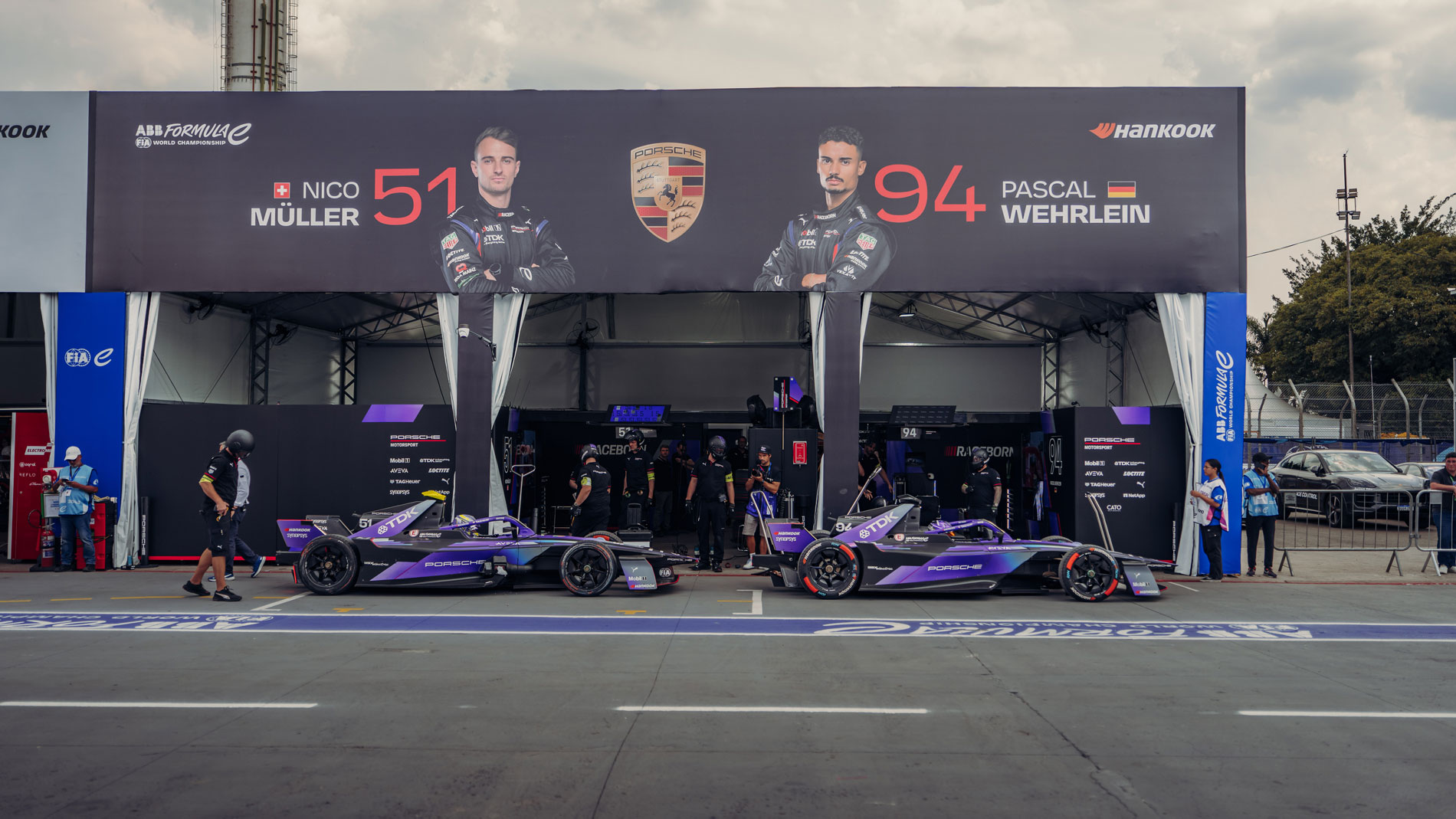
From the very beginning, the series has imposed strict limits on costs and resource consumption. Sustainability is therefore not only environmental but also financial. Budgets are capped by the regulations and are only a fraction of those seen in many other racing series. During a typical race weekend, we use just two sets of tyres, whereas a Formula 1 team may use around 20.
Logistics are also tightly controlled. For two cars, we are allocated 6.5 tonnes of freight, including the entire garage set-up and equipment. In addition, the number of personnel allowed on-site is restricted.
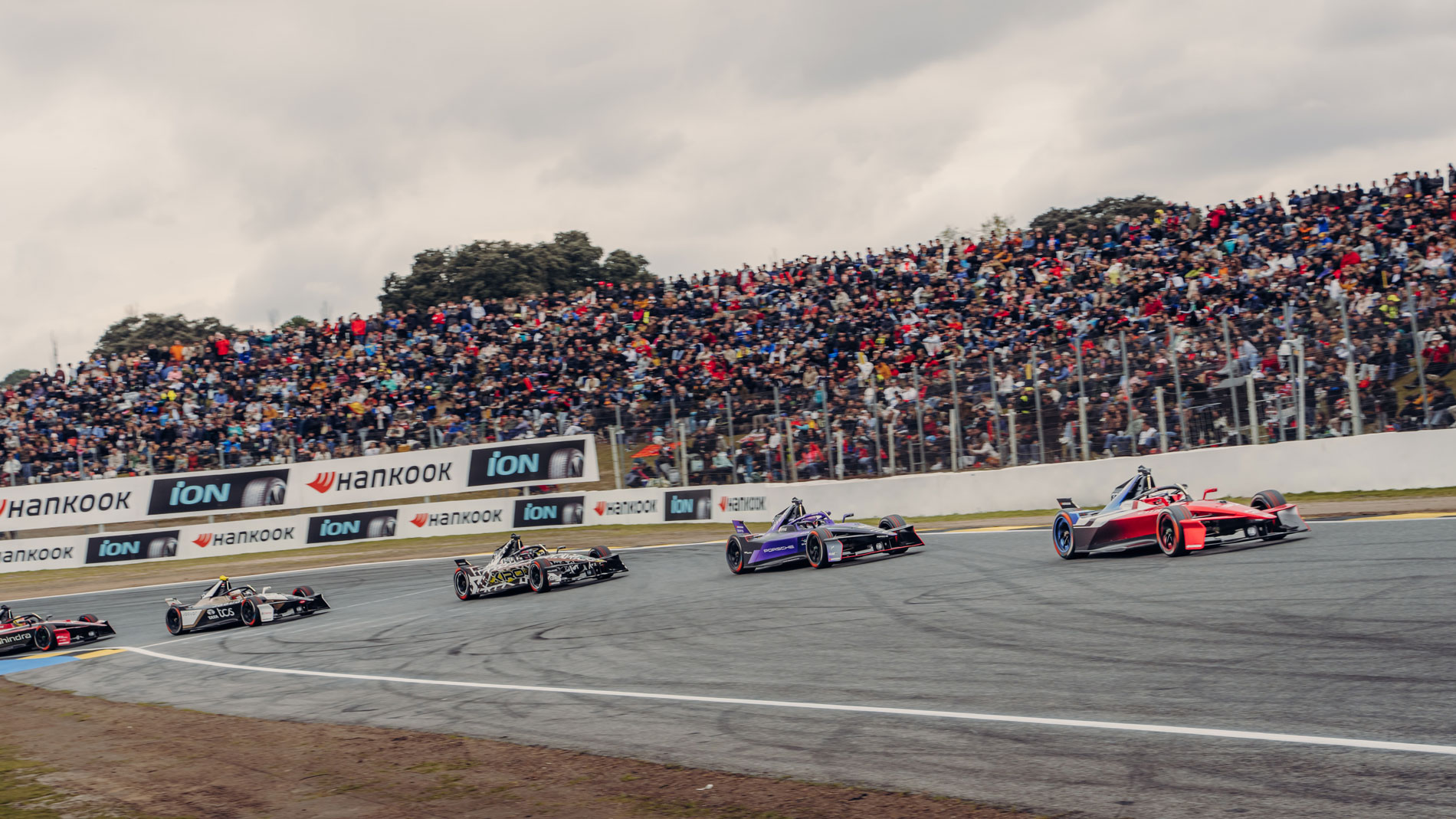
Porsche won both the Teams’ and Manufacturers’ World Championships in 2025. In 2026, the goal is to defend those titles. Does it change the mentality when you become the team everyone is chasing?
I do not see a fundamental difference. In every race, our objective is to maximise the points we score with the package available to us. Whether you are defending a title or chasing one does not really change that approach.
Towards the end of the season, priorities inevitably become clearer: who is the main rival, and against whom do you need to race strategically? But the underlying principle remains the same – execute every race weekend as effectively as possible and score as many points as you can.
What does a Formula E driver need to bring to the table besides speed?
Technical understanding is extremely important because so many software functions are integrated into the car. The driver needs to know which systems are active and when. On top of that, there is raw pace, the ability to multitask, and constant communication with the engineer regarding energy and temperature management.
For me, strategic awareness is equally crucial. A driver needs to understand who they are fighting against and for which position. In such a closely contested championship, a careless collision or a race with zero points can ultimately cost a world title.
Porsche customer teams such as Andretti and Cupra Kiro are also achieving success. How open can a factory team be when sharing data with customer teams that are competitors?
There are always advantages and disadvantages, but for us it is important to work as closely as possible with our customer teams. We share data and jointly look for areas of optimisation. From Porsche’s perspective, the goal is for as many Porsche cars as possible to be running at the front.
That does not mean giving each other an easy ride on track, but it does mean avoiding situations where we compromise one another’s races.
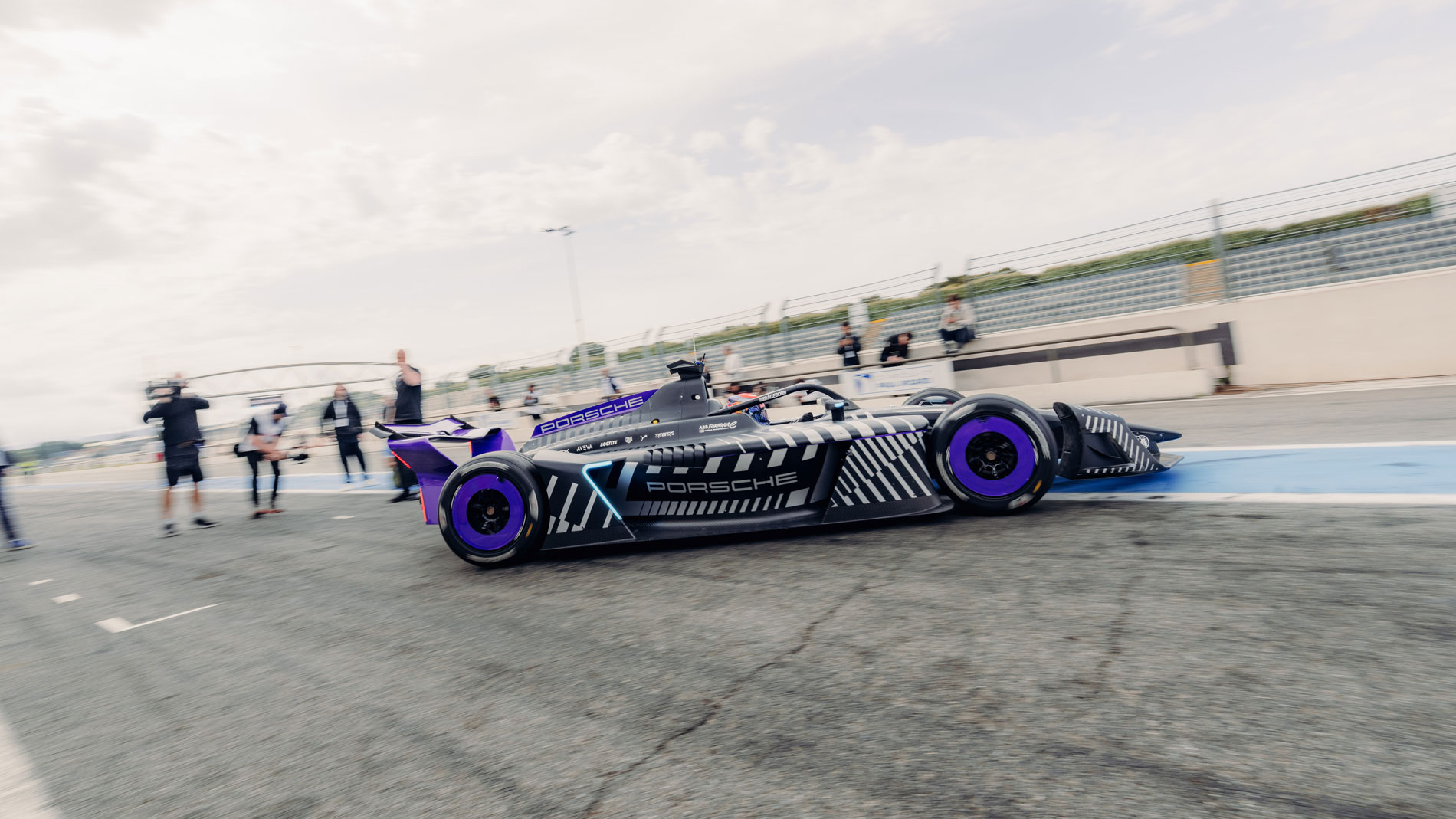
The GEN4 car, the Porsche 975 RSE, will be more powerful and faster. Will Formula E become more emotional as a result?
Definitely. In terms of performance, electric mobility has reached a point where there is no longer any need to debate its capabilities. With Porsche GEN4, Formula E will position itself somewhere between Formula 1 and Formula 2, making it one of the fastest single-seater championships in the world.
I have attended several tests already, and the sound, speed and performance are all genuinely emotional experiences. It is something you need to see and feel for yourself. The same applies to production cars: sit in a Taycan or a Cayenne Electric, and your perspective changes.
You grew up in Asbach and watched Formula 1 as a child. What fascinates you about Formula E today?
I come from a small village of around 60 residents and remain very connected to my roots. Motorsport fascinated me as a boy: the speed, the competition, the spectacle. I am ambitious and think like an athlete.
What fascinates me about Formula E is the intensity of the competition. Everything comes down to hundredths and thousandths of a second, and individuals can still make a real difference through good ideas – engineers, drivers and mechanics alike. That opportunity is what excites me.
What would need to happen over the next five years for you to say that Formula E has not only delivered victories for Porsche, but has also advanced electric mobility as a whole?
From a technical perspective, I would like to see development continue. In terms of drivetrain efficiency, we are approaching 100 per cent asymptotically. Similar progress could be made in areas such as energy storage and battery management, provided the regulations continue to allow greater technical freedom.
From a communications perspective, it is important that more people become interested in electric mobility: seeing it, experiencing it, stepping outside their comfort zone and forming their own opinion. Formula E can play an important role in creating that awareness.
Photos: Porsche Motorsport