
Reading time: 5 minutes
Road freight transport remains a heavily male-dominated sector. Women account for only around four per cent of Europe’s lorry drivers.1 At the same time, the industry urgently needs new recruits: according to current figures from the International Road Transport Union (IRU), around 502,000 driver positions in Europe are unfilled. By 2030, around 660,500 drivers could retire.2 Women could therefore play an important role in the industry - yet so far, attracting them to the profession has proved difficult. The IRU identifies a number of barriers, including a lack of safe and well-equipped parking and rest areas, long periods away from home and the profession’s still-negative image.3
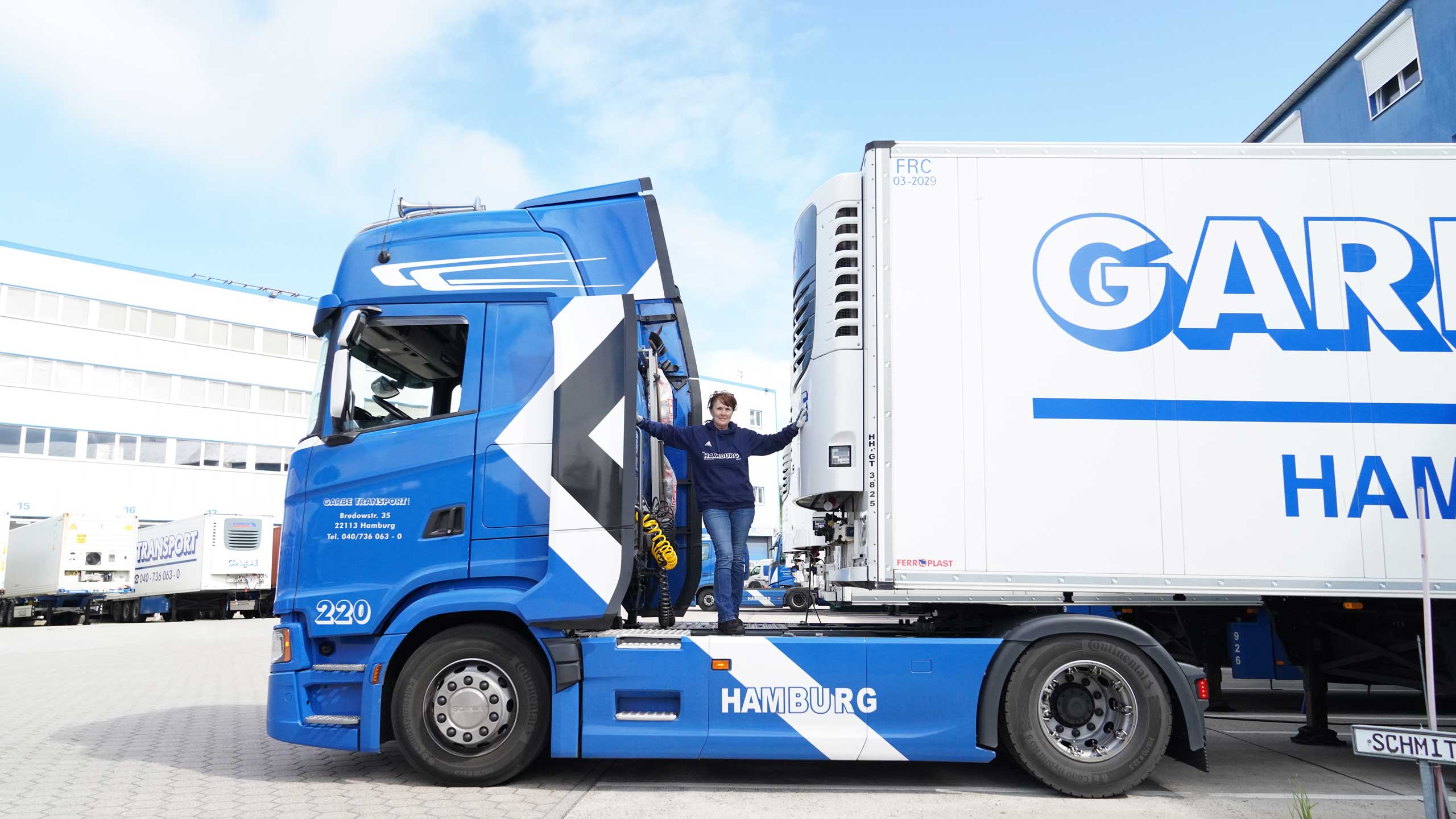
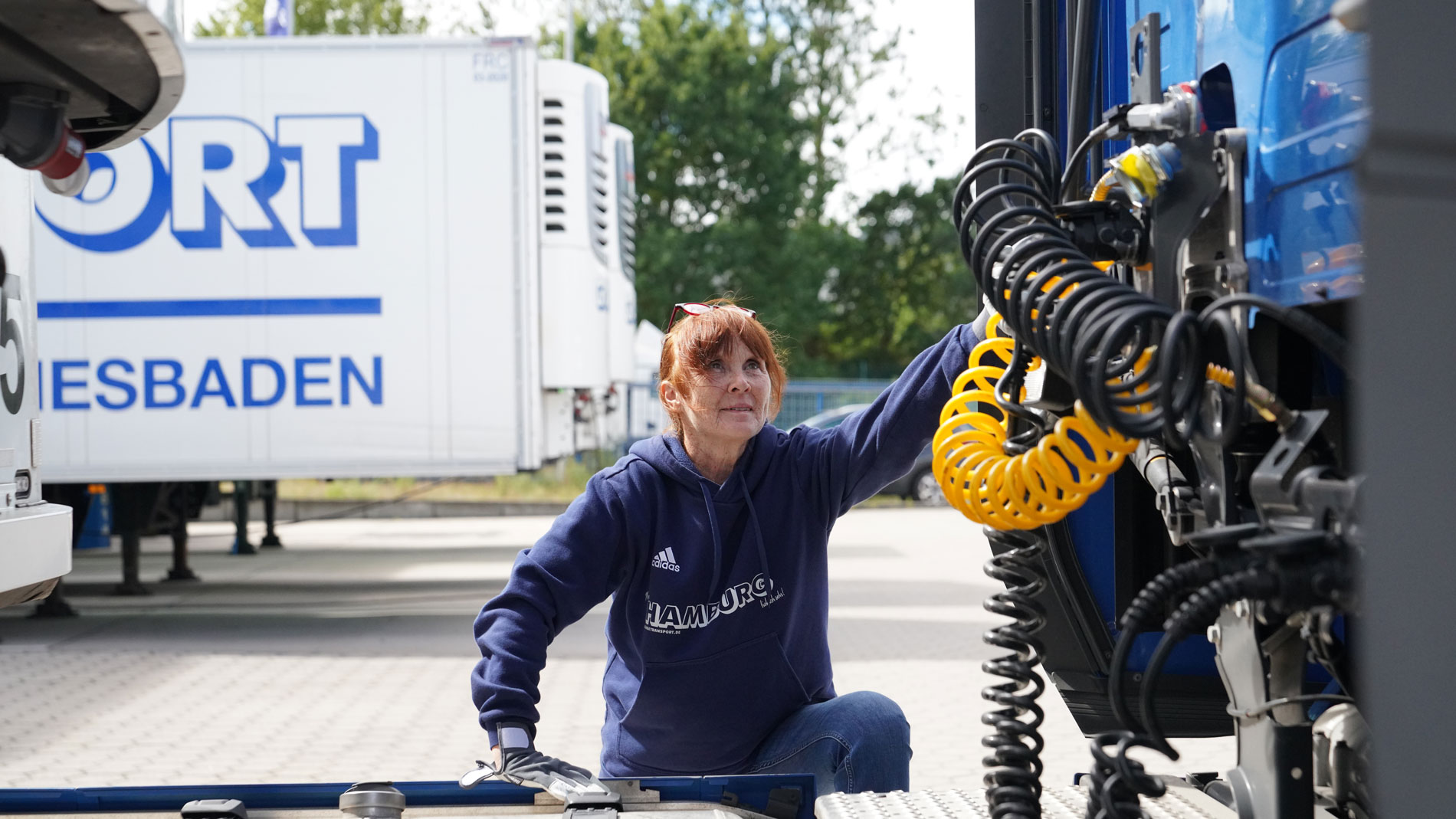
Brita Matthiesen from Hamburg spends half the year working as a guide for motorcycle tours in Colombia (GATEWAY has previously spoken to her about that too; the interview can be read here). During the other half of the year, she drives a 40-tonne lorry through central Hamburg for GARBE Transport Spedition. GATEWAY joined her on one of her trips.
When did you first think: “I want to drive lorries”?
I used to work for an agency that organised off-road motorcycle rallies through the deserts of Tunisia, Libya and Morocco. I accompanied the rallies by car, transporting tyres and tents from checkpoint to checkpoint. One day, the driver of the catering truck fell ill and I was asked whether I could step in. I had never driven a lorry before - only tractors when I was a child; I had always liked big vehicles. So, in a slightly Pippi Longstocking sort of way, I got behind the wheel. And from that moment on, I knew that I had to drive lorries and that I wanted to do it professionally.
How did you then end up working for a haulage company in Germany?
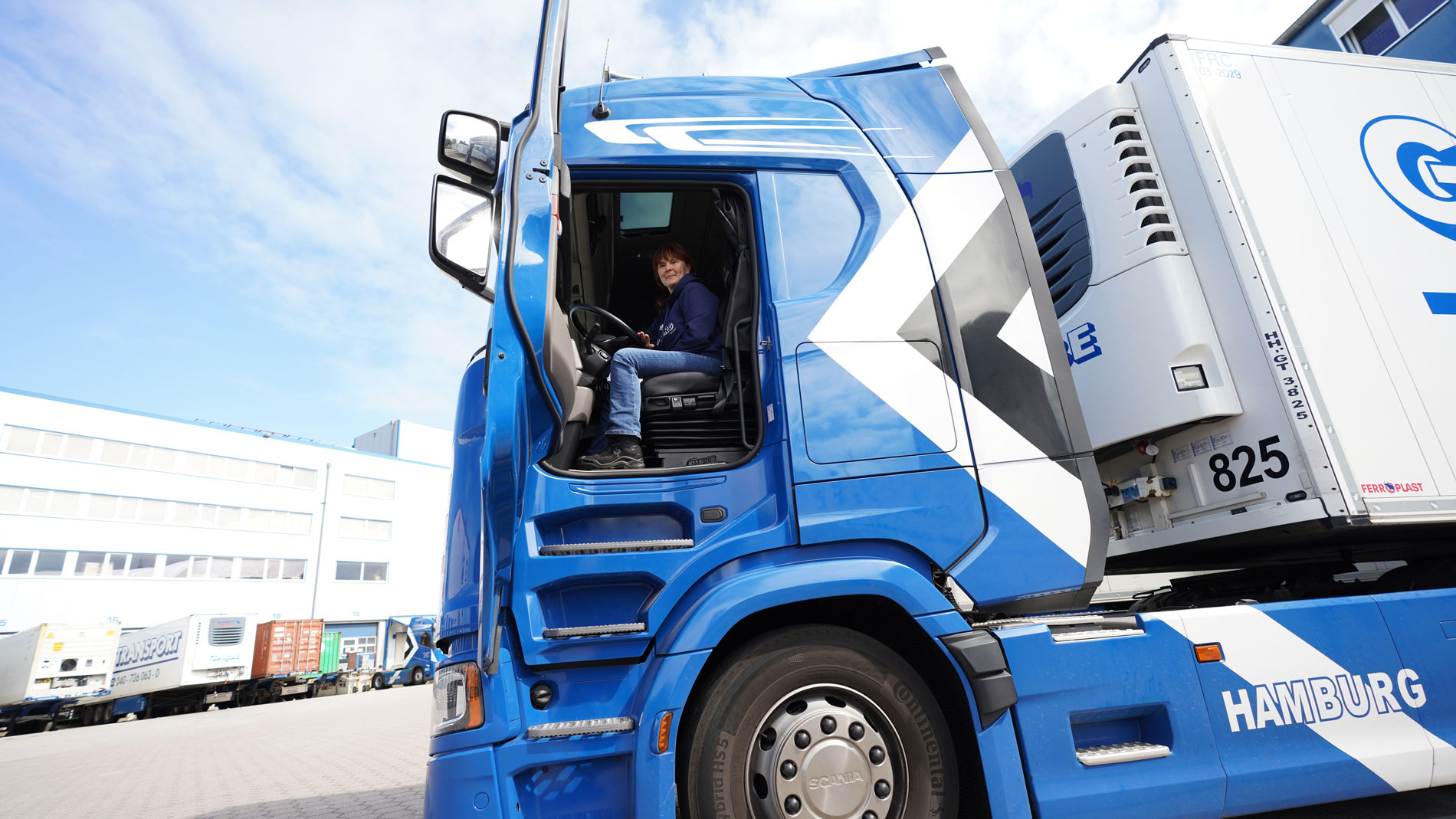
I got my lorry licence in Germany, but of course I still lacked proper practical experience. Driving a lorry is not just about moving the vehicle. There are lots of other things you need to know: how do containers work, and how does the port work in general? How do I secure the load? How do refrigeration units work? I then went to a large haulage company in Hamburg and said that I wanted to learn all of this and asked whether I could ride along with someone as a co-driver for a while. I still lacked the confidence to manoeuvre 40 tonnes through the city centre entirely on my own. I have now been working for that haulage company for 20 years.
And how did your boss initially react when you asked for a job?
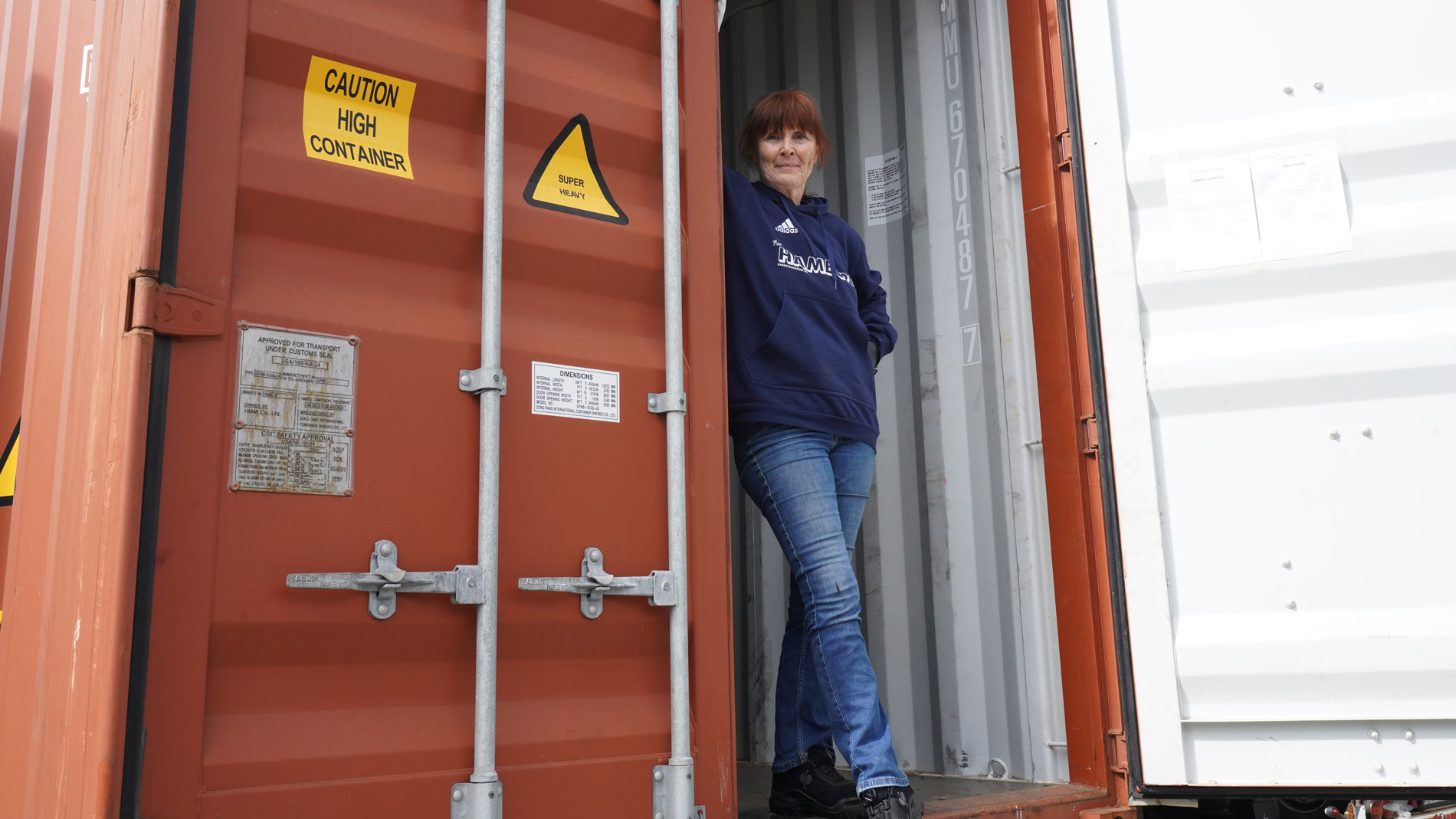
He would actually have preferred not to hire me. For one thing, I could not really do anything yet, and for another, I was the only woman among 200 men, which can sometimes lead to problems as well. But he eventually let himself be persuaded, and there was never any problem with stupid comments or unwanted advances from colleagues or anything like that. Quite the opposite: at the beginning, almost everyone helped me if, for example, I could not open a rusty container door.
What does it feel like to operate such a huge machine?
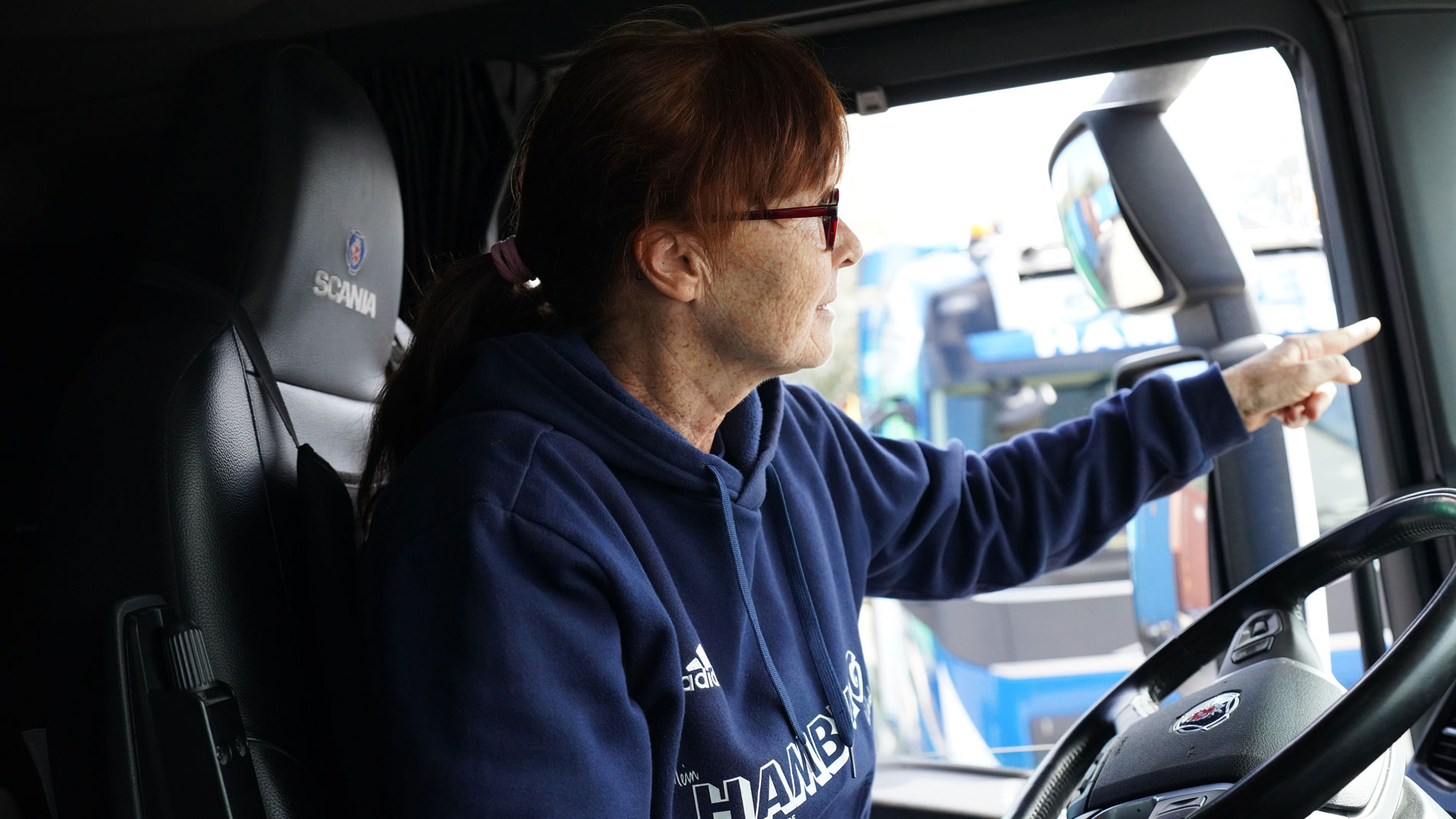
I definitely have respect for it. I think everyone who drives a lorry does. You have to concentrate, keep your nerve and think ahead. I still remember when I thought I had watched enough to be able to drive on my own. I went to the dispatcher and said: „I can do my first trip on my own now.” His only response was: “Great, you’re leaving at 5 a.m. tomorrow.” Suddenly, I was really scared and did not sleep all night. Where are they going to send me? Will I damage the lorry? Will I manage to reverse up to the loading bay? Will someone get hurt? Will I arrive at the yard and everyone laugh at me? Of course I am much more relaxed today, but I still have that respect.
How do customers, the police or passers-by react when they realise that a woman is driving the lorry?
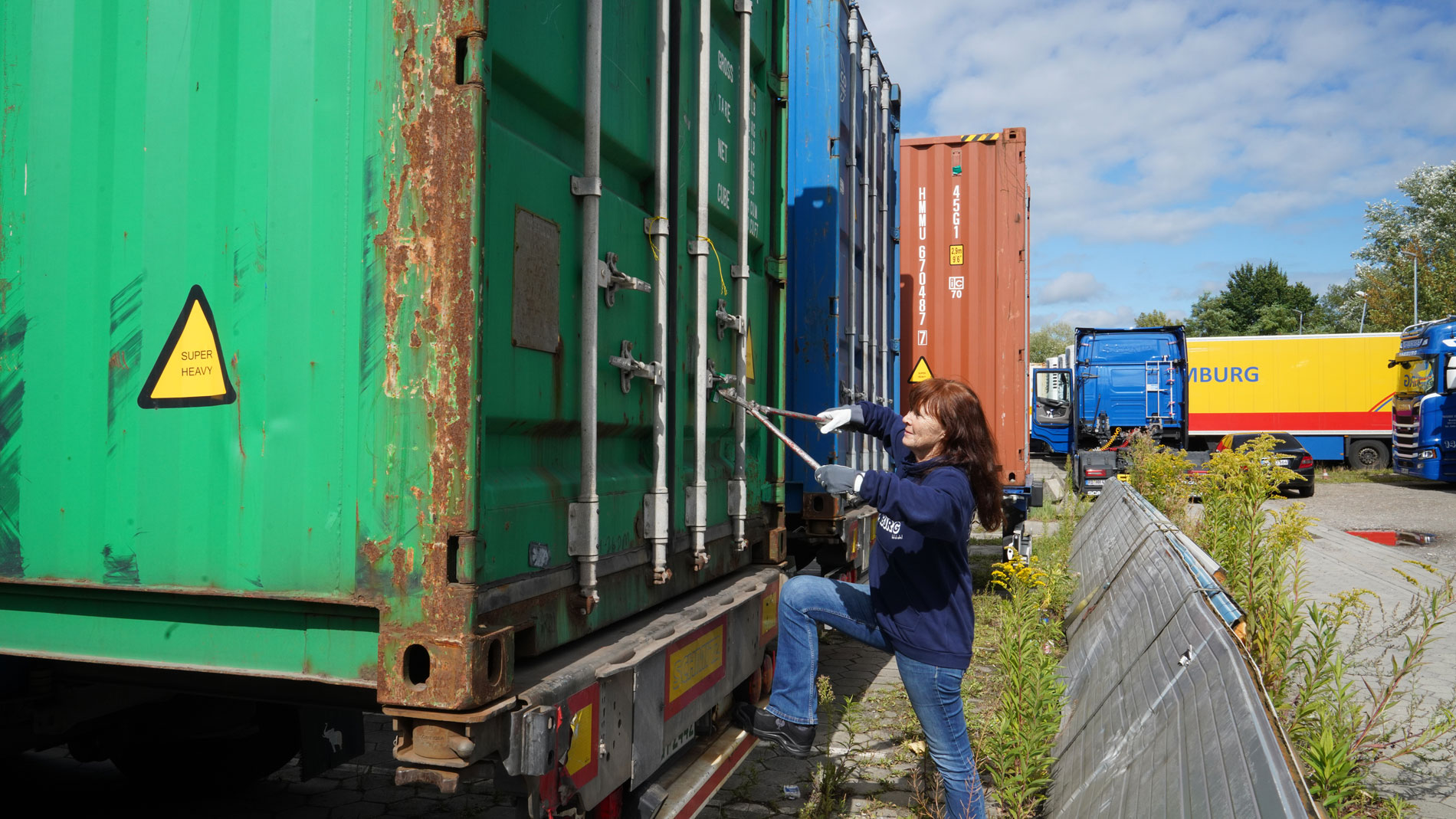
Some customers are surprised, especially when you also have to load the vehicle; sometimes they offer to help me. I have only had to deal with the police twice during routine checks. They were surprised too, but very courteous. One time, I had not properly closed a container door using both levers because I did not have enough strength for the rusty thing, so the police officer helped me do it.
And what about other drivers?
When I started, I was still the only woman at the haulage company. Whenever I drove the lorry into the yard, literally everyone looked. I was immediately in the spotlight. I found that really annoying at first. These days, they do not look any more; partly, of course, because they know me now and know that I can do it, but also because you see far more women today. At our haulage company, there are now four or five female drivers. And when I am out on the road, I see several women behind the wheel pretty much every day. That was not the case at all when I started.
Why don’t you drive long-distance routes?
I would rather sleep at home. So far, I have not had any bad experiences, but I think if I had to sleep at service stations regularly, things would probably look a bit different. I also do not want to eat chips and currywurst every day. What I like about driving is the variety: sometimes the port, sometimes the motorway, sometimes country roads, sometimes the city centre. On long-distance routes, you are mainly on the motorway. That is not really my thing.
Many haulage companies are urgently looking for new drivers. What would need to change for more women to even consider this profession?
I think the industry needs to work on its image. A lot of people still have this image of the scruffy lorry driver in their heads, and sometimes there is some truth to that. But I think if lorry drivers as a whole were treated with more respect, that would change too. I have experienced that in other countries, for example in the Netherlands or Sweden. Drivers have a different standing there. You can also see it in the way they present themselves. Someone will be standing next to their lorry in clean jeans and a white T-shirt and simply look professional. I think that respect for the profession makes a difference.
What is the biggest stereotype about lorry drivers that you are tired of hearing?
We are basically seen as the idiots, as people with no education who cannot do anything else. But it is a profession that involves a great deal of responsibility and skill - much more than some office jobs, for example. If you are a driver, you are a driver because you are passionate about it; you simply love driving. And that is how it is for me too. I know I am not going to impress anyone by saying that I am a lorry driver. Instead, the response is usually: “Why do you do that?” The answer is very simple: I do it because driving is my passion. And I think most other drivers, male and female, feel the same way.
If a young girl saw you and said: “I’d like to do that too” - what would your honest answer be?
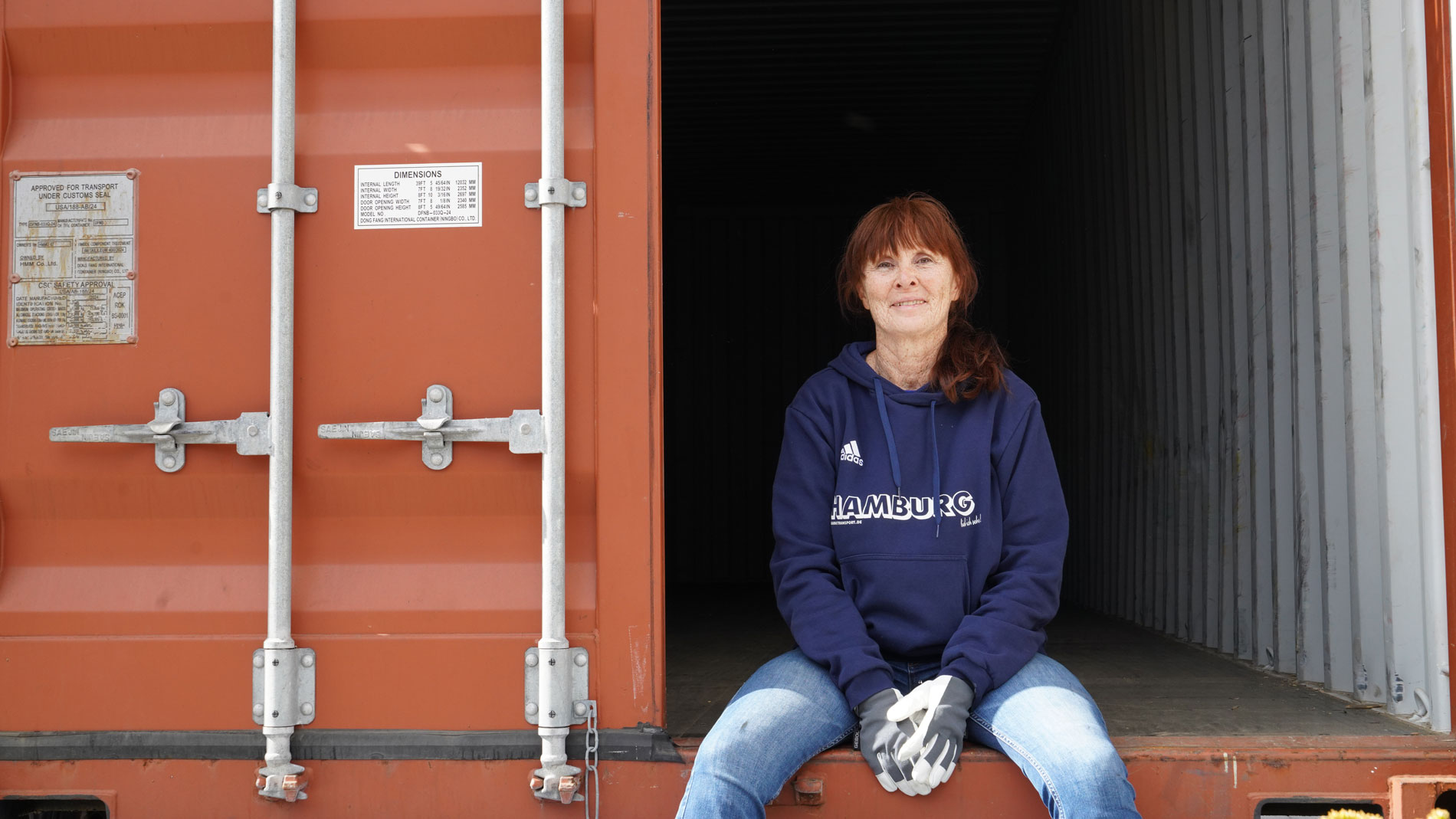
Do it! There is absolutely no reason why women should not drive lorries. And be brave! Because the best thing is when you lose your fear. I have the feeling that many areas are still so male-dominated - not because women could not do these jobs just as well, but because they are less likely to have the courage to take that first step and simply get started.
1 IRU: Operators deeply concerned by worsening driver shortage: new IRU report, 28. September 2026.
2 IRU: Global Driver Shortage Report 2025, 28. September 2026.
3 IRU: Half of European truck operators can’t expand due to driver shortages, 28. September 2026.
Photos: Anna Clarks