
Reading time: 3 minutes
Mr Colpron, is the aftermarket currently experiencing more uncertainty, or are your customers already seeing new opportunities for growth?
There are many changes, but we saw electrification, software and connected vehicles coming. That gave us time to prepare. Four years ago, we discussed the direction of travel with our customers; two years ago, we presented concrete solutions. Today, we are talking about real business opportunities. Artificial intelligence adds another dimension. The key is not to panic: transformation takes time, while the established business remains important.
Transformation is also part of ZF’s history. How has the company prepared for technological change?
Twenty years ago, our portfolio was significantly more dependent on the combustion engine. Since then, ZF has diversified it and built up particularly strong positions in chassis technology, which is less dependent on the type of powertrain. In powertrain technology, we offer solutions for combustion-engine, hybrid and electric vehicles. In the aftermarket, we have brought our offerings together under one roof. This allows us to support our customers both in the existing business and with new technologies.
You are known as “Mr Uptime”. In our last conversation, you described maximising vehicle availability as a strategic objective. What has actually come of that?
I am happy to be Mr Uptime! The strategy has three pillars: strengthening trust, expanding the portfolio and connecting the ecosystem. Our OE expertise and brands such as ZF, SACHS, WABCO, LEMFÖRDER and TRW are increasingly presented as one integrated offering. Connected vehicles provide information for fleets and workshops; diagnostics, electronic catalogues and ordering are interconnected. This allows information to flow more quickly between fleets, workshops and the trade, reducing repair times. That is what we mean by Maximizing Uptime.
ZF needs to reduce costs and focus its portfolio more strongly. What does this restructuring mean for the aftermarket business and its customers?
ZF is in a phase in which we need to focus. That does not mean there is no viable model for the future: we have strong products and customer relationships. But in a period of rapid technological change, we cannot spread ourselves too thinly. We invest where we have a distinctive position and opportunities for growth. The same logic applies to the aftermarket: build on our strengths, stay close to customers and direct investment towards growth markets.
ZF is evolving from a parts supplier into a provider of connected solutions. What practical benefits does the new AI voice assistant for ZF [pro]Manager offer, and where are the limits of AI?
AI is only at the beginning here. Its purpose is to make customers’ everyday work easier. For instance, our new AI Voice Agent for ZF [pro]Manager, our virtual front desk for workshops helps handle customer calls in natural language, understand service requests in real time and connect appointments directly to live workshop scheduling, reducing missed calls and easing pressure on front-desk teams. AI does not replace expertise; but can help simplify specific processes.
“I am happy to be Mr Uptime.”
Are independent workshops sufficiently prepared for electric vehicles, driver assistance systems and software-defined vehicles, and where do you see the greatest business potential over the next few years?
We are in a transitional phase. Comprehensive mobility is not possible without a strong independent aftermarket; manufacturers’ networks alone are not sufficient. Independent workshops need multi-brand diagnostics that are available, affordable and cybersecure. Pay-per-use helps when a rare model only comes into the workshop once or twice a year. Europe also needs rules that enable access to data and competition while protecting investment in software.
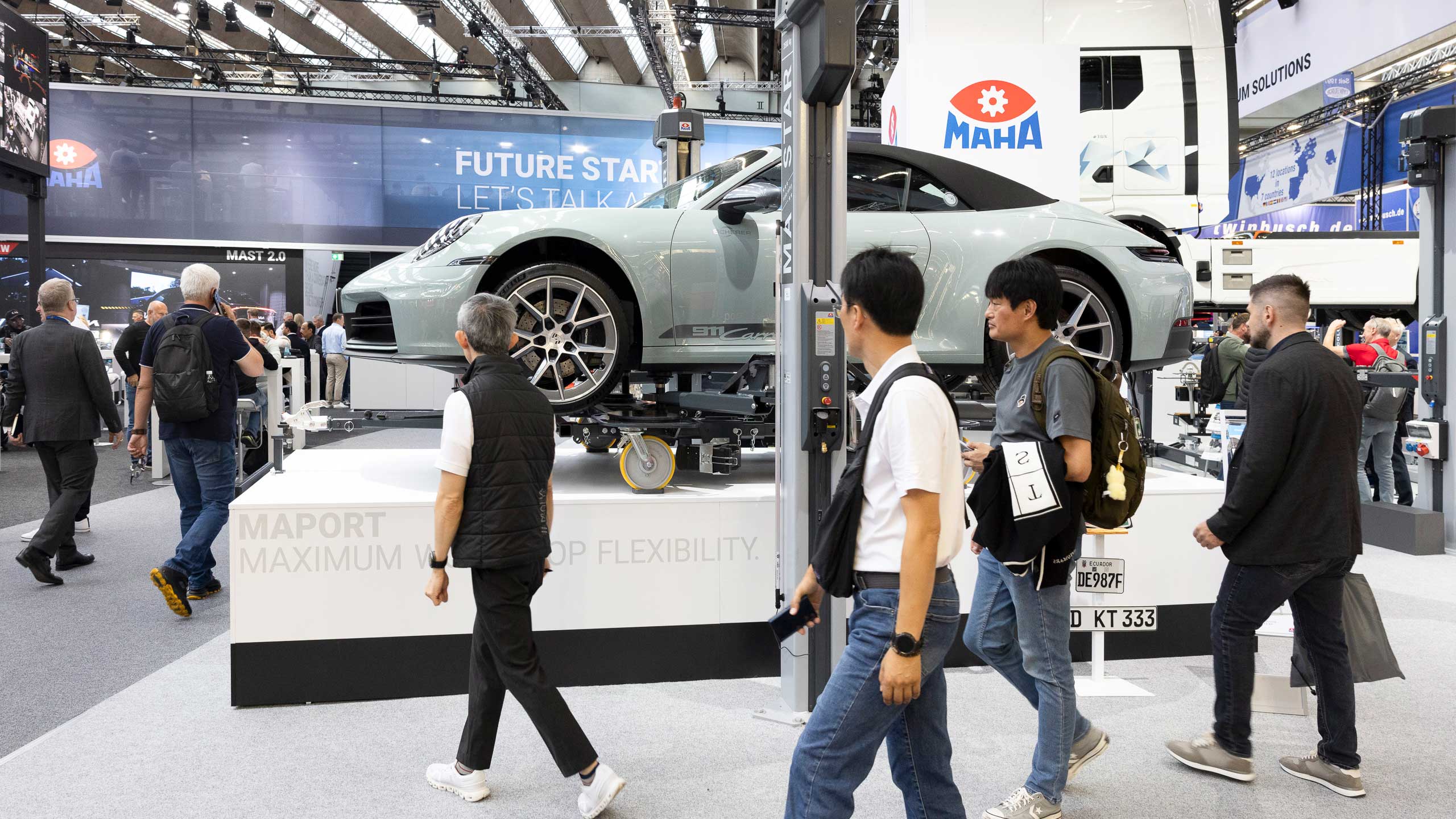
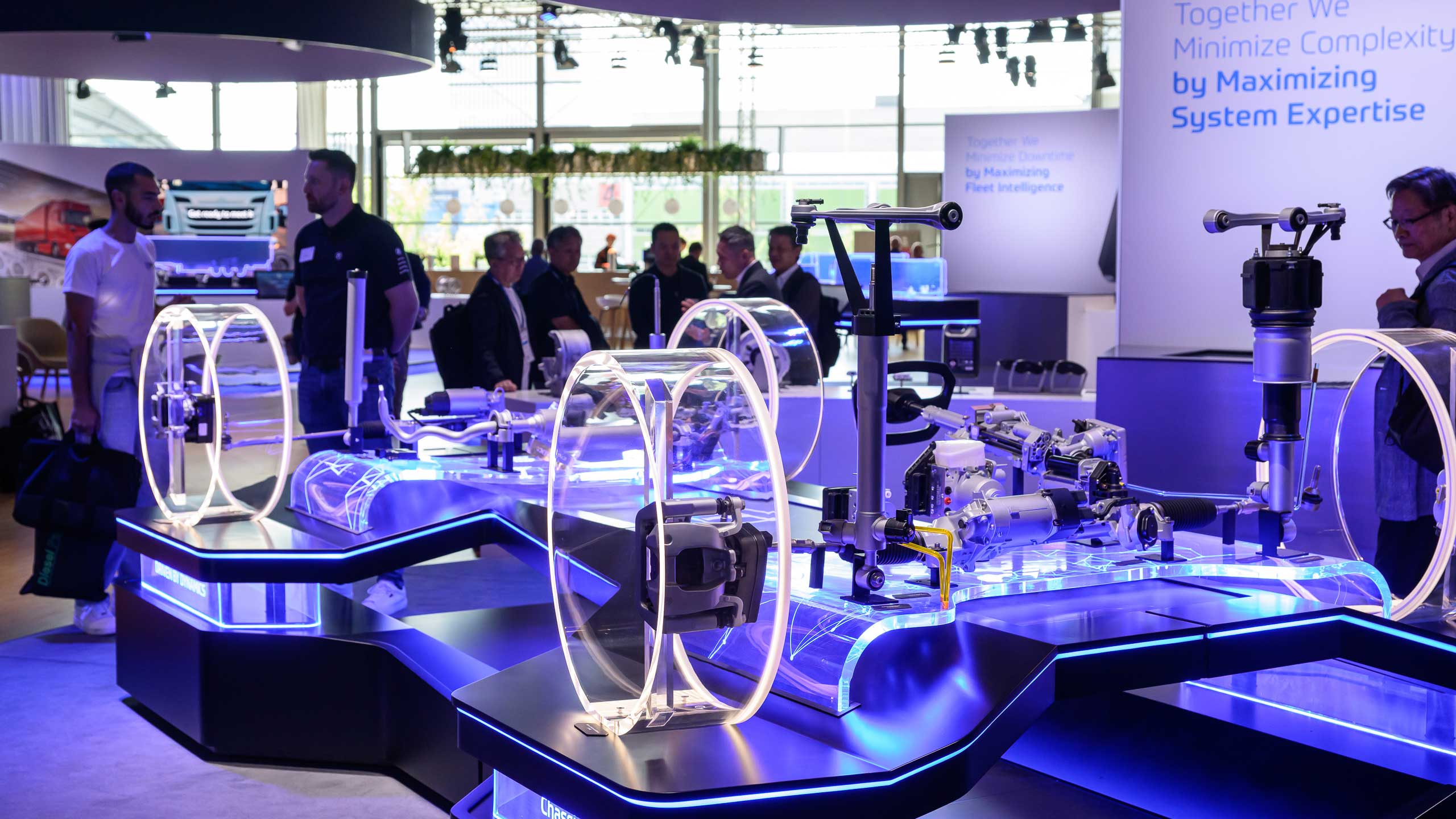
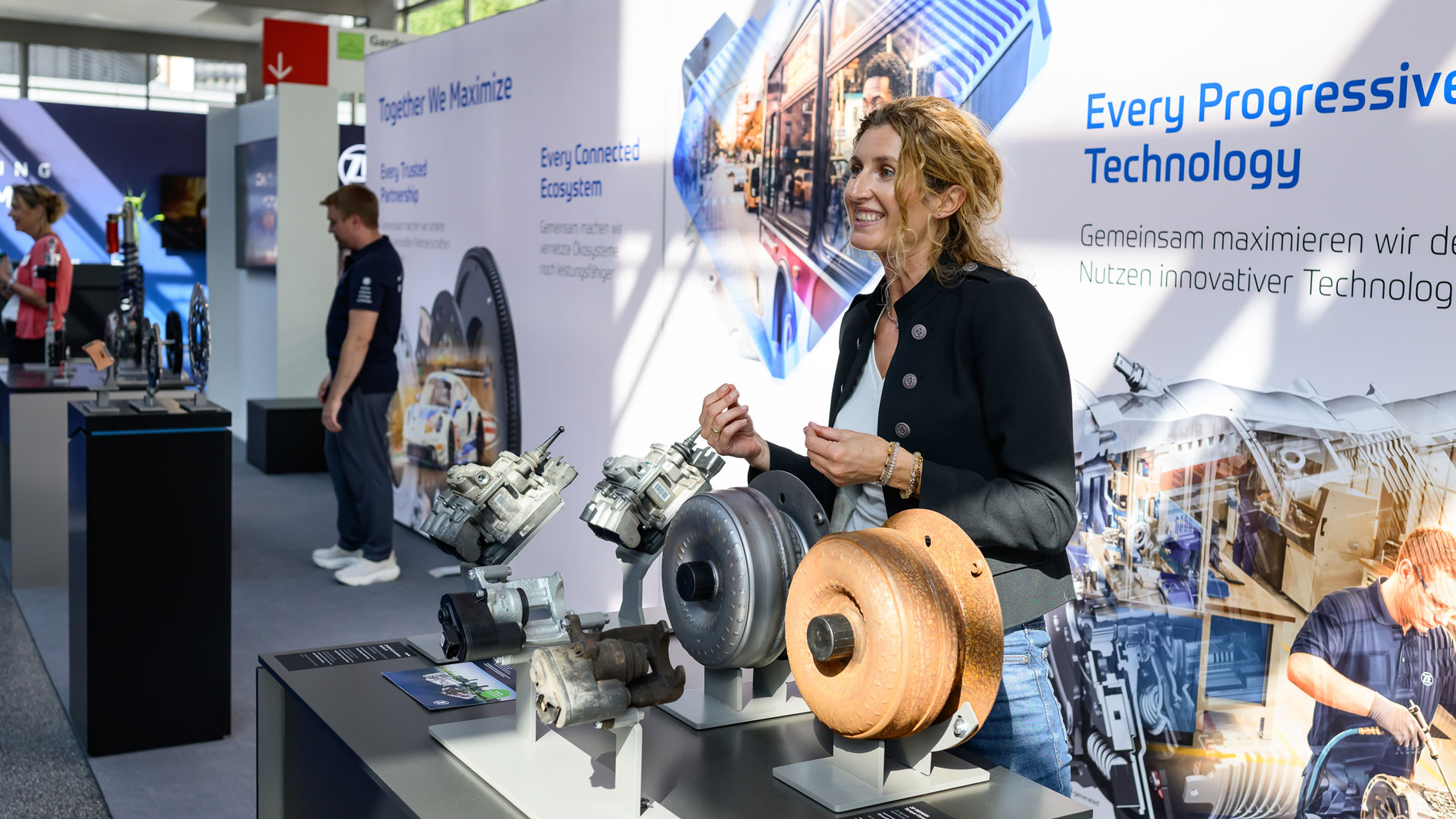
ZF offers more than 7,300 products and is showcasing, among other things, high-voltage training and a TRW brake fluid containing recycled material at the trade fair. Where do you see the greatest potential over the next five years?
The question is interesting, because we often discuss internally which single product we should highlight in particular. But our real strength lies precisely in the fact that we offer a very wide range of solutions from a single source and can therefore cover a substantial proportion of workshop needs. This ranges from passenger cars and commercial vehicles to repair and remanufacturing, as well as digital solutions that connect fleets, workshops and the trade. That is why I do not want to single out any one product. What matters is how the entire offering works together.