
Reading time: 3 minutes
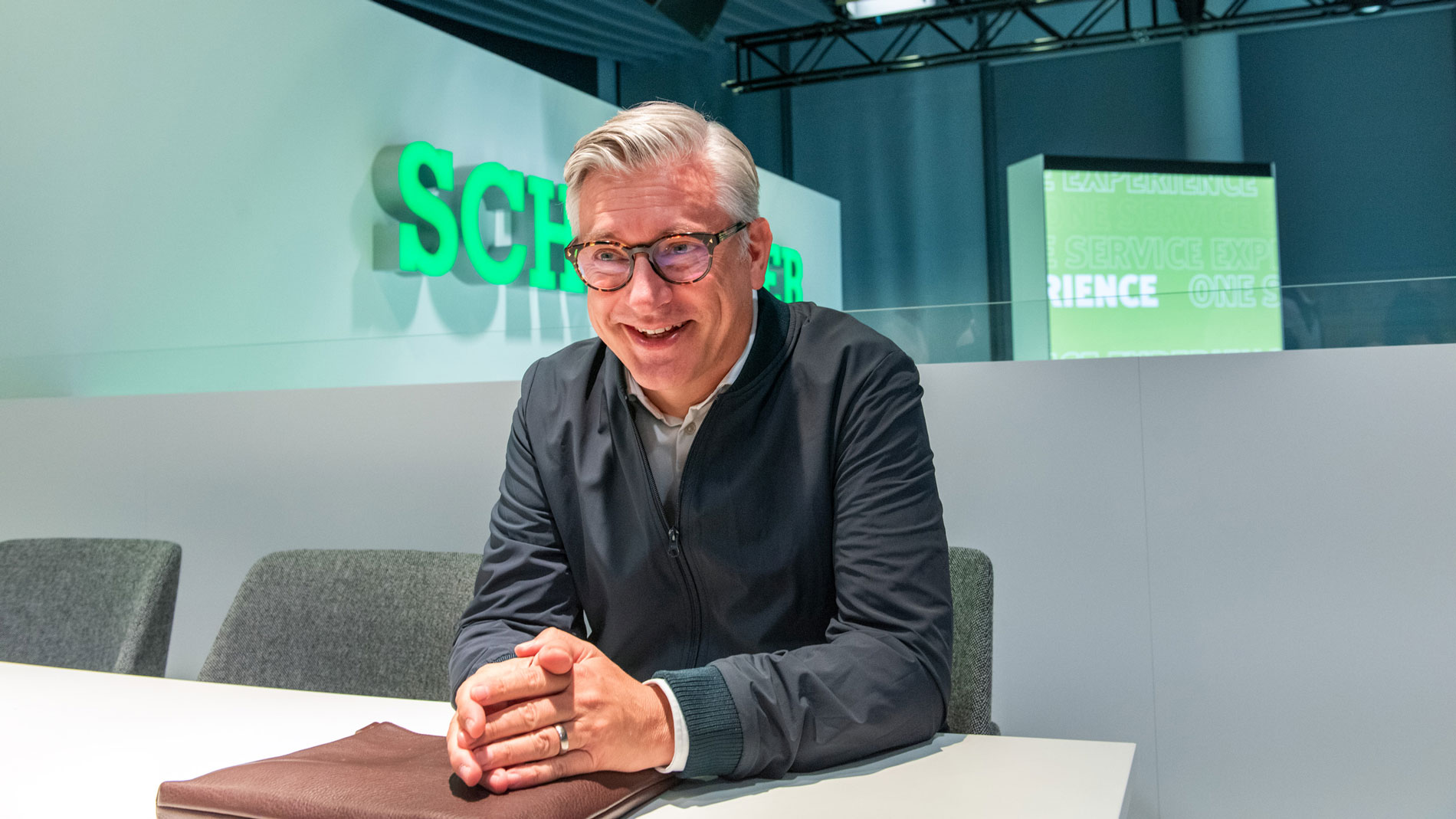
Mr Schüler, you are meeting distributors, workshops and suppliers from many countries here. How would you describe the mood: a sense of new beginnings, uncertainty or a state of crisis?
At present, we are a long way from a crisis in our business. Of course, there is uncertainty about how suppliers, the trade and workshops will successfully manage the transformation. At the same time, our customers report pressures from high fuel prices and rising costs in Europe. Looking at the stability of the business in the current and coming year, however, I believe the industry as a whole is well positioned.
The problems facing the German automotive industry are putting many suppliers under pressure. Do you need to move away from the traditional automotive industry, or is there a risk of spreading yourselves too thinly with new areas of business?
We remain committed to our automotive business and have positioned ourselves for the future with electric mobility, powertrain and after-sales. In addition, we have a strong industrial business. At the same time, we want to establish a presence in defence and humanoid robotics. We are bundling these activities separately so that they can develop without affecting the focus of our established business areas. Whether this requires high levels of investment depends on the expertise and technologies already available and on how missing know-how is added. We are taking a step-by-step approach and building on the technologies and capabilities that already exist within the company.
China is a sales market, production location, innovation hub and competitor all at once. Does the “in China for China” strategy still apply, or does Europe need greater technological independence?
Our principle is: in the region, for the region. We want to be competitive in China, even if we do not succeed in every area. When something proves successful in one market, we always examine whether it can be transferred to other regions. At the same time, we remain a global company with development and production in different parts of the world. We focus on what Europe needs for Europe, the USA for the USA and China for China. This means that our business outside China is not entirely dependent on China. Especially in the spare parts business, proximity to customers and markets is crucial, because vehicle fleets and workshop requirements develop differently from region to region.
“No workshop should ever have to turn a customer away again – that would be a success for me.”
It is often said that it is easier to make money with mechanical products than with digital ones. Is that true – and what role can a long-established supplier play in digital mobility?
Even in the mechanical world, making money was never something that could be taken for granted. There is no supposedly simple mechanical business on one side and difficult digital business on the other. All areas have to contribute to sustainable profitability. With Vitesco, we have significantly strengthened our position in electronics and technologies for electric vehicles. At the same time, our portfolio is balanced: electric mobility and combustion engines, new-vehicle parts and repair, as well as automotive and industrial business. We come from a technology background and also know how to industrialise innovations.
Your entire trade fair stand focuses on the question of how workshops can handle more complex jobs and carry out more repairs. What exactly do you offer them to make this possible?
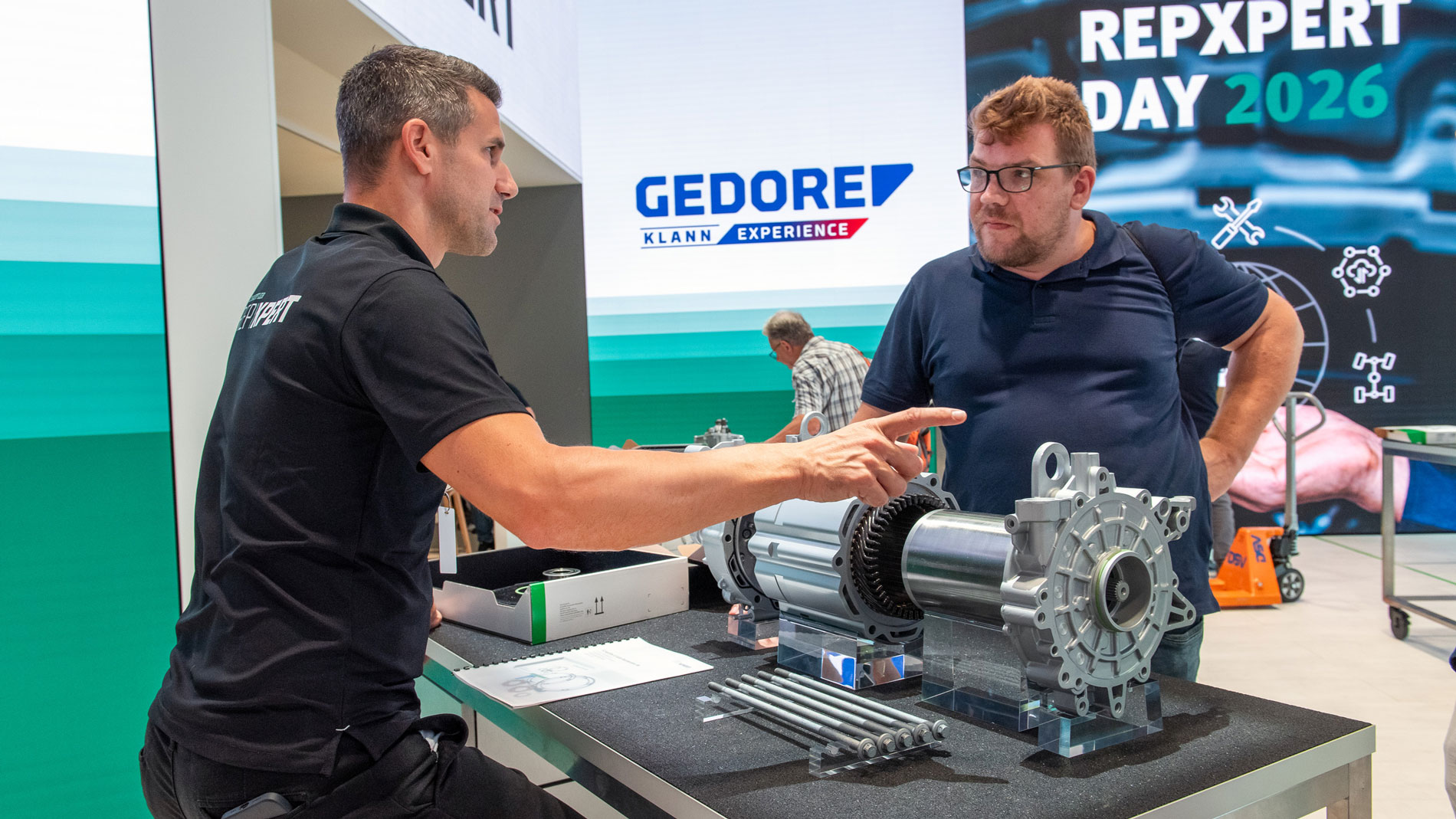
We want to reduce complexity for workshops. To do this, we combine our parts portfolio with information, diagnostic expertise, special tools and REPXPERT training. In this way, we bring together products, services and technical know-how into an integrated offering for workshops. Our solutions range from transmissions, engines and chassis systems to thermal management and electric mobility, including e-axles and battery management systems. The aim is to make new technologies understandable and repairable. Workshops should be able to carry out demanding work economically and repair components selectively instead of replacing complete systems prematurely.
Transformation is often described as a burden. How do you personally experience change – and when, in your view, would the transformation of workshops be a success?
To be honest, I often find phases without change less exciting. For me, change is simply part of the process because it always creates new opportunities as well. I would consider the transformation a success if all workshops were able to accept all repair jobs and no longer had to turn customers away. The real success lies in turning new technologies into new opportunities for the workshop business.