Reading time: 4 minutes

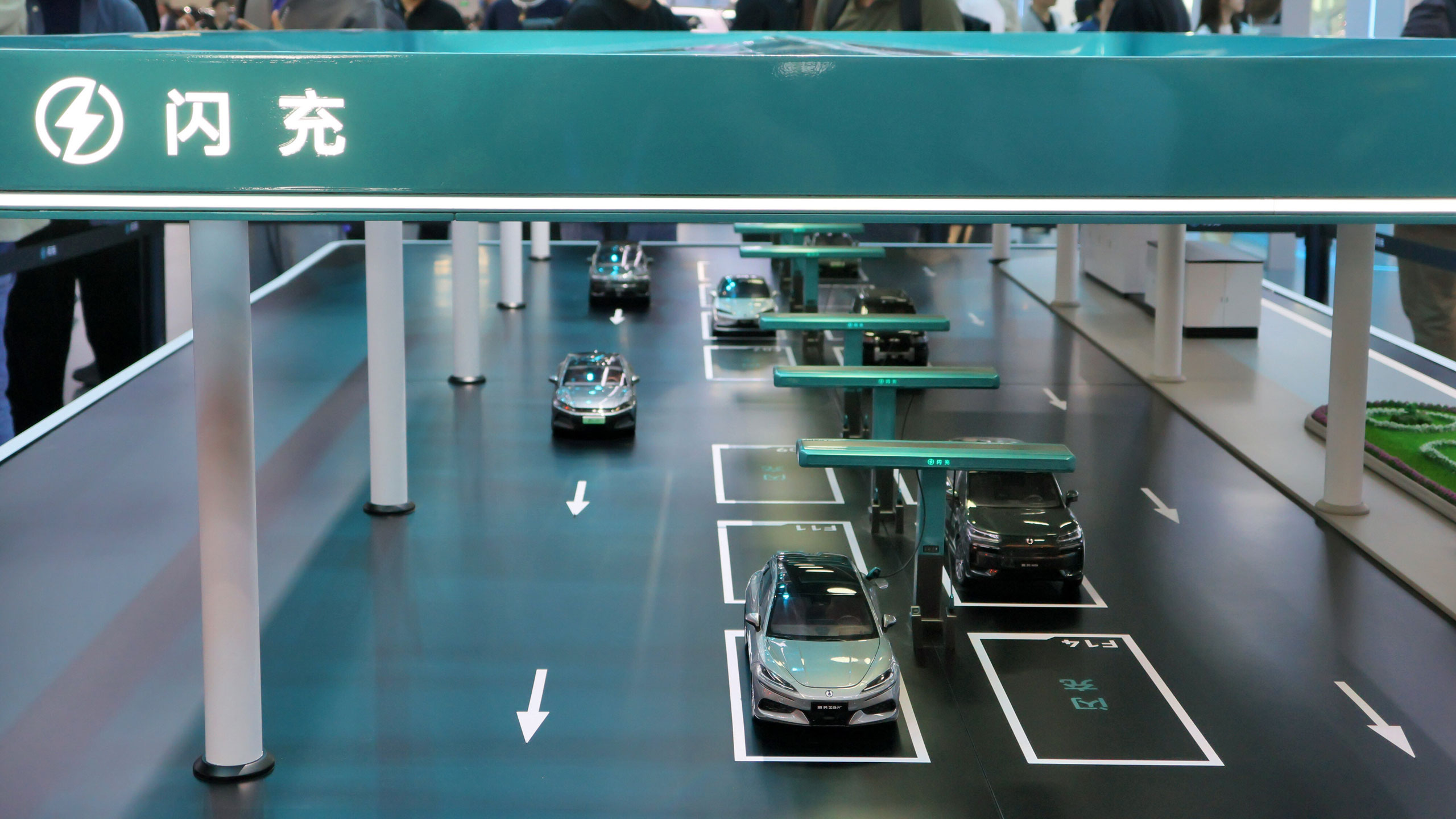
BYD reports charging capacities in the megawatt range for passenger cars. Is this a technological turning point or primarily an industrial-policy signal?
It is impressive what is being shown there technologically. It shows that such charging capacities are technically possible in principle. But I would also classify it above all as a signal and as a marketing instrument. For the mobility transition at scale, such charging capacity is not necessary in my view.
Why not? If an electric car could charge in five to ten minutes, that would surely be a strong argument for switching.
Of course, a short charging time is attractive. But one has to ask where the actual bottleneck lies. In the passenger-car sector, I do not see it primarily in maximum charging capacity. In the CCS area, up to 500 amps are possible today, which means around 400 kilowatts for 800-volt vehicles. Many vehicles currently on the market do not reach this capacity at all, or only for a short time. The greater bottleneck lies in the grid connection and in economic viability.
So battery, power electronics, cables and cooling would be technically manageable?
Yes, these technical issues can in principle be brought under control with today’s solutions. But that costs money, both on the vehicle side and on the infrastructure side. The higher the charging capacity, the more complex the components become. The decisive question is therefore not only what is physically possible, but whether it makes sense and is affordable for the specific use case.
Where do the biggest problems lie with the grid connection?
The time constants in grid expansion are very long. Grid operators have to plan over many years. I recently had a conversation with Netze BW. There, the assumption is that grid capacities in the distribution grid will have to roughly double within the next ten years. That is an enormous challenge.
China is faster in industrialisation and rollout, Europe strong in research and standards. Does this comparison hold?
It is not entirely wrong, but of course it is strongly simplified. For domestic industry, it will be challenging to keep up permanently because in many areas we are more sluggish and have different starting conditions. We have an existing grid, dense development and many regulatory processes. At the same time, there are many technologically innovative manufacturers and research institutions in Europe.
Is Germany’s nationwide fast-charging network sufficient for the next development stage with 800-volt passenger cars and high HPC capacities?
For the passenger-car sector, I would say: yes. 800-volt vehicles can be well served with today’s and planned HPC infrastructure. The broad mass of vehicles tends to be at charging capacities of 100 to 150 kilowatts, in some cases above that. Megawatt charging is not the decisive point for passenger cars in my view.
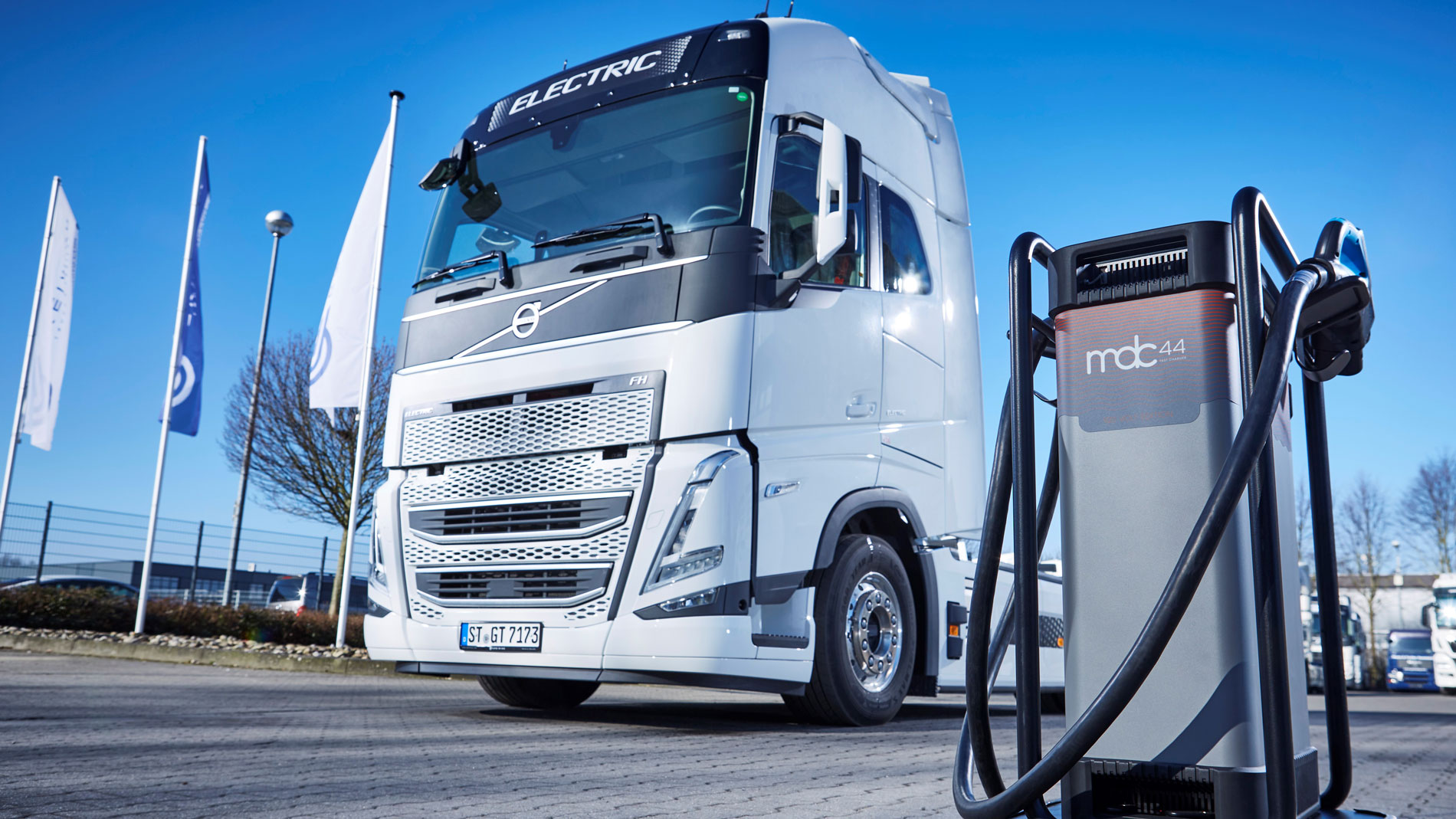
But things are different for e-trucks?
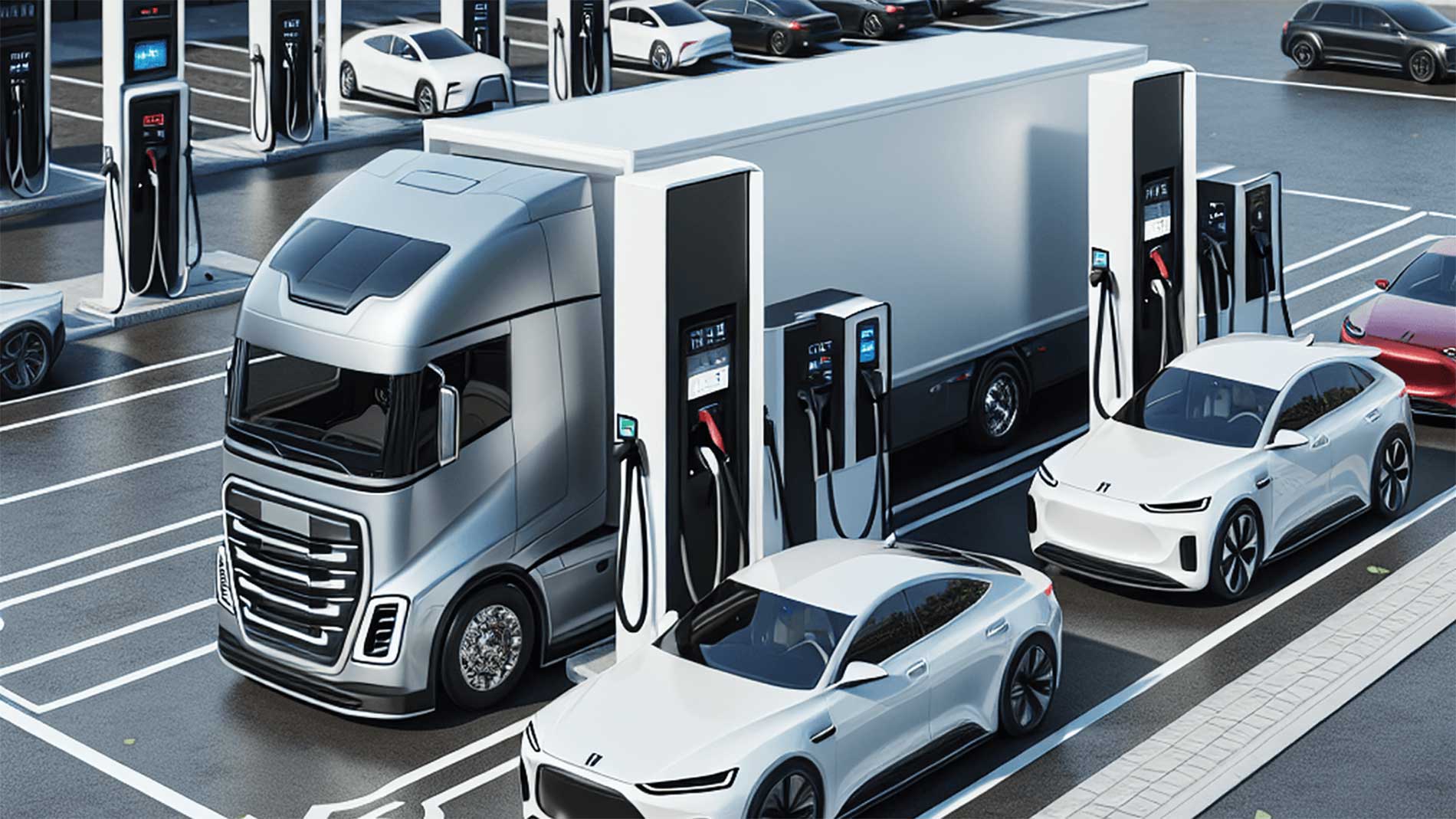
Exactly. In the e-truck sector, there are many applications that can still be covered with CCS. At present, many e-trucks are even being ordered with CCS because that is sufficient for regional and plannable operations. For long-distance transport, it is different. If a truck pauses after several hours of driving and is to recharge enough energy for the next leg during that time, significantly higher capacities are needed.
Does heavy transport need its own charging parks?
In many cases, yes. The requirements are different: larger vehicles, different dwell times, different amounts of energy and different site logics. For long-haul trucks, charging infrastructure is needed along the main axes, at logistics sites and at suitable rest areas. This infrastructure is still being built.
Fraunhofer ISE is working on resilient fast-charging parks in the ReNew project. What does resilience mean in this context?
We are primarily addressing continued operation in the event of a grid outage and the supply of critical vehicles. Through DC coupling, a charging park can continue operating to a limited extent as long as battery storage is available or photovoltaics are supplying electricity. In the event of a disaster, for example, emergency vehicles could continue to be charged on a quota basis. If one thinks of this across the board, it can significantly increase resilience.
You also speak of grid supportiveness. What does that mean in concrete terms?
Large charging parks reach capacities comparable to those of small towns. On motorways, we are looking perspectively at 20 megawatts. Such systems cannot simply be loads that draw energy as required. They have to participate in grid stability. We are therefore investigating, among other things, grid-forming power electronics.
What advantages does a DC grid in the charging park have over today’s AC structures?
One advantage is the reduction of 50-hertz transformers. Transformers are material-intensive and have no-load losses because they are constantly in operation. A DC system can be more efficient here. In addition, the cable effort is significantly reduced. If a 1-megawatt charging point is connected over 100 metres in the conventional way with a 400-volt three-phase system, very large quantities of cable are needed. At 5 kilovolts DC, the cable weight of the connection lines to the charging point would be reduced to under 20 per cent. That reduces material, costs, losses and installation effort.
Are there also economic advantages in scaling?
Yes. A DC-coupled system can better decouple charging capacity and grid connection capacity. Not every subsystem has to be designed as if all charging points were always being used simultaneously at full capacity. In the literature, one finds rough approaches in which the grid connection amounts to about 60 per cent of the installed charging capacity.

What role do photovoltaics and battery storage systems play?
Photovoltaics are very interesting at long-distance transport sites because the electricity generation costs are significantly below what users pay at the charging station. That is why many operators are securing land along motorways. Battery storage systems are particularly exciting because they can fulfil several tasks: shifting generation and consumption over time, reducing load peaks, optimising grid charges and providing flexibility.
Can a resilient fast-charging park be operated on a purely private-sector basis?
With the current state of technology, a charging park can certainly be attractive for the private sector. For new technologies such as the ReNew concept, however, pilot applications and demonstrations are needed first. In addition, regulation, grid charges and flexibility remuneration must be designed in such a way that investors have planning certainty.
What would Germany have to decide now so that fast-charging parks become grid-compatible and crisis-resistant by 2030?
The most important point is grid expansion. It takes time, which is why prioritisation and regulation must be adapted so that important sites can be realised more quickly. In addition, charging parks should already be thought of today as long-term infrastructure. They will be operated for 10, 15 or 20 years. Over this period, grid-forming systems and flexibility will become significantly more important. Standardisation for DC systems is also necessary so that operators do not become dependent on proprietary solutions from individual manufacturers.