E-trucks are moving beyond the trial phase in logistics. At the medium-sized company Metzger, it becomes clear what already works today and why manufacturers such as Volvo Trucks and MAN have to think beyond simply selling vehicles, taking energy, charging and planning issues into account as well.
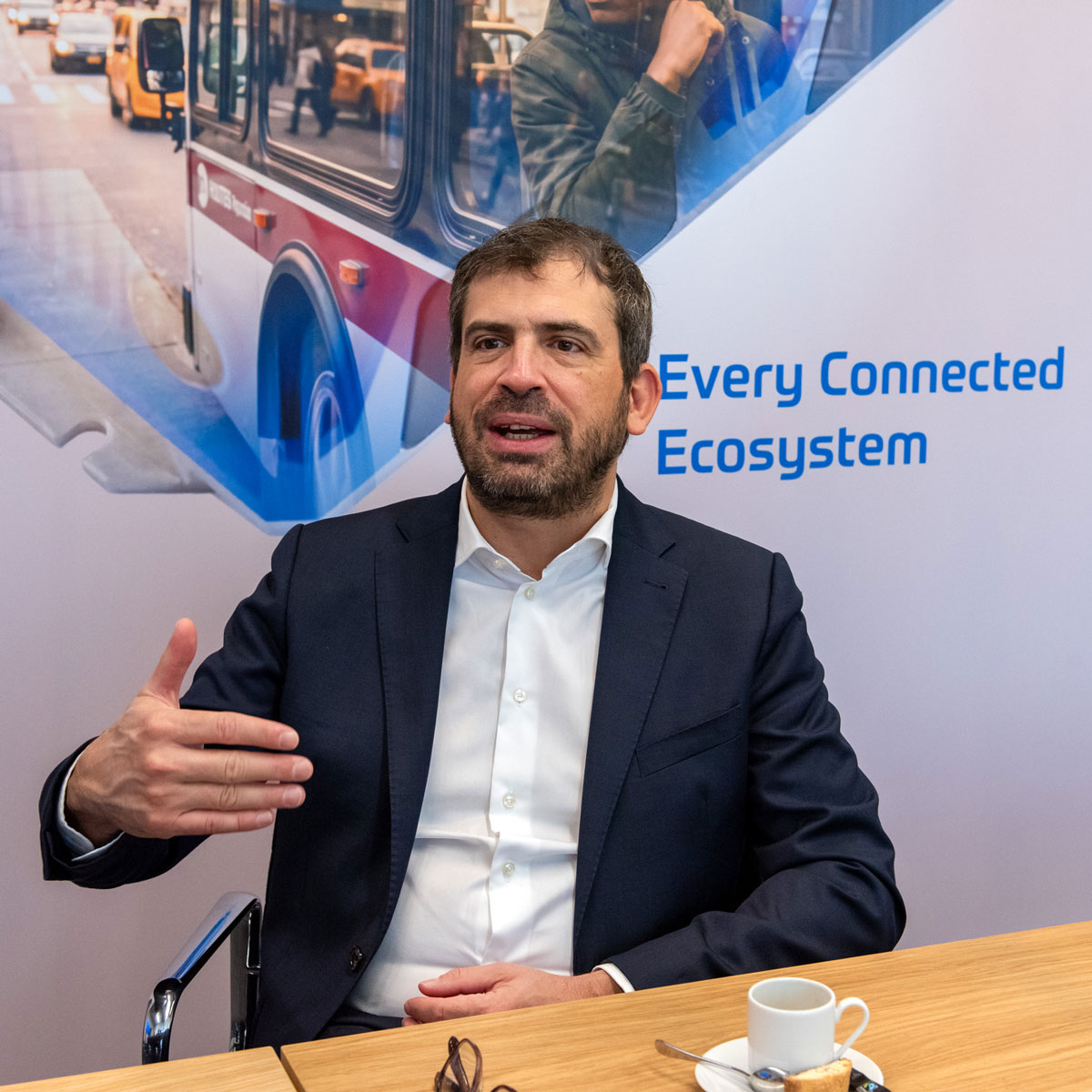
At the Metzger haulage company in Baden-Württemberg, the electric truck is no longer an exotic trade fair vehicle. It is part of the fleet, charges at the loading bay and runs fixed routes. Johannes Metzger is the third generation to run the family business. “I have now been working in my parents’ company for ten years,” he says in conversation with GATEWAY, “I am the third generation now holding the steering wheel.”
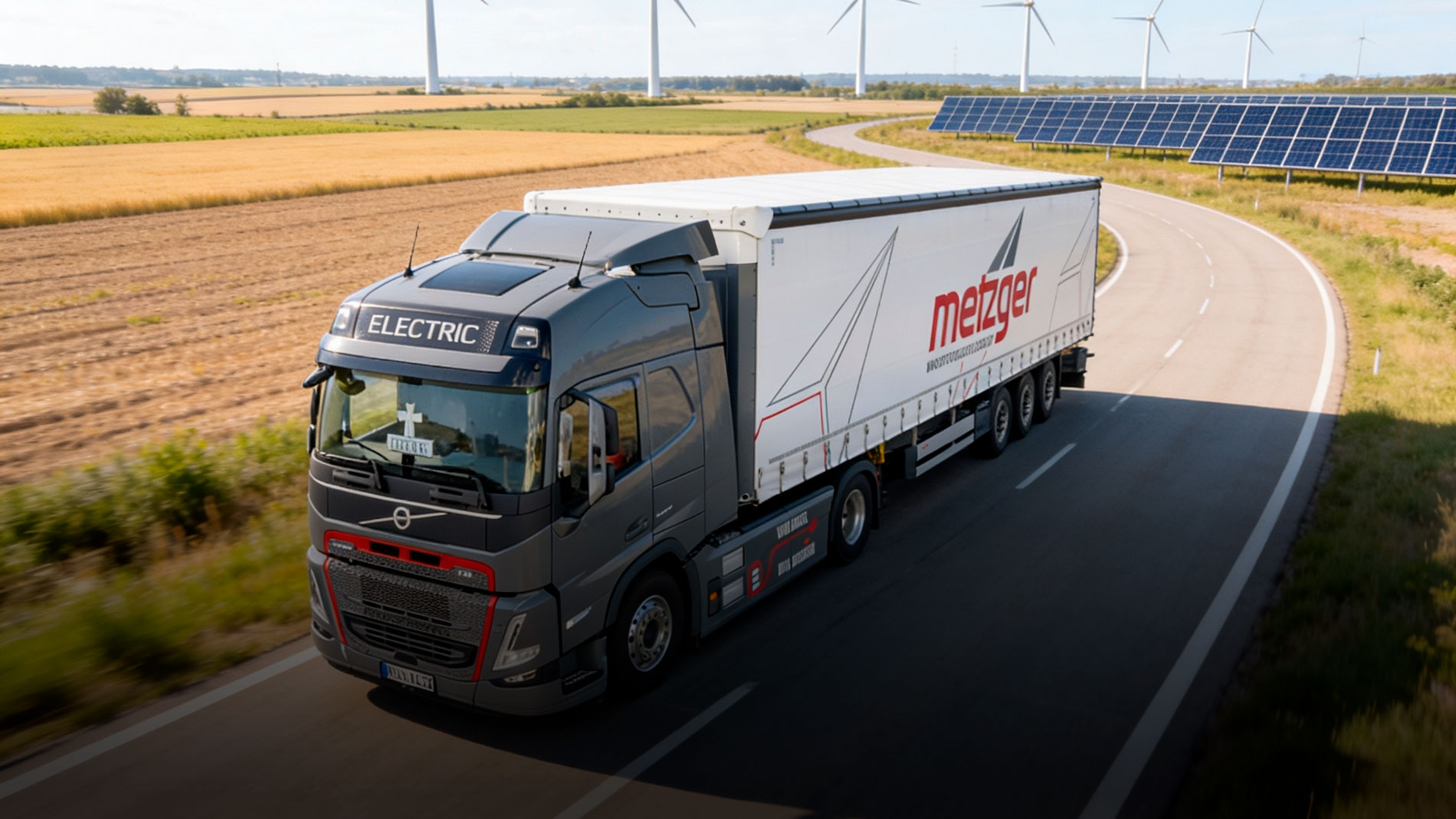
Metzger now has five electric trucks in operation, within a fleet of 25 to 30 vehicles. It began almost exactly five years ago: “The first one joined the fleet on 10 June 2021 with its initial registration, a twelve-tonner.” With its own charging infrastructure, the trial became part of everyday operations: “With the charging infrastructure, we moved into regular operation.”
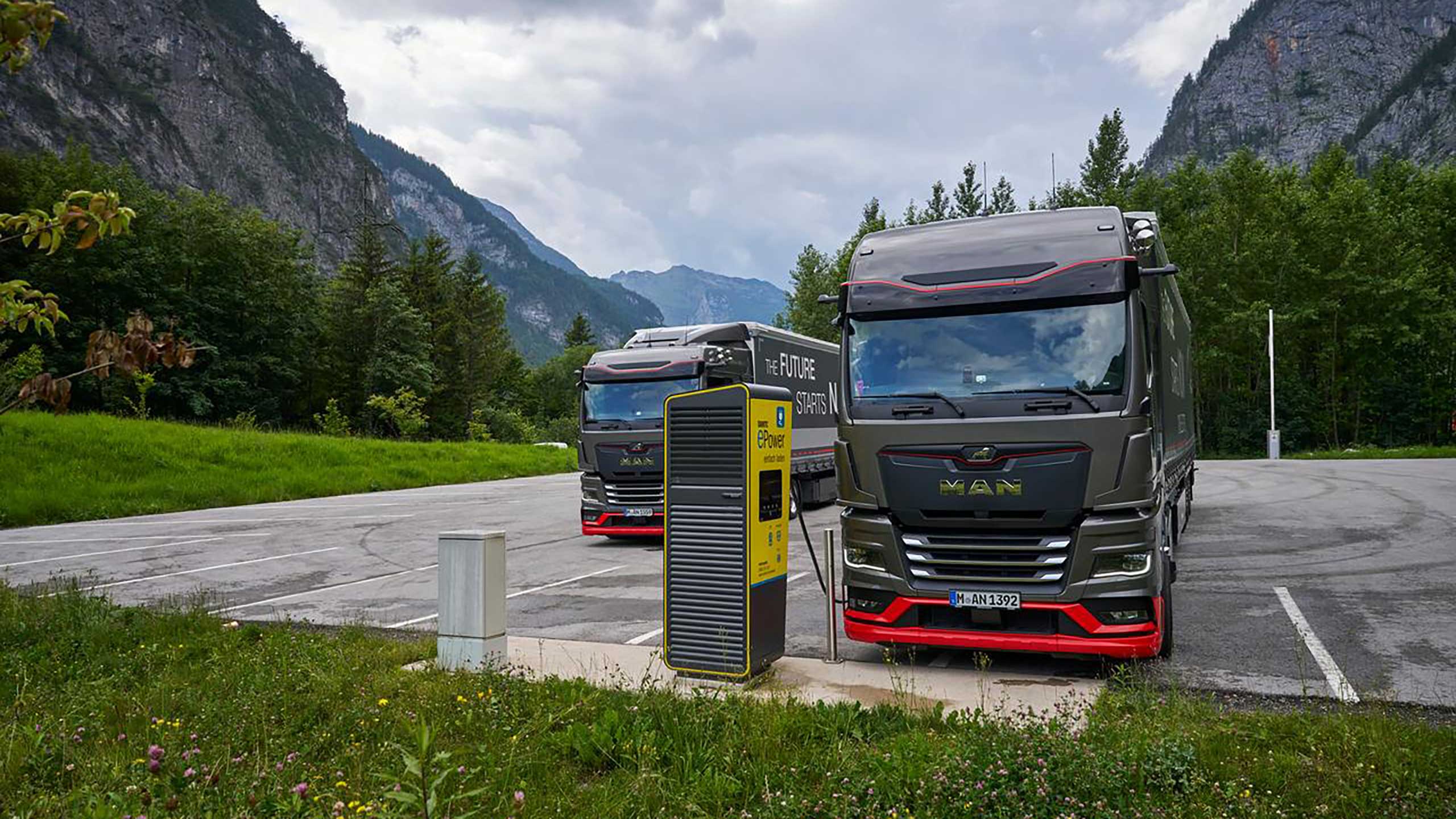
Today, Metzger does not operate just one brand. “We have electric Volvos, we have electric MANs and also Daimler trucks,” he says. “We have the largest manufacturers there, and we maintain a very good relationship with all of them.” The decision is less ideological than operational: “You simply have to find the right vehicle for your use.”
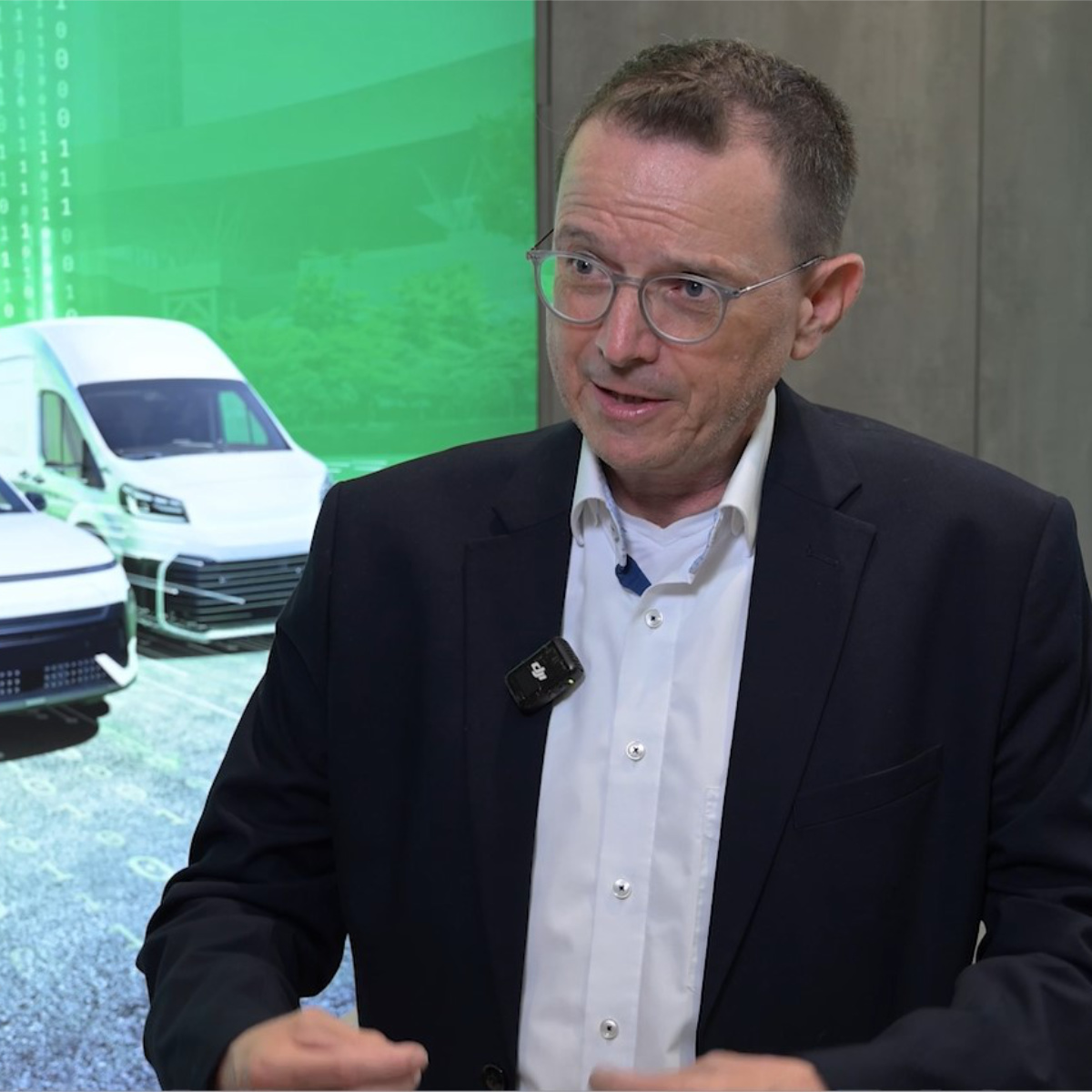
The market itself is still small. According to ACEA figures, electrically chargeable trucks over 3.5 tonnes accounted for only 4.2 per cent of new registrations in the EU in 2025. But the technical debate has shifted. Volvo Trucks speaks of a range of up to 700 kilometres for the FH Aero Electric. Benjamin Schiebler of Volvo Trucks translates this figure into practice: “In daily operation, haulage companies deliberately plan with reserves, for example for traffic or changing weather conditions. In practice, this means that routes of around 600 kilometres can be carried out reliably and predictably without public charging en route.”
“In the best case, the sun is shining and the truck is charging.”
From truck to an overall system
Photo: Bim
The decisive factor is no longer just battery size. “For us, it is remarkable that, as a truck manufacturer, we are now being asked about charging infrastructure,” says Schiebler. “Naturally, no one asks us about the number or location of diesel filling stations.” This, he says, shows how fundamentally the industry is changing: “Today, we no longer just deliver the truck. We talk just as much about depot charging, public charging points, energy supply, battery storage and route optimisation. Electromobility really is an overall system.”
At MAN, the message is similar. “In the past, we had only a single product,” says Dennis Affeld, Managing Director of MAN Truck & Bus Germany. “Now we have the full range of models - from light distribution transport, through the electric TGM, to construction-site transport with the electric TGS and long-distance transport with the eTGX.”
Sales are changing too. “When you sell a diesel truck, it is primarily a vehicle business,” says Schiebler. “Selling an electric truck, by contrast, is more like a project business that goes far beyond the vehicle itself.” With an e-truck, he says, it is “indeed moving towards an overall system.“
According to Mr Schiebler, there are also major differences in the approach to procuring e-trucks: some initially focus on the purchase price of the vehicle, which can sometimes have a deterrent effect. Others, however, set the vehicle acquisition costs against the lower operating costs compared with diesel, which can suddenly make the e-truck economically attractive and even cheaper in the long term. And for some haulage companies, such as Metzger, topics such as energy autonomy, photovoltaics, battery storage and dynamic electricity tariffs play an immense role.
Metzger raised this question early on. “As logistics companies, we have very large properties with a great deal of roof space, which we have long since equipped with photovoltaics,” he says. The idea was “not only to sell this generated energy, but to actively use it ourselves”. The ideal case sounds simple: “In the best case, the sun is shining and the truck is charging.” But everyday operations do not fit together quite so neatly: “We don’t quite manage that, because most of the time, when the sun is shining, the truck is on the road.”
“The more toll kilometres, the greater the saving. The more kilometres I drive, the more I save on electricity versus diesel.”
The matter of the loading bay
At the depot, charging is therefore integrated into the operational flow. “Our charging stations are arranged in such a way that they are installed directly at the loading bays, so that the truck can take on electricity during the loading and unloading process,” says Metzger. Four stations with 350 to 400 kilowatts are located there. If a vehicle is being loaded or unloaded for an hour, it can recharge significantly during that time.
This turns route planning into an energy calculation. “Everything that can be driven on a plannable round, with recurring factory transport and ideally in three-shift operation, is the most attractive case,” says Metzger. It becomes particularly good when intermediate charging can take place at the company’s own depot: “Today, compared with diesel, we are not only competitive, we even have a cost advantage.”
Photo: Bim
In Germany, the exemption from road tolls is the second major lever. Zero-emission heavy commercial vehicles will remain exempt from tolls in Germany until 30 June 2031. At MAN, Dennis Affeld says: “The more toll kilometres, the greater the saving. The more kilometres I drive, the more I save on electricity versus diesel.”
Volvo Trucks sees the toll not only in terms of money, but also in terms of trust. “That carries significant weight,” says Schiebler. “It has both a monetary and a psychological aspect.” Planning certainty is decisive: “If the haulage company knows, ‘I am on the safe side for the next few years’, then it works.”
Not everything needs megawatts
When it comes to charging, the major term “Megawatt Charging System” (MCS) quickly comes up. Schiebler considers the debate important, but in some respects overheated. “MCS will make some routes easier or make them possible in the first place. But we should not create the impression that electromobility only works with MCS. Our customers are already successfully using electric trucks in everyday operations with significantly lower charging capacities. The decisive factor is not the technically possible charging capacity, but the capacity that is necessary to reach the next charging point, ideally at the next depot.”
MAN draws the line where the statutory rest period becomes the charging window: “The current CCS standard, the ‘Combined Charging System’, is entirely sufficient for all those who have enough time and can charge at the depot or at the destination. But if, in long-distance transport, I want to fully charge the vehicle during the driver’s 45-minute rest period, then CCS is not enough; then I need MCS.” It is not merely a promise for the future: “It is very concretely here, it can be ordered, but the infrastructure is still missing.”
In any case, infrastructure is more than hardware. Metzger took part in a pilot project for a reservation system for charging slots. “For us, it is extremely important, when we charge externally or at a partner’s site, that we have a free charging slot.” In future, dispatch should not have to manually piece together every charging stop. “We are at the very beginning of the beginning,” says Metzger. His wish is “that vehicle dispatch and also refuelling stops are integrated and linked in such a way that this can be generated automatically.”
They do want to drive them after all
Photo: Volvo Trucks
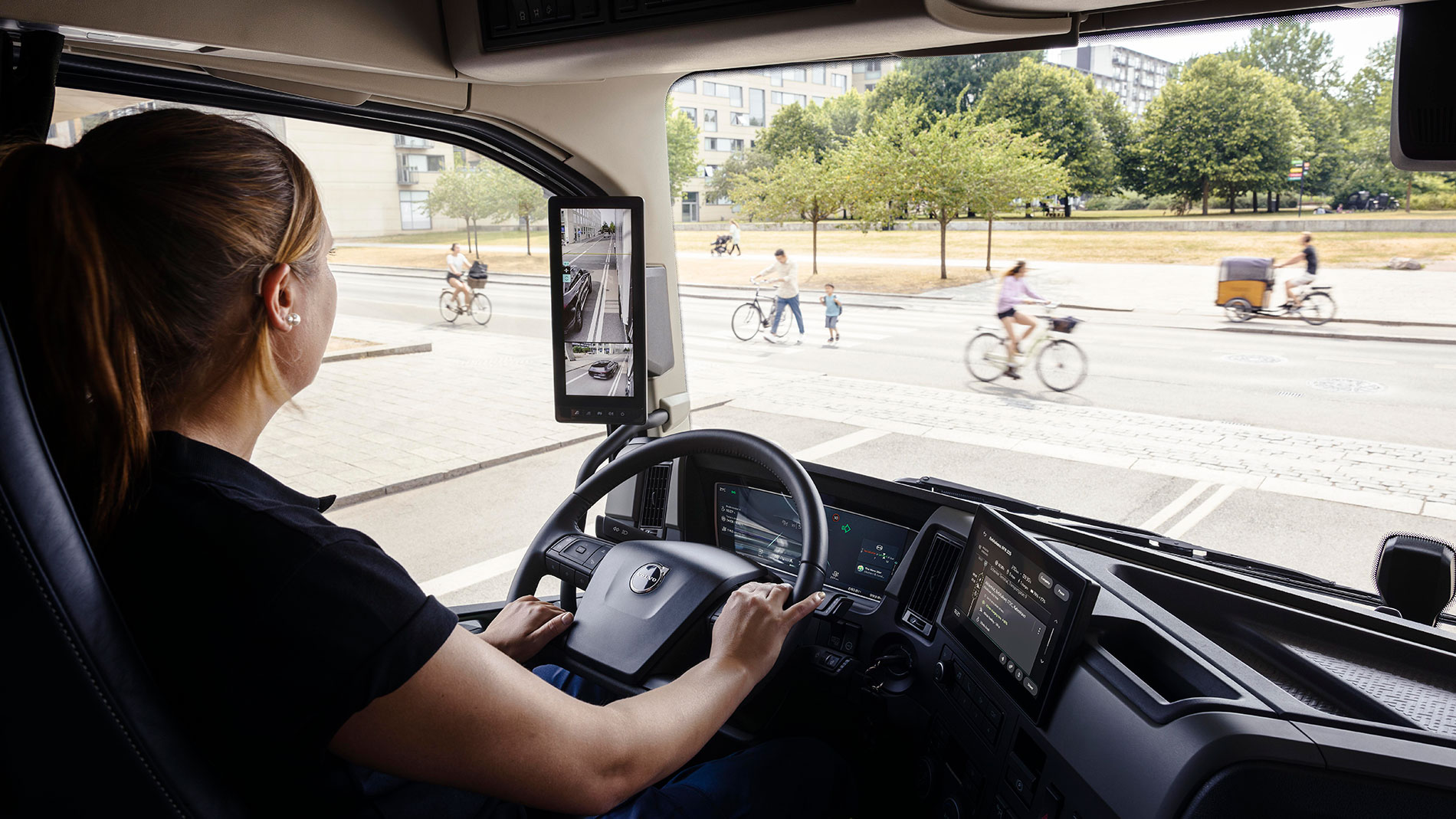
Among drivers, too, something has shifted. “With the first vehicle five years ago, the mood was: I’m not driving something like that,” says Metzger. “That has changed completely.” Today, the driving feel, comfort, torque and noise level are convincing. Uncertainty is more likely to arise around charging: “Today, we still have a patchwork of different charging options, charging speeds and billing systems.”
Dennis Affeld at MAN observes the same effect: “At first, drivers do not want to get in at all. But once they are sitting inside, they do not want to get out.” For Volvo Trucks, this is the point at which scepticism turns into everyday reality. “As soon as the first routes have been driven, the initial scepticism almost always gives way to enthusiasm about the truck’s relaxed driving behaviour,” says Schiebler.
In everyday operations, however, it is not quite that simple. Electric tractor units are heavier, batteries cost payload, and not every axle-load regulation is yet suited to the new drive system. Metzger states the limitation openly: “It has not yet been resolved in such a way that the vehicles can take over the performance of a diesel vehicle one-to-one within the permitted limits.” In fully loaded transport operations, this can mean losing cargo or investing in lighter trailers.
For manufacturers, early medium-sized adopters are valuable precisely because they reveal such things. At MAN, Affeld says of customers like Metzger: “We receive feedback from practice.” Such customers benefit themselves because they gain experience earlier. “And such lighthouse customers then also convince other medium-sized customers.”
Schiebler calls such companies “local heroes”: regardless of how large or small the companies are, their pioneering work has a radiating effect within the industry.
“Sustainability is the reason why people talk about e-trucks. But part of the hard reality is this: if it appears unaffordable for the haulage company, then the topic comes to an end again.”
The future, therefore, does not mean electrification overnight. It means mixed operation, photovoltaics, rapid-charging points, HVO100, bio-LNG or hydrogen for remaining combustion vehicles, gathering experience and electrifying suitable routes. “Sustainability is the reason why people talk about e-trucks,” says Schiebler. “But part of the hard reality is this: if it appears unaffordable for the haulage company, then the topic comes to an end again.” At Metzger, the solution sounds sober: “Now it is about the operating model.” It is precisely there that it will be decided whether the e-truck in logistics merely drives — or also pays off.
Text: Michael Hopp
Head of Content at the Gateway editorial team and an absolute pioneer in recognising automotive trends