
Reading time: 4 minutes
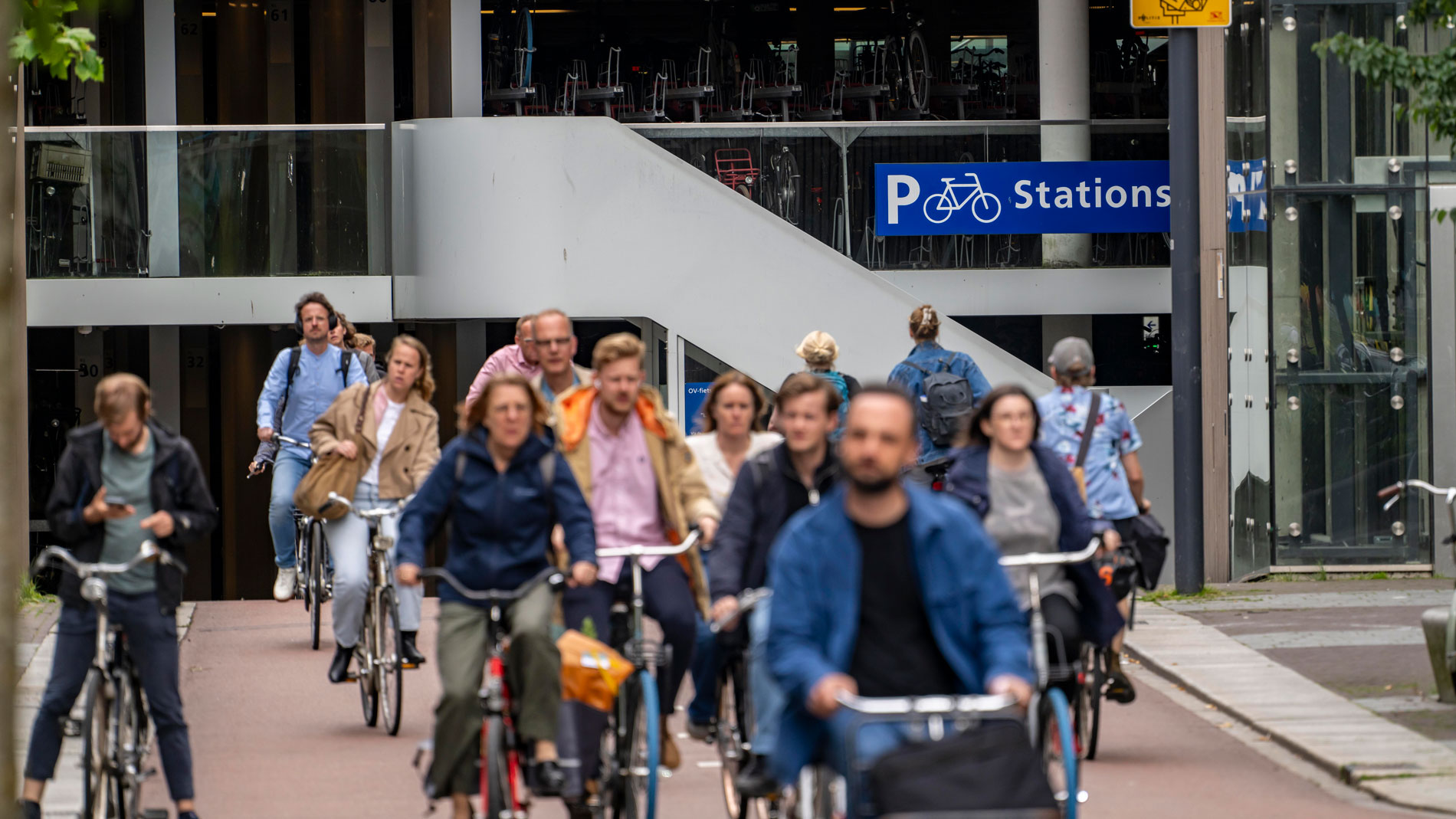
Bicycles are transforming the streetscapes of major cities worldwide. By creating dedicated cycling lanes, many cities aim to attract more cyclists into their centres. But that alone is not enough. Parking facilities, as well as their security and the services provided also play a crucial role. The Danish architect and urban planner Jan Gehl, author of „Cities for People”, never tires of emphasising: „You get what you invite in. If you invite cars, you get cars. If you invite bicycles, you get bicycles, and with them a livelier, healthier city.” Gehl is thus addressing the issue of bicycle parking facilities, a topic often neglected by many urban planners.
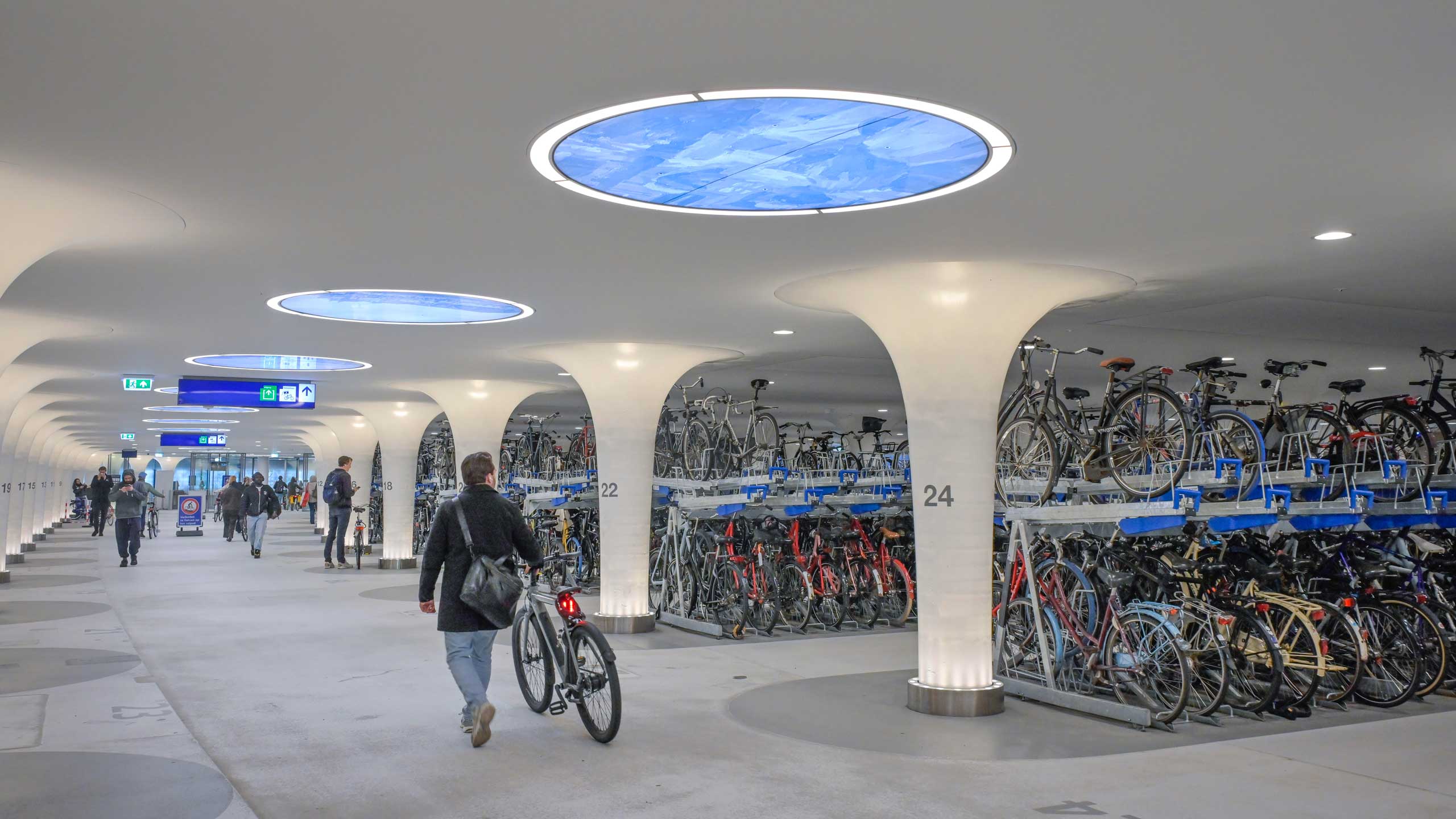
In recent years a number of examples for effective bicycle parking have been built: Utrecht in the Netherlands and Tokyo in Japan are leading the way. In the Dutch university city, more than 12,000 bicycles can be parked in the so-called „bicycle shed“, which is located beneath the train station. The three-storied mega-parking facility also has 480 spaces for cargo bikes and tandems. A cycle path runs through the 350-metre-long car park, and cyclists can directly access the platforms from the lower level to catch their respective trains. This makes it the largest bicycle facility in the world. By way of comparison, the Japanese capital is home to the second-largest bicycle park, with 9,400 spaces.
„Glimmers of hope, which only serve to highlight the dilemma faced by many major European cities”, says Karl Grünberg of the Allgemeiner Deutscher Fahrrad-Club e. V. (German Cyclists’ Association, henceforward abbreviated as ADFC) in Berlin. Where do European cities stand, and what milestones have already been reached? Karl Grünberg sees excellent prospects for the future of two-wheelers: „The combination of train and bicycle is unbeatable for commuters looking to travel in an environmentally friendly, healthy, flexible and speedy manner.“
However the reality is often quite different and not just in Germany: „Anyone arriving at a station by bike often cannot find a decent and secure parking space,” criticises the expert from the ADFC. In Germany alone there is a need for around 1.5 million additional bicycle parking spaces at stations. The figures derive from a study by the Federal Ministry of Transport. Although around 400,000 spaces have been added over the past six years, „there still is a shortfall of over a million parking spaces for bicycles,” according to Grünberg.
People are often well aware of the needs, yet implementation falls short in many areas: “What is needed are adequate long-term funding programmes from the federal government, in addition to political will at the local level to build parking facilities for bicycles”, knowingly testifies Grünberg. He has previously had experience with that. „Local authorities must apply for the funding programmes, contribute their own share and implement the projects independently.” For that to happen, a high enough number of people, with the sufficient qualifications, would need to look after cycling-related matters. Yet it is precisely in these areas that there is a shortage.
Nevertheless, the projects that have been realised are impressive: Karl Grünberg sees the German university city of Münster as a model: it is home to Germany’s largest bicycle station, with space for 3,300 bikes. Cycles can be rented on site. A repair service and a washing facility are also available. This all-round service significantly increases the appeal of commuting. There are also further bicycle parking facilities with similar services in Hanover, Kiel and Eberswalde. And in Osnabrück there is a fully automated bicycle parking facility – known as the Bike Tower. It is 16 metres high and has space for 160 bicycles, which are parked in individual boxes using a paternoster system – protected against theft and the weather.
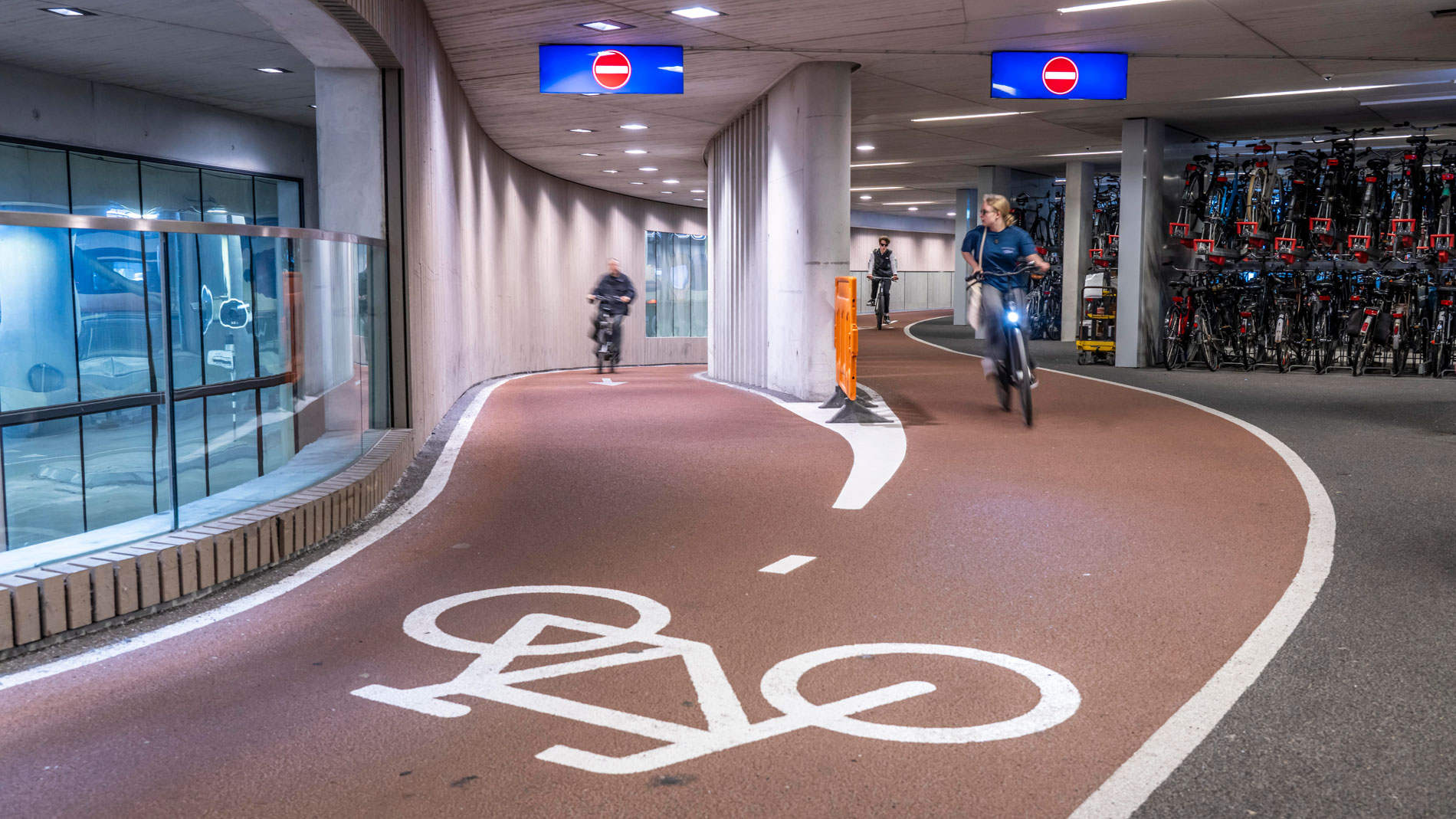
Is that enough to contribute to the mobility transition? Grünwald is sceptical: Such initiatives would need to be implemented on a large scale, supported by funding programmes––across the country and on the local level especially. The federal programme „Fahrradparken an Bahnhöfen” (Bicycle Parking at Railway Stations) runs until the end of 2027 and, at 55 million euros, is significantly underfunded. The money is only enough to fund 32 bicycle parking facilities and is largely tied to projects that have already been approved. Grünberg: „The funding programme must continue beyond 2027 and be provided with significantly higher funding secured for several years.”
Across European countries, cities are already gaining valuable experience with the first shelters for two-wheelers. What has so far proven successful everywhere is keeping costs for users as low as possible. What follows is a look at some European bicycle parking facilities and their structure:
The prime example: Utrecht, „Stationsplein“, 12,500 spaces. The client and operator are the City of Utrecht and the company ProRail. Costs: first 24 hours for free, then 1.25 euros per day. Annual subscription: 92 euros.
The design landmark: Copenhagen, „Karen Blixens Plads“. The client and operator are the University of Copenhagen and the city. Use is free of charge. Special feature: „Bicycle hills“, the 2,000 spaces are hidden beneath artificial hills, which also serve as viewing platforms.
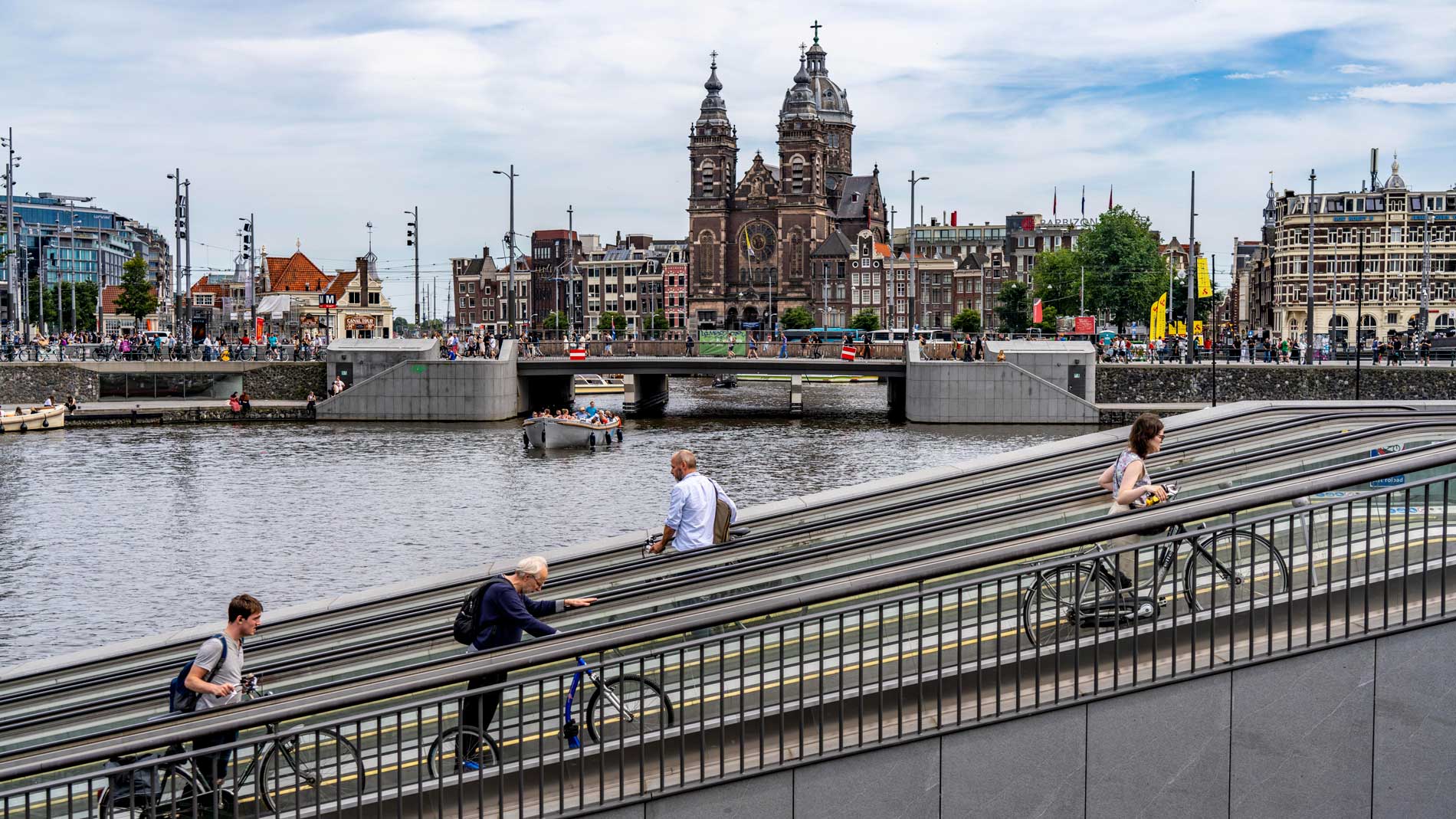
An engineering marvel: Amsterdam’s „Stationsplein“. The client and operator is the City of Amsterdam. Cost to users: The first day is free, then €1.35 per day. Unique feature: Built entirely below the water level of the harbour basin to keep the view of the historic station unobstructed.
The German „Bike Towers“: They are located in the German cities Osnabrück, Wunstorf and Bernau bei Berlin. The clients and operators are the respective local authorities, who collaborate closely with the local transport companies. Cost to users: Around €1 per day. Monthly subscription: €15. Special feature: A robot stores the bikes in a tower. Maximum theft protection in the smallest of spaces.
The „Fietsstalling MuseumEiland“ bicycle park in Groningen. The client and operator is the City of Groningen. Cost: free for short-term parkers. Special feature: focus on aesthetics and integration into the neighbourhood, combined with repair services.
In his book „Cities for People”, urban planner Jan Gehl describes bicycle parking facilities as part of a people-oriented infrastructure. And he goes one step further: this infrastructure must never be viewed in isolation. In Jan Gehl’s view, the urban planning sequence must always be as follows: „First life, then spaces, then buildings, the other way around never works.“ The focus must always be on usage, people’s everyday life, and their mobility.