Reading time: 4 minutes
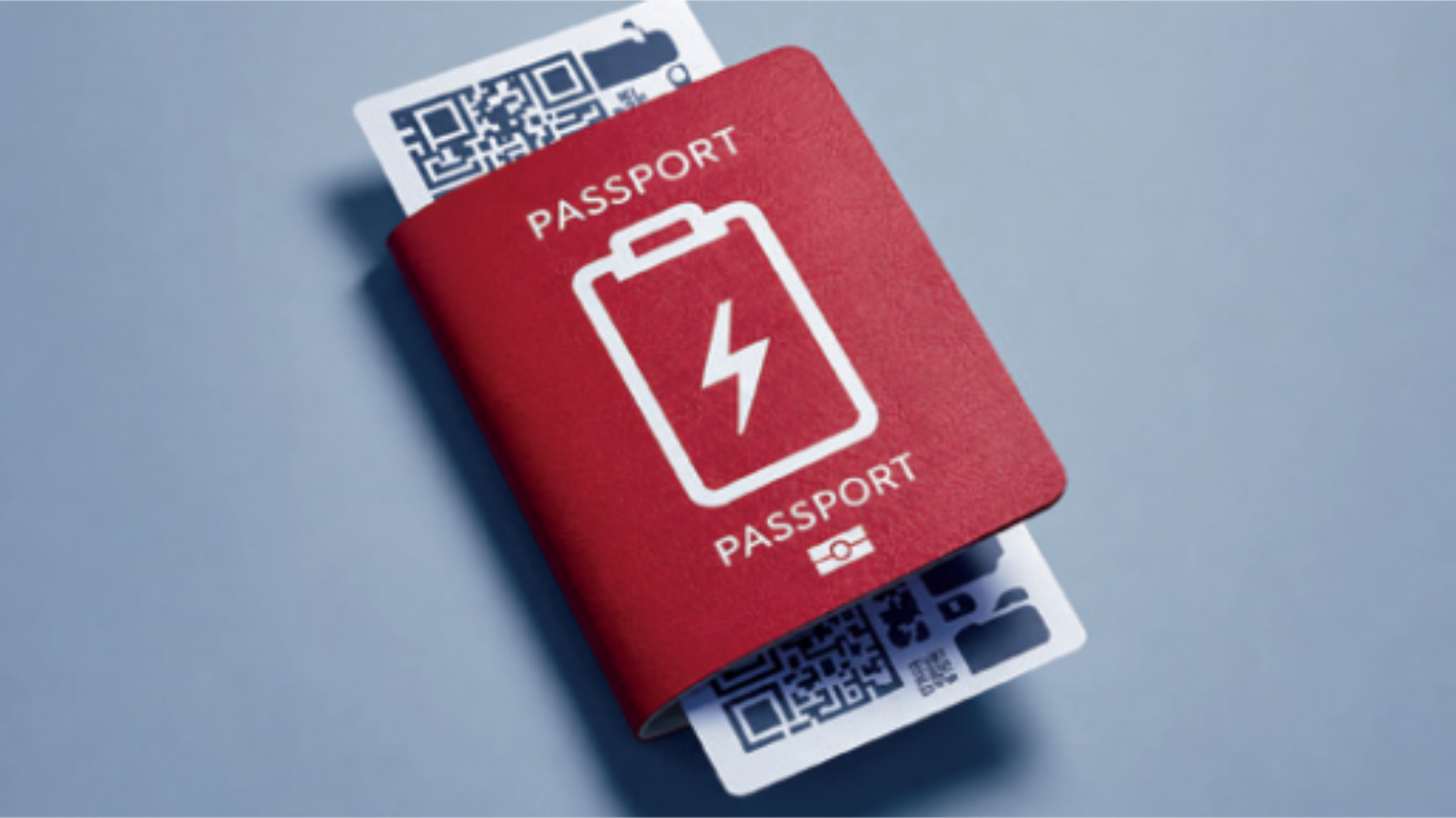
Accessible via a QR code, this passport will provide authorised users with detailed information covering the battery's entire lifecycle—from its origin and carbon footprint to its technical specifications, repair history and State of Health (SoH). For independent workshops and dealer service centres alike, this is far more than another regulatory requirement. It represents a fundamental shift in how EV batteries are documented, serviced and valued throughout their operational life.
A Regulation That Applies Across the EU
Unlike many European legislative initiatives, the Battery Passport is based on EU Regulation 2023/1542, meaning it applies directly in all Member States without requiring national implementation.
The timetable is already underway:
- 18 February 2024: Regulation entered into force.
- 18 August 2025: The new regulation fully replaced the former Battery Directive (2006/66/EC).
- 18 February 2027: The Digital Battery Passport becomes mandatory for traction batteries exceeding 2 kWh.
The regulation goes far beyond environmental compliance. Its objective is to improve transparency throughout the battery value chain by documenting sustainability, carbon footprint, material sourcing, repairability and end-of-life management.
Requirements Are Already Being Introduced
Although the Battery Passport itself will not become mandatory until 2027, several provisions are already taking effect. Since February 2025, manufacturers have been required to declare the carbon footprint of EV batteries placed on the European market.
From August 2026 onwards, battery labels must also include standardised information such as:
- battery chemistry,
- rated capacity,
- expected cycle life,
- and minimum recycled material content.
For workshops, these changes represent the first step towards greater transparency. Technicians will increasingly encounter batteries carrying harmonised technical information that can be identified without specialised diagnostic equipment, simplifying vehicle identification and service planning.
Around 80 Data Fields Throughout the Battery's Life
The Digital Battery Passport is far more comprehensive than a conventional product label. It consists of approximately 80 structured data fields, grouped into several categories covering the battery's entire lifecycle.
Among the information stored are:
- battery identification and serial number,
- manufacturer details,
- production date,
- battery chemistry,
- carbon footprint,
- origin of raw materials,
- supply-chain information,
- recycled material content,
- nominal capacity,
- internal resistance,
- guaranteed cycle life,
- operating temperature range.
However, one parameter is expected to become particularly valuable for the aftermarket: State of Health (SoH)
Unlike static manufacturing data, the State of Health is continuously updated throughout the battery's service life. It indicates the battery's remaining usable capacity compared with its original specification and is increasingly becoming the most important indicator of an electric vehicle's residual value. As the used EV market continues to mature, SoH is expected to play a role comparable to vehicle mileage in conventional combustion-engine vehicles.
Repair History Becomes Fully Transparent

Another major innovation introduced by the Battery Passport is the inclusion of comprehensive repair and maintenance records.
The passport will document:
- dismantling procedures,
- repair instructions,
- battery replacements,
- module exchanges,
- maintenance history,
- official servicing procedures.
For independent workshops, this represents a significant improvement. Until now, many repairers have had to work on high-voltage batteries with limited access to manufacturer documentation. From 2027 onwards, the Battery Passport is intended to provide authorised repairers with standardised technical information covering the complete service history of every battery—provided they meet the required access conditions.
Two Levels of Data Access
One of the key features of the Digital Battery Passport is its two-tier access model. Not all battery data will be available to everyone. Basic information—including battery identification, manufacturer details, chemistry, carbon footprint and performance classification—will be publicly accessible via the QR code attached to the battery. In most cases, a standard smartphone will be sufficient to retrieve this information. More sensitive technical data, however, will only be available to authorised users.
These protected data sets include:
- real-time State of Health (SoH),
- Battery Management System (BMS) information,
- detailed dismantling and repair instructions,
- complete maintenance and service history,
- and other manufacturer-specific technical records.
Access to these data will require secure authentication through approved digital platforms.
Independent Repairers Will Have a Legal Right to Access Battery Data
Perhaps the most significant aspect of the new regulation is its impact on competition within the automotive aftermarket. For the first time, the legislation explicitly recognises the right of independent repairers to access technical battery information. This provision is intended to ensure that critical service and repair data are not reserved exclusively for vehicle manufacturers and authorised dealer networks. Exactly how this access will work in practice is still being defined.
Before February 2027, the European Commission is expected to establish:
- the digital platforms through which data will be accessed,
- authentication procedures,
- accreditation requirements,
- and the different access levels for authorised users.
For independent workshops, however, the direction is already clear: The legal right to access battery information has been established. The technical infrastructure is now being developed.
Every Battery Replacement Will Generate a New Battery Passport
One provision of the regulation has received relatively little attention but could have a major impact on workshop operations.
Whenever a high-voltage battery is:
- replaced,
- remanufactured,
- repurposed for a second-life application,
- or substantially rebuilt,
a new Digital Battery Passport must be created.
This new passport will remain linked to the original record, creating a complete and traceable digital history throughout the battery's lifetime. For workshops, this means that replacing a battery will no longer be the final step in the repair process. The intervention itself will become part of the battery's permanent digital record, contributing to a transparent service history that follows the battery for the rest of its operational life. In effect, the Battery Passport becomes a digital identity for every EV battery.
Diagnostic Equipment Will Play a Central Role
The introduction of the Battery Passport will also increase the importance of workshop diagnostic equipment.
Future diagnostic systems will need to do far more than simply read fault codes.
They will increasingly be expected to:
- retrieve battery health data,
- verify the State of Health,
- access official repair procedures,
- document maintenance activities,
- and communicate securely with certified Battery Passport platforms.
Regular software updates and online connectivity are therefore likely to become essential requirements. Workshops that invest early in compatible diagnostic solutions will be well positioned as the regulation comes into force.
A New Era for the Automotive Aftermarket
The Battery Passport is much more than another compliance requirement. It represents a fundamental shift in how electric vehicle batteries are managed throughout their entire lifecycle. Manufacturers, workshops, used vehicle dealers, leasing companies, fleet operators and recyclers will all benefit from access to harmonised, standardised battery information.
Greater transparency will support:
- more accurate vehicle valuations,
- increased confidence in the used EV market,
- more efficient repair processes,
- improved battery recycling,
- and the development of second-life battery applications.
Ultimately, the Battery Passport is expected to become one of the key building blocks of Europe's circular battery economy.
Conclusion
The Digital Battery Passport introduces an entirely new level of transparency to electric vehicle battery management. For workshops, it marks the beginning of a new service environment in which digital documentation becomes just as important as technical expertise. Battery diagnostics, repair procedures and maintenance records will no longer exist in isolation. Instead, every intervention will contribute to a continuously updated digital history accompanying the battery throughout its lifetime. From February 2027 onwards, the Battery Passport is set to become as integral to workshop operations as service records and diagnostic reports are today. For businesses that prepare early—by investing in compatible diagnostic equipment, digital workflows and staff training—it also represents a significant opportunity to strengthen their position in the rapidly evolving EV aftermarket.