
Reading time: 5 minutes
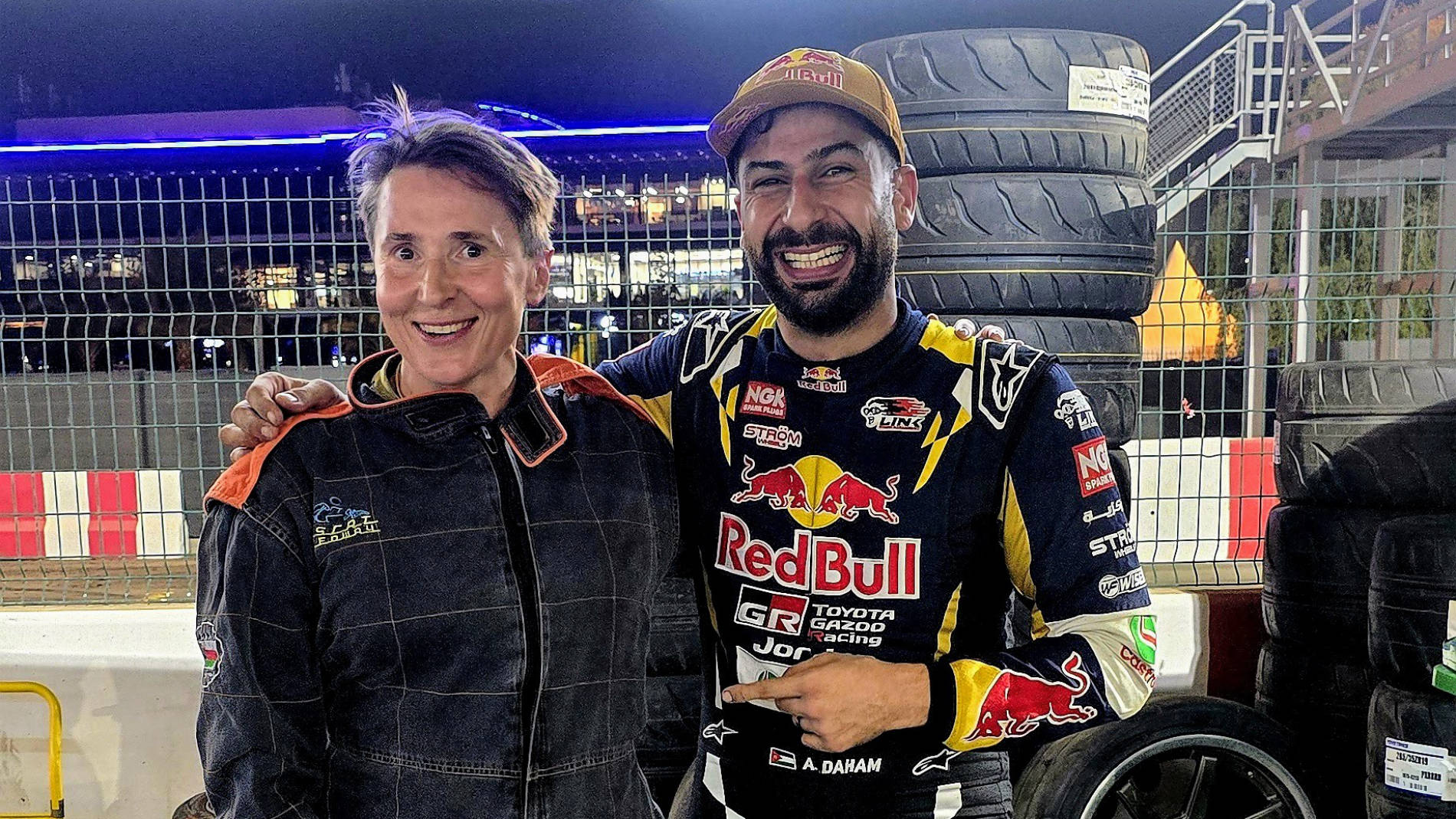
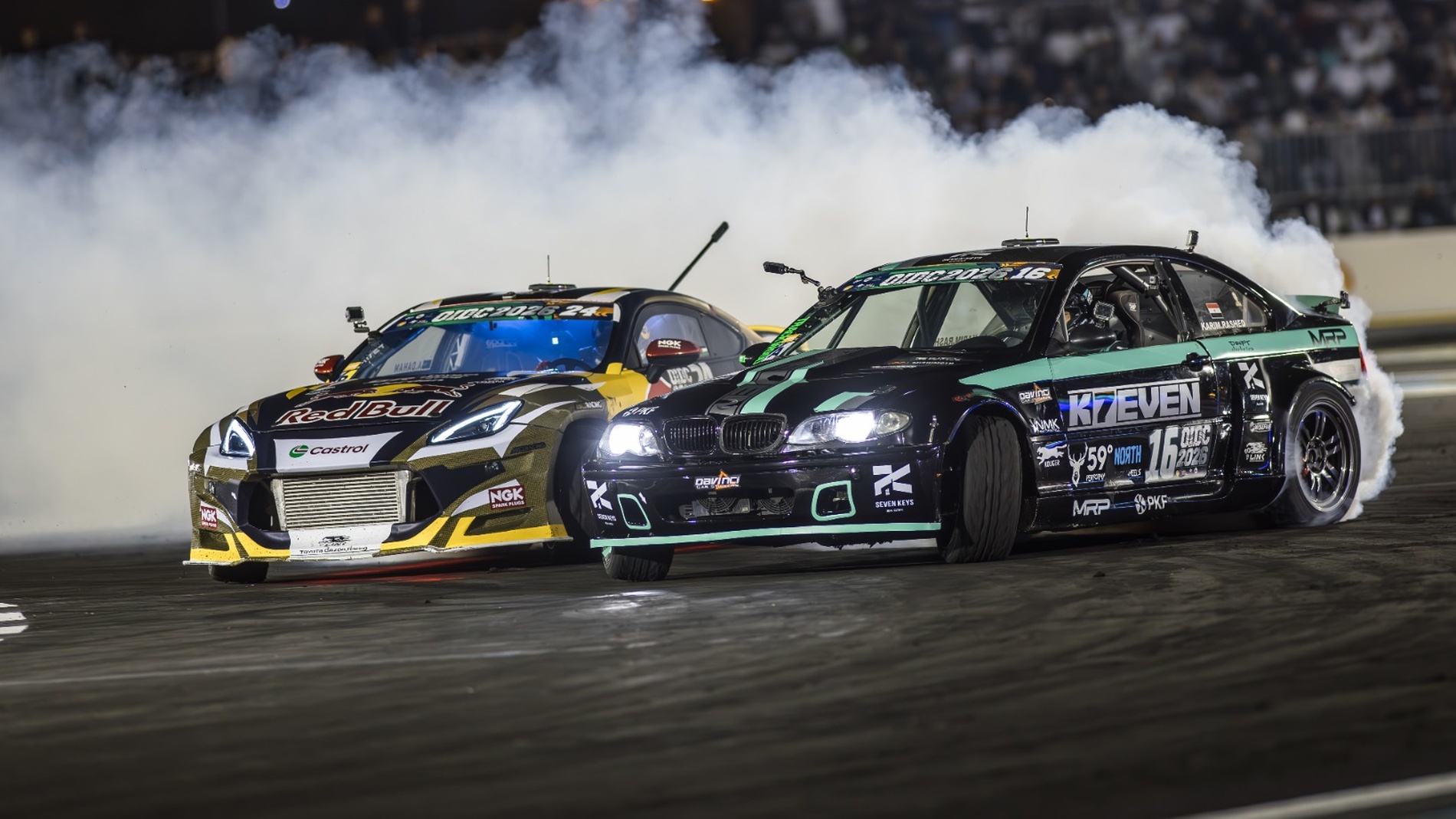
I met Ahmad Daham ahead of the Oman International Drift Championship in Muscat in January 2026, where I was invited to attend the pre-event practice sessions.
This provided a rare opportunity to follow his preparation up close and to experience his driving from the passenger seat. It also offered direct insight into the day-to-day reality of professional drifting—how cars are prepared and maintained under demanding field conditions within a tightly controlled service environment.
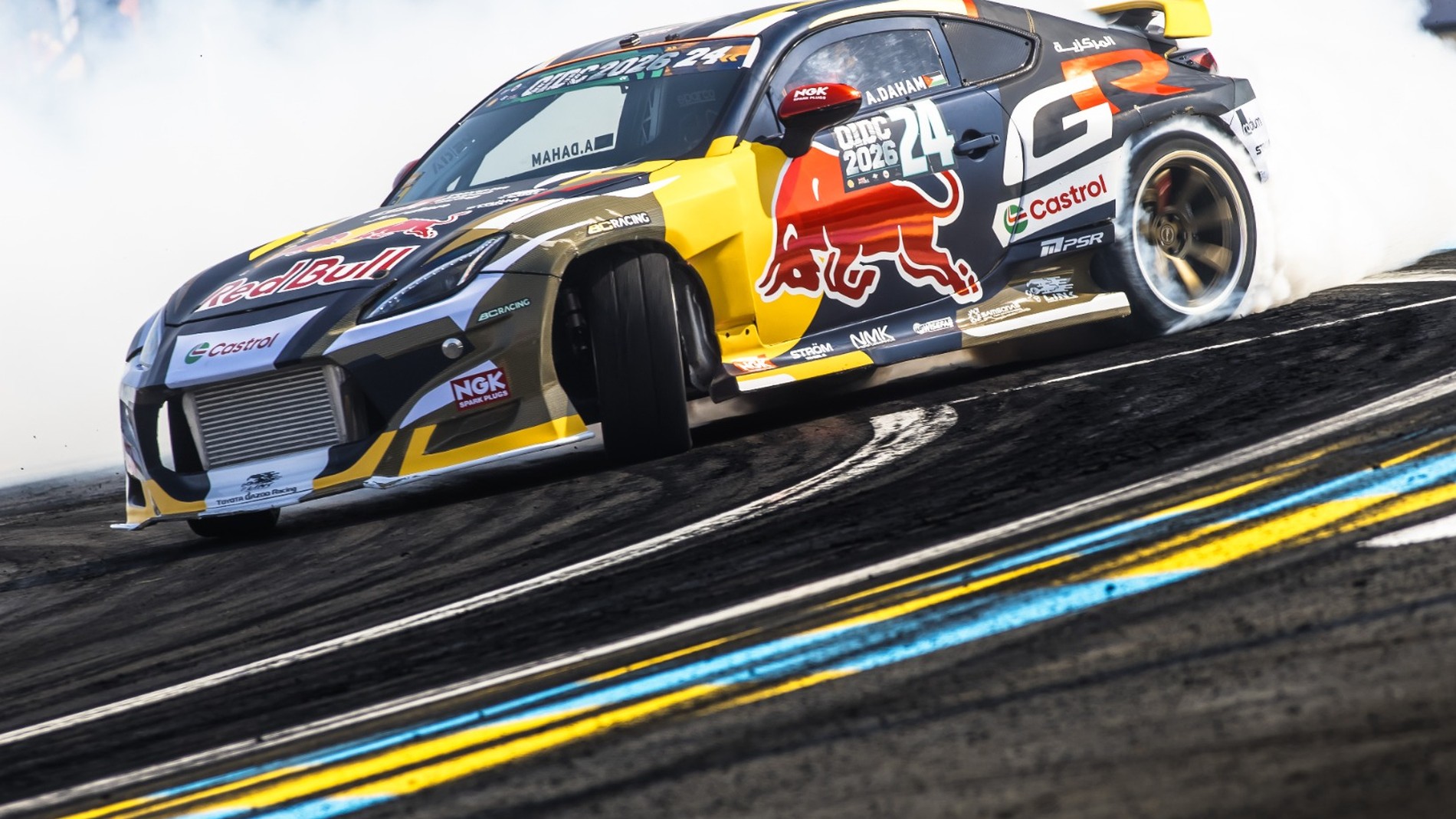
At the professional level, these demands extend beyond the car itself. A single drift run can consume a full set of rear tyres, and over the course of a competition day, drivers may go through 8 to 20 tyres. According to Daham, his own usage is typically around 16 tyres per event. Managing this level of wear requires precise alignment between vehicle setup, power delivery and driving technique—an area where his technical involvement becomes particularly visible.
Being in the car with Ahmad highlighted the level of precision required at the top of the sport. His ability to control the car at extreme angles and speeds reflects not only exceptional driving skill, but also a deep technical understanding of vehicle dynamics. At moments, the experience felt as if the usual physical limits no longer applied—an impression that speaks to the level at which he operates.
For Daham, performance starts with balance. As he explains, even extreme power figures are secondary if the car cannot be controlled at the limit. A drift car must remain predictable through transitions and sustained angles, placing vehicle balance ahead of outright horsepower, followed by power and then weight in the development hierarchy.
Driver and Engineer: A Dual Role in Modern Drifting
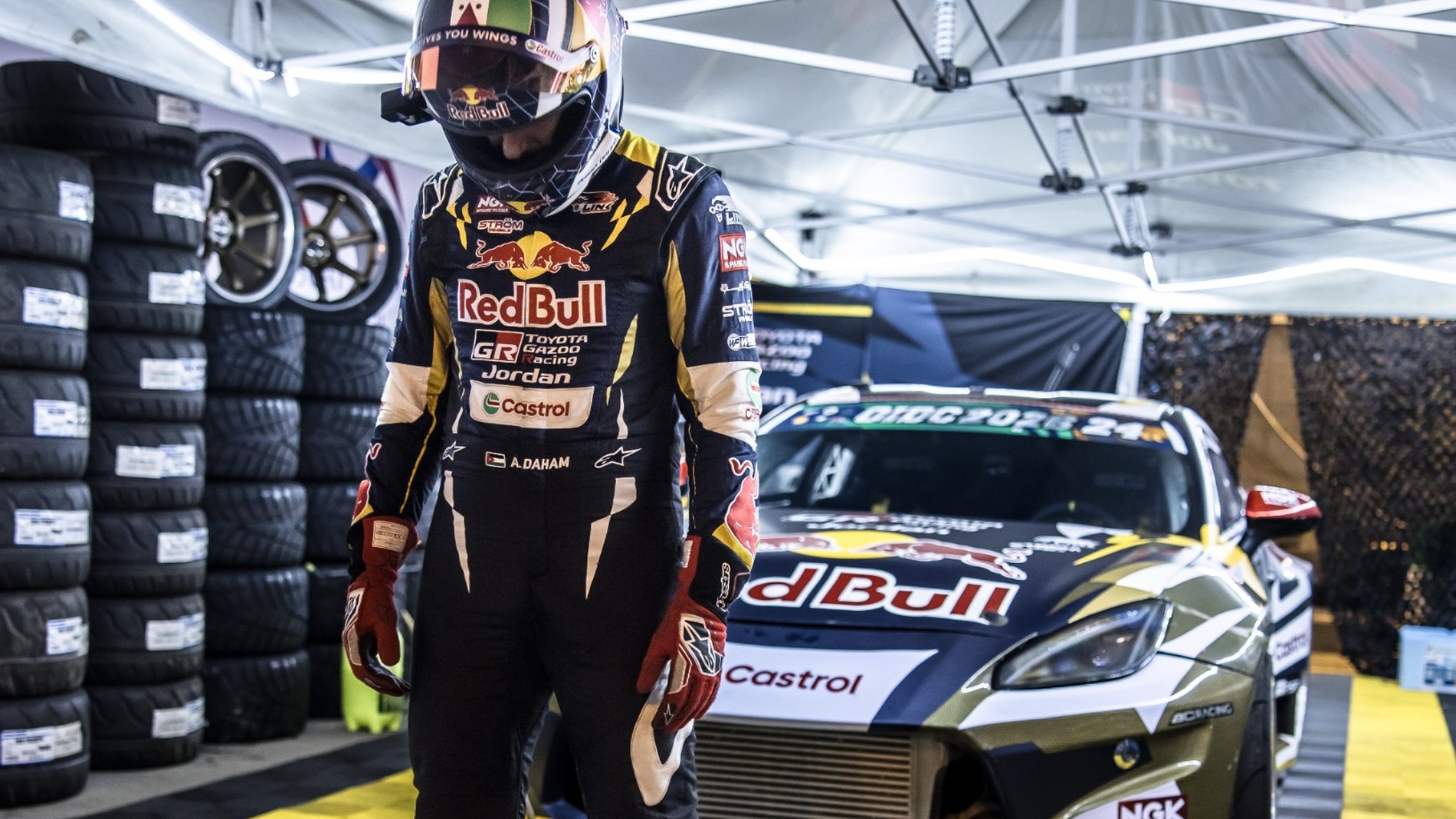
Ahmad Daham represents a rare profile in modern drifting: a championship-winning driver who engineers, builds and tunes his own cars, combining mechanical expertise with competitive precision. Widely regarded as one of the leading figures in Middle Eastern drifting, he has established himself as a consistent top performer on the international stage.
This dual role becomes evident already in the pit. Daham is not only a driver - he is actively involved in the entire technical process. He leads discussions with his technicians, makes adjustments to the car’s setup before each run, and demonstrates a clear, end-to-end understanding of how the vehicle should perform. The workflow is highly collaborative, with the pit operating as a coordinated unit where each member contributes to performance under pressure.
A key element of this process lies in engine management. Daham highlights torque control as one of the most underestimated aspects of drifting setup. Rather than focusing solely on peak power, managing torque delivery ensures that the car remains stable and predictable throughout a run—critical for maintaining angle and precision.
From Tuning to Competition: Building a Drift Career
Originally from Jordan and based in the UAE, Daham’s path into motorsport did not follow a traditional route. He initially focused on basketball before turning fully towards cars, entering the scene through modified streetcar culture as a teenager.
His passion for motorsport developed early. At the age of ten, he began spending time at racetracks alongside his brother, gradually building an understanding of both driving and vehicle behavior. By 14, he already owned his first car—a 1976 Toyota Corolla—and was actively involved in setup and tuning.
His entry into drifting came through his work as a tuner. When asked to modify and test a drift car, he discovered the discipline that would define his career. From that moment, drifting became his professional focus.
His technical philosophy reflects this background. For Daham, suspension setup and steering geometry are not defined by grip alone, but by how the car manages weight transfer—arguably the most critical factor in controlled drifting.
Consistency at the Top: Titles and International Recognition
Daham began his competitive drifting career in 2011 at the age of 24 and made an immediate impact, winning his first three Red Bull Car Park Drift events.
He went on to build a record of consistent success across the region, securing back-to-back Red Bull Car Park Drift championships (2014, 2015), the Jordan Drift Championship (2014), King of the Desert titles (2016, 2017), and the Emirates Drift Championship (2018, 2019). He also holds a Guinness World Record for the longest twin drift.
This trajectory reflects not a single breakthrough moment, but sustained performance across multiple series—establishing Daham as one of the most accomplished drifting drivers in the Middle East with growing international recognition.
Ahmad Daham – Profile
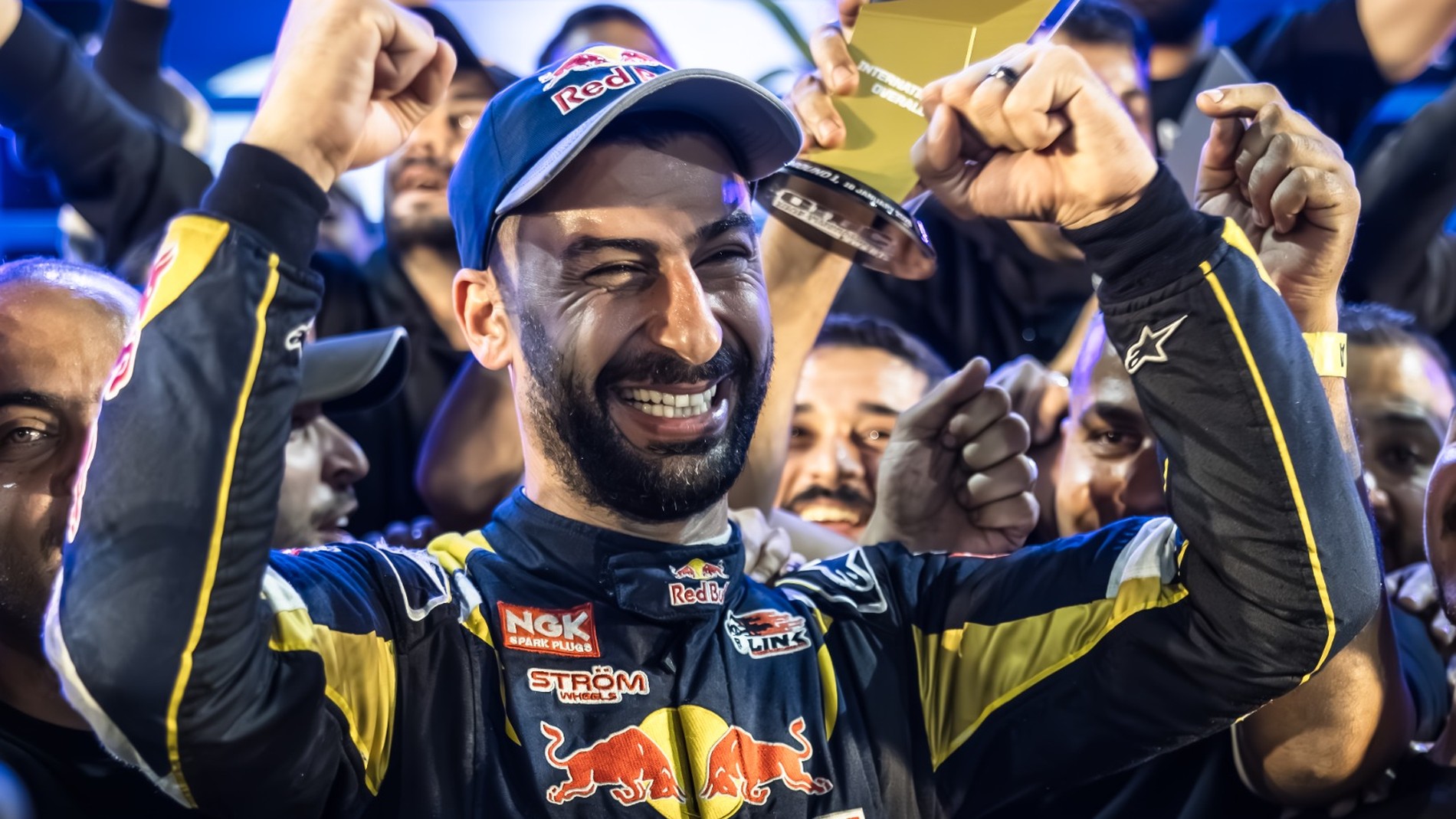
Ahmad Daham is an internationally recognised professional drift driver and performance specialist, known for combining competitive driving with deep technical expertise in ECU tuning and vehicle development. Active in professional drifting since 2011, he has built a career spanning regional championships and international motorsport events, with consistent top-level results.
Career highlights and achievements
- Red Bull Car Park Drift Champion: 2014, 2015
- King of the Desert Champion: 2016, 2017
- Emirates Drift Championship: race winner and front-running competitor (2018, 2019)
- Oman International Drift Championship: event winner and multiple podium finisher
- Goodwood Festival of Speed – participant
- Lebanon Drift Championship – competitor
- Jordan Speed Test – competitor
- Rumman Hill Climb – competitor
- Guinness World Record holder (longest twin/tandem drift, set with James Deane)
Technical profile
Alongside his driving career, Daham is recognised for his hands-on role in vehicle engineering and race preparation. His expertise includes: ECU calibration and tuning Drift car setup and chassis optimisation and trackside technical diagnostics under competition conditions, development of high-performance drift builds
This dual capability as driver and engineer, positions him among a smaller group of professional drifters directly involved in the technical evolution of their cars.
Competitive positioning
Daham competes regularly in international-level drifting, including high-profile events in the Middle East and Europe. His victory in the Oman International Drift Championship against top-tier global drivers underlines his ability to perform at the highest competitive level.
Engineering the Drift: From ECU to Chassis Balance
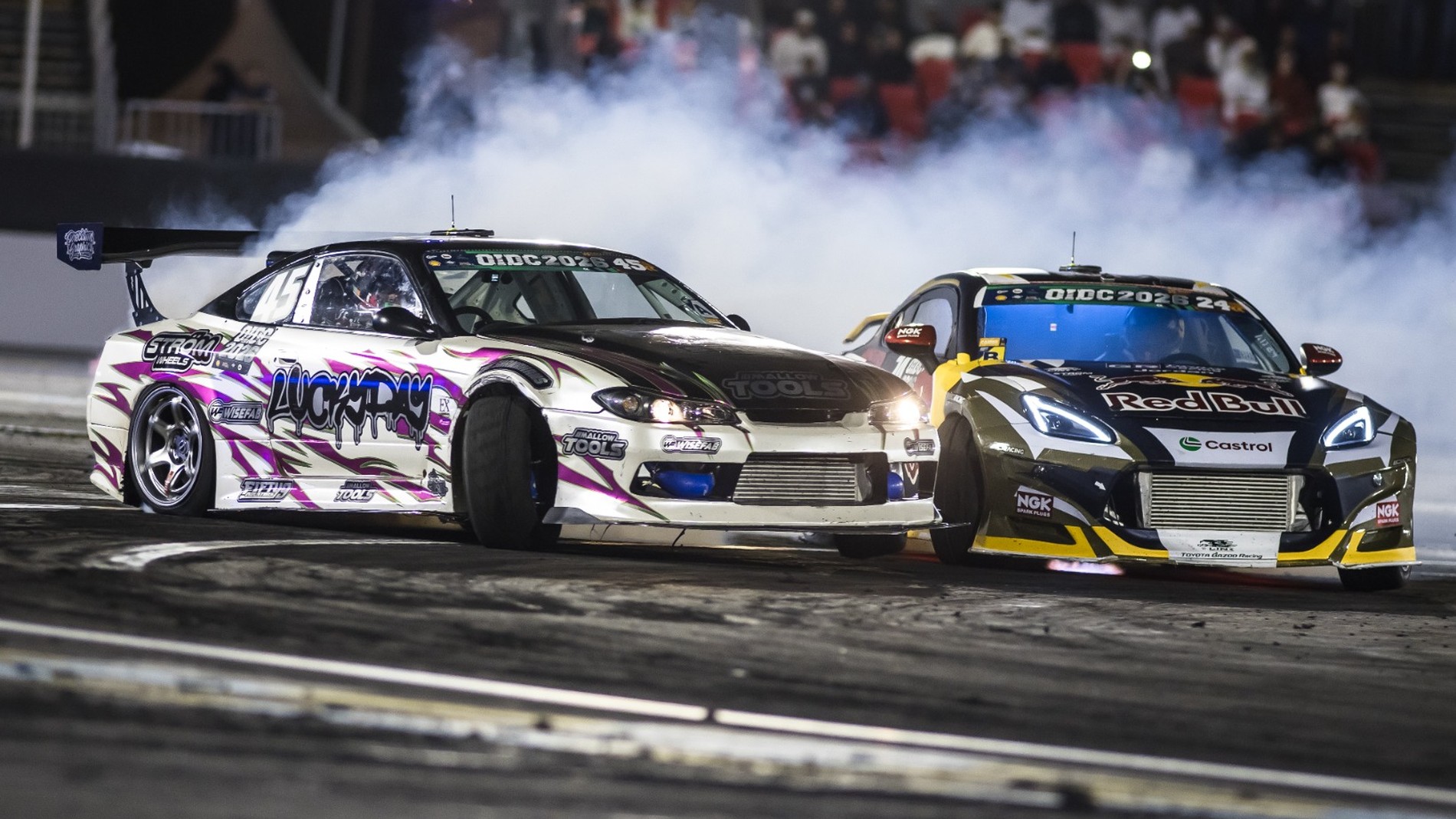
Beyond competition, Daham’s technical identity remains central to his success. A self-taught ECU specialist and engine management expert, he has financed his career through tuning work and continues to play an active role in building and developing his own race cars.
Unlike many drivers, he does not separate driving from engineering—he approaches performance as a complete system, where setup, power delivery and vehicle balance are inseparable.
This is reflected in his role as a full-cycle car builder. Daham does not outsource development; he is directly involved in every stage—from concept and build to setup and continuous iteration. His Lexus RC F drift cars, developed over multiple generations, demonstrate a structured engineering process where each component serves a defined performance function.
His development philosophy is inherently iterative. Each build evolves from the previous one, incorporating lessons learned through real-world testing and track feedback. This continuous improvement model—more typical of professional motorsport teams—allows him to refine both the car and the relationship between driver input and mechanical response.
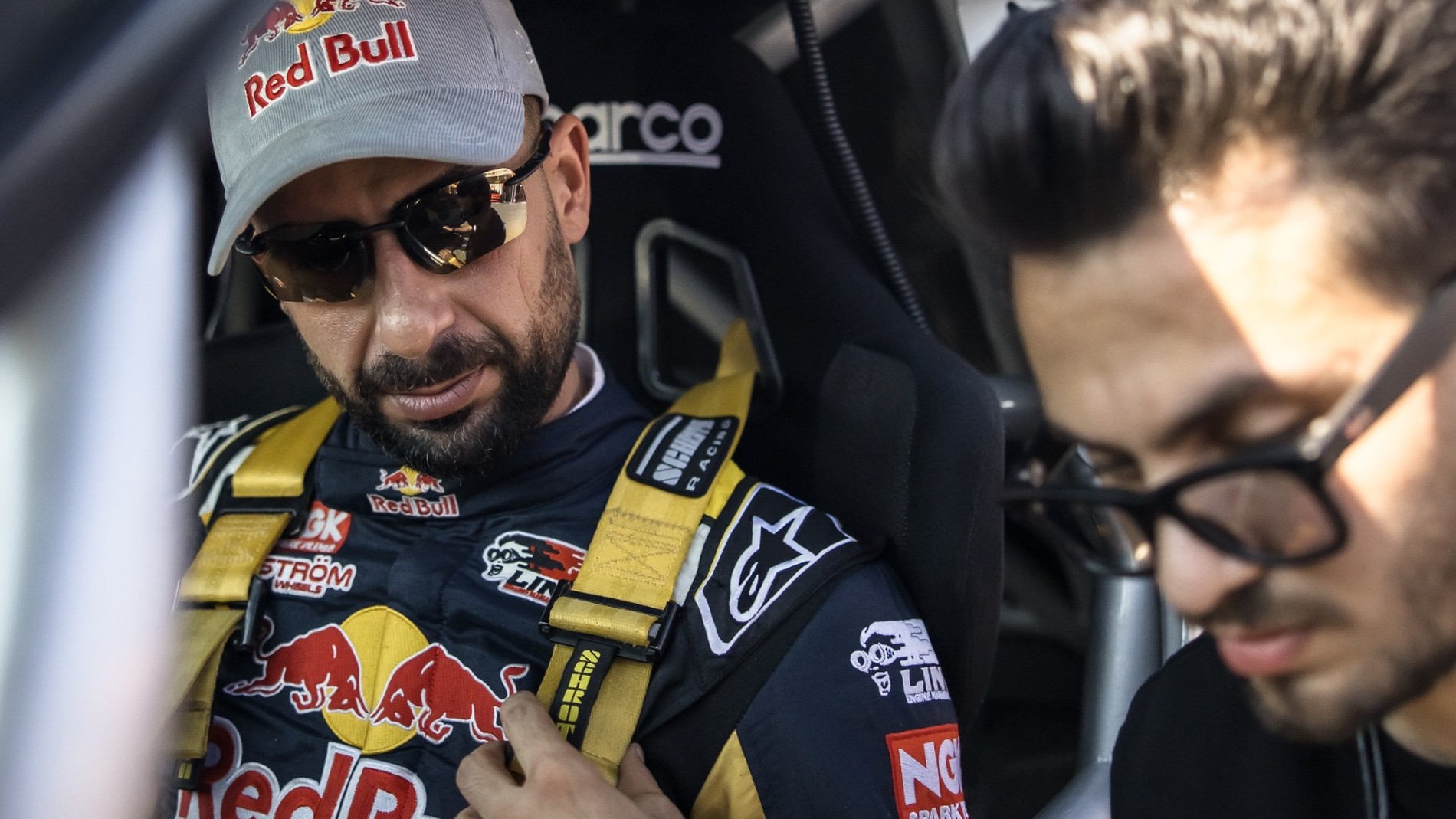
A defining aspect of his approach is precision. Decisions extend down to the smallest components, where material selection, weight distribution and reliability are carefully balanced. Rather than pursuing peak horsepower alone, Daham focuses on creating usable, controllable performance—particularly critical in drifting, where power must remain stable and predictable at extreme slip angles.
Tyre performance is central to this equation. As Daham notes, the right tyre is not the one that delivers peak grip in the first moment, but the one that remains consistent from initiation through to the final corner—ensuring stability and predictability throughout the run.
Ultimately, his strength lies in integrating mechanical development with driving feedback. By operating within a closed loop—feeling the car, adjusting its setup, and validating changes on track—he removes the traditional gap between driver and engineer.
At the highest level, this extends to driving itself. According to Daham, what separates a good driver from a winning one is precision—the ability to control the car exactly at the limit and repeat that performance consistently under pressure.