Reading time: 2 minutes
Experience with electric cars makes the switch easier
According to the DAT Report, around 40% of car owners can envisage switching to a fully battery-electric vehicle. Following a decline in the previous two years, interest is thus on the rise again. At the same time, around a third of those surveyed (34%) continue to clearly reject the idea of switching.
The situation is different for people who have already gained experience with an electric vehicle. More than half of them (51%) can envisage making the switch. Only 17% – and thus only half as many as the average for all car owners – rule out taking this step. The results suggest that practical experience with BEVs puts many reservations into perspective.
Reservations about electric mobility
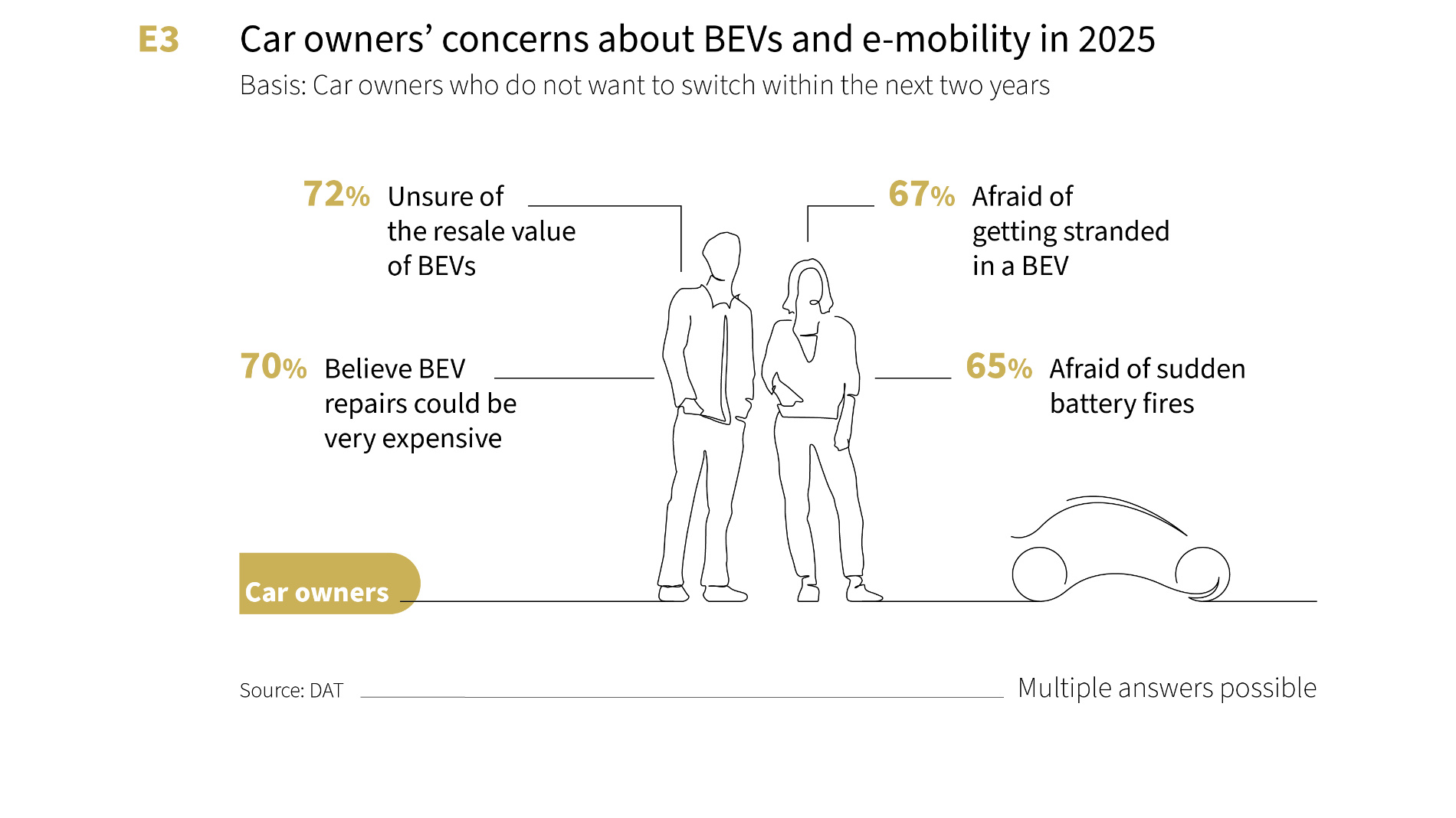
For the first time, the DAT Report surveyed car owners’ concerns and compared them with the actual experiences of BEV owners. The greatest reservations relate to the use of electric vehicles. Around two-thirds of car owners (67%) fear being stranded with a BEV. Concerns about battery fires are also widespread: Almost two-thirds (65%) expressed such fears.
Financial aspects also play an important role. For instance, 70% of respondents fear high repair costs for electric vehicles. Furthermore, 72% express concerns regarding the resale value of a BEV – particularly against the backdrop of technological developments and possible uncertainties regarding battery life.
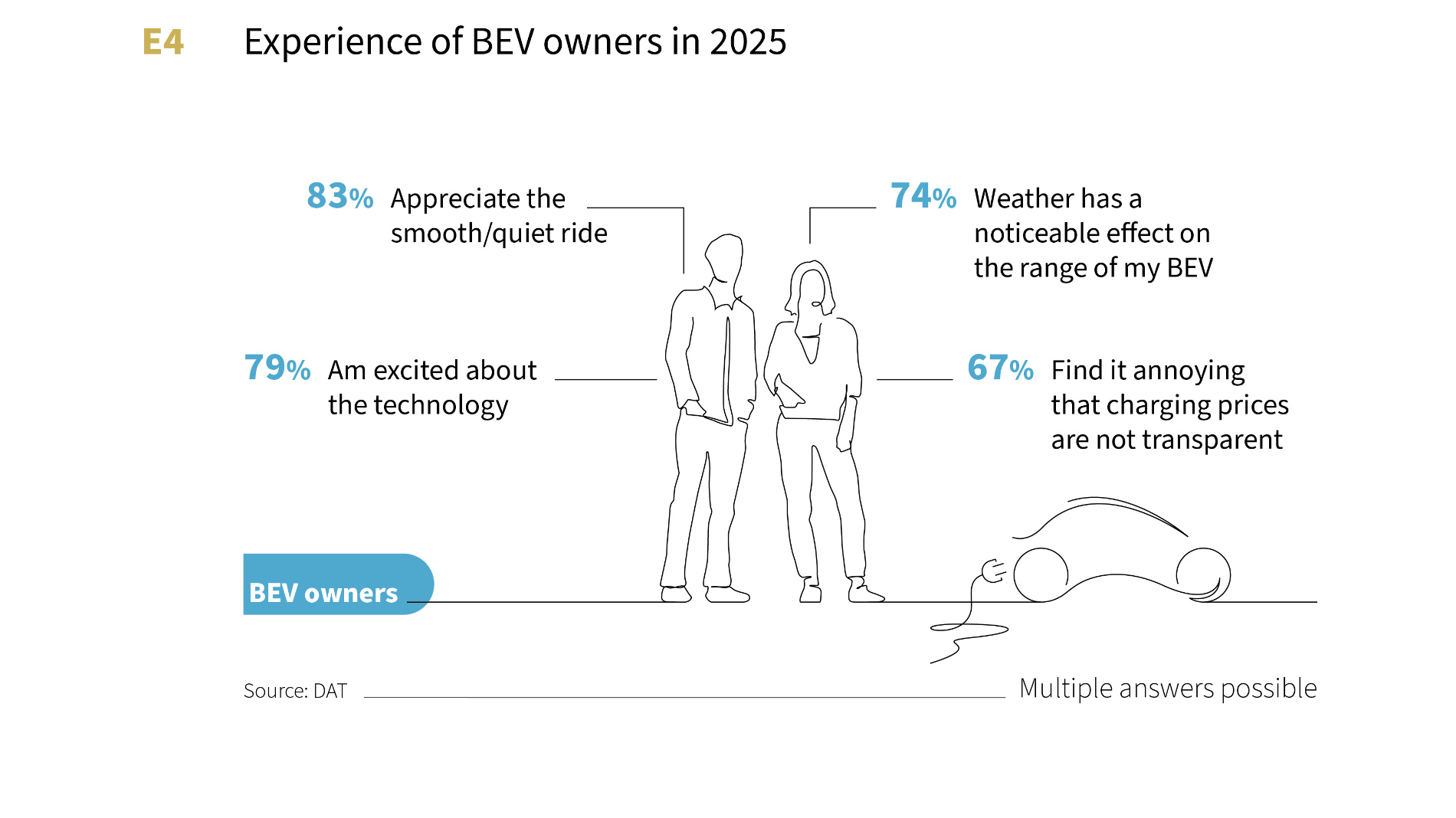
The views of BEV owners, who have been using their electric vehicles for just under three years on average, are mixed. Almost three-quarters (74%) confirm that weather conditions noticeably affect the range. Furthermore, 67% find the continuing lack of price transparency at charging points annoying. At the same time, users are very satisfied with their vehicles’ technology: around 80% particularly appreciate the smooth and quiet driving experience.
Subsidy has only a limited influence on purchase decisions
In this context, the behaviour of those currently planning to buy a vehicle is interesting. Around half of these prospective buyers currently find it difficult to decide on a specific powertrain. However, rising fuel prices are significantly more relevant than the subsidy. These have prompted just under 60% of new car buyers and slightly more than 40% of used car buyers to look more closely at electric mobility.
Whilst 80% of all prospective buyers can identify at least one positive aspect of the subsidy, 75% also cite at least one point of criticism. The social aspect of the subsidy is most frequently rated positively. The financial incentive when purchasing a BEV is also frequently mentioned. On the other hand, many respondents criticise the fact that used cars are not eligible for the subsidy. Almost as frequently, they criticise the fact that substantial state funds benefit a comparatively small group of buyers – private buyers of new electric vehicles. Furthermore, the missed opportunity for a discount on charging electricity and a potentially complicated application process are cited as points of criticism.
“Electric mobility has firmly established itself among the various types of propulsion. However, to pursue this path in an even more targeted manner, we need, on the one hand, more real-world experience with electric vehicles and, on the other hand, above all transparency regarding prices at charging points and, generally speaking, a good charging infrastructure. In our view, the solution lies in making test drives in electric cars easier, so that the switch does not become a matter of waiting and seeing, but a personal choice,” comment the authors of the DAT Report, Uta Heller and Dr Martin Endlein.