
Reading time: 4 minutes

Mr Gutjahr, could you tell us about your career path?
I did a broad-based degree in design at KISD in Cologne. The course covered a wide range of topics, including design history, gender design, graphic design, typography, and user interface design. During this time, I also designed furniture, created exhibitions and worked as a freelancer, nationally and internationally.
Even during my studies, I took on projects for BASF, first for the Ludwigshafen company and later for the Coatings division. As these projects became more frequent, I joined BASF full-time in 2011.
Which car colours have influenced you?
When I was a child, cars came in much more colourful designs. Silver became popular in the 1980s and, by the end of the 1990s, there had been a dramatic shift towards non-colours in the market. During the 2000s, almost every third car was silver. Today, black, white and grey dominate worldwide, with black currently experiencing the strongest growth.
At the same time, colour is making a comeback. Many manufacturers are once again embracing bright colours, partly because they realise that differentiation and emotional appeal are becoming more important in such a competitive environment.
Can you describe your role at BASF in more detail?
I am responsible for the global automotive design team, which is based in Europe, Asia and America. We collaborate closely with the design departments of all major car manufacturers. Our role involves developing colour concepts, identifying future trends, and ensuring they are technologically feasible.
That doesn’t sound easy…
We take on a mediating role. On the one hand, there are designers at car manufacturing companies who have very specific ideas about what colours should look like. On the other hand, our colour laboratories and technology departments have to assess whether these ideas can be implemented in series production. Our job is to translate between these worlds and ensure that an idea is turned into a feasible colour shade.
Marketing, production and quality management are also often involved in these processes. Every decision impacts costs, processes and scalability. Our task is to bring these perspectives together at an early stage and resolve any conflicts before they arise in the production process.
How does the development of a specific colour work?
It always starts with a briefing. Sometimes the impetus comes from the customer, and sometimes from us. It could be a trend colour from our annual trend collection or a request for an entirely new colour for a model series or vehicle launch.
Together, we clarify the intended use of the colour shade: will it be used for a single model or across brands? Is it intended for a high-volume model or a limited series? Will it be produced worldwide or only in certain plants? The shape of the vehicle also plays a role, as colour has a different effect on angular bodies than on flowing ones.
What happens after this content-related clarification?
This forms the basis for the subsequent development work. In our styling laboratories, initial samples are created and painted on small metal sheets. At the same time, we are increasingly working digitally. Colours can now be simulated very precisely and transferred to virtual vehicle models, enabling design decisions to be made at an early stage and providing all those involved with a shared visual reference.
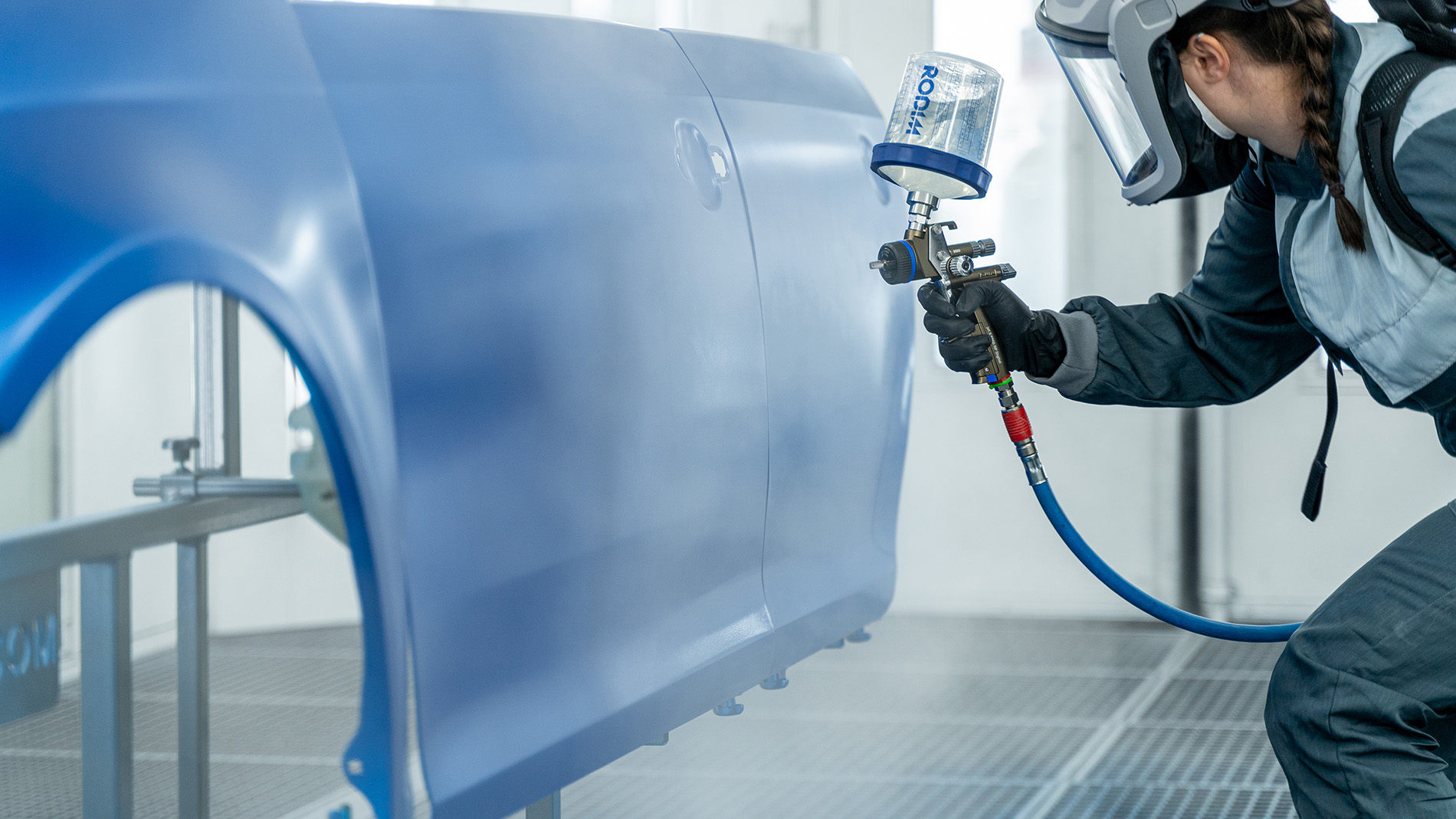
The colour tone is then refined step by step in the further process. Exact pigmentation is crucial: for example, which effects are necessary to achieve a certain depth or colour intensity? Even small changes can have a significant impact. At the same time, technical requirements must be met, such as process stability in production as well as aspects like reparability and specific environmental regulations.
In this process, we often push the boundaries of technology. While some effects are desirable from a design perspective, they can only be achieved with additional effort. This may involve applying multiple layers of paint or tinted clear coats, for example. However, such solutions increase production complexity. This is precisely where our role as mediators becomes crucial. We highlight what is possible, what alternatives are available, and the consequences of certain decisions.
The final decision rests with the customer. Our task is to provide a sound basis for decision-making and develop solutions that combine design quality and industrial feasibility. We have succeeded when a colour tone can be produced consistently worldwide while retaining its design effect.
In what ways do colours differ between brands, particularly black?
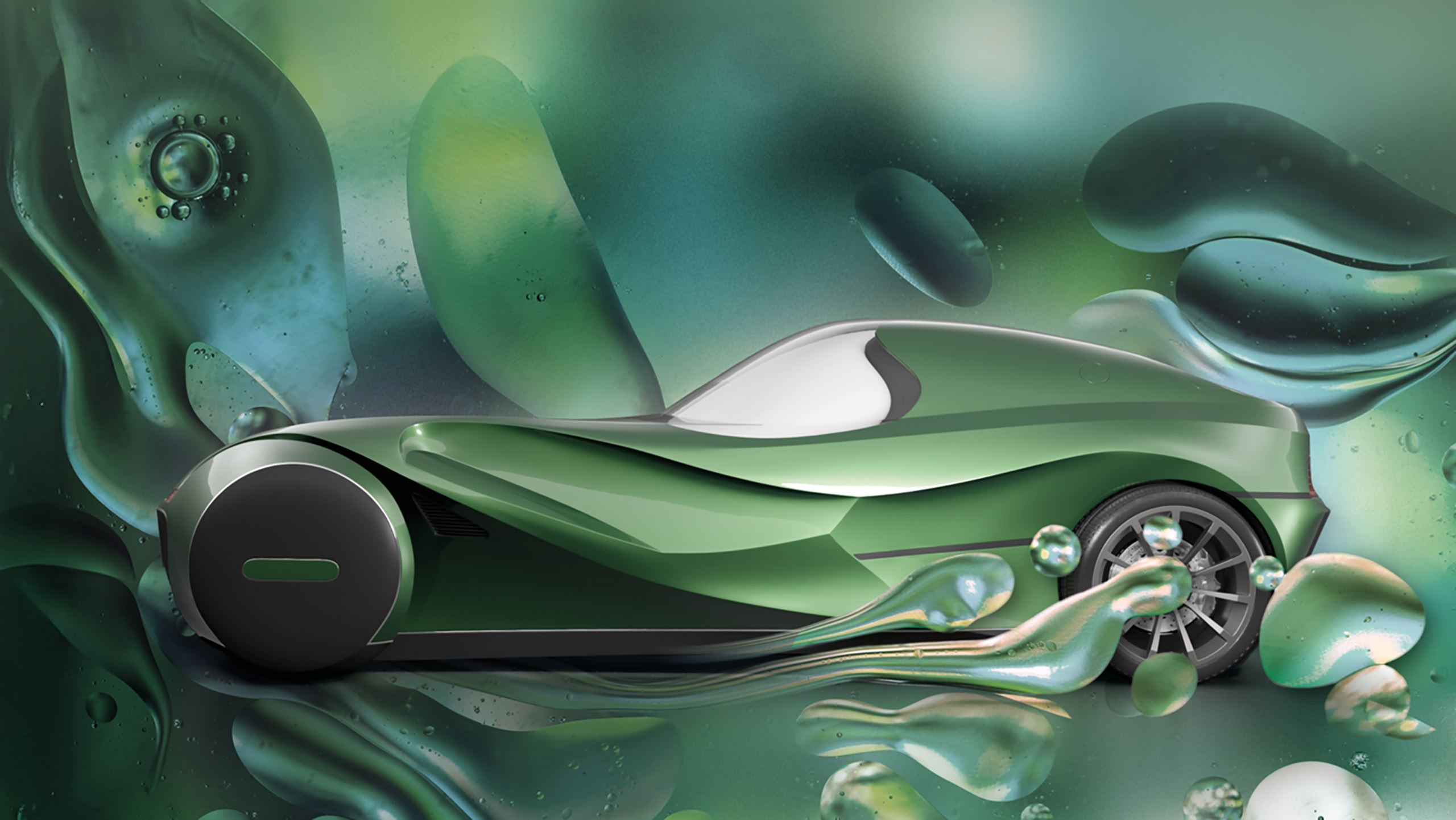
Pure university black is rarely seen these days. Most shades of black contain metallic or pearlescent effects. Differences in pigments, layering, and composition can achieve different effects. Black can appear cool, warm, deep, or technical, thereby contributing to a brand’s identity.
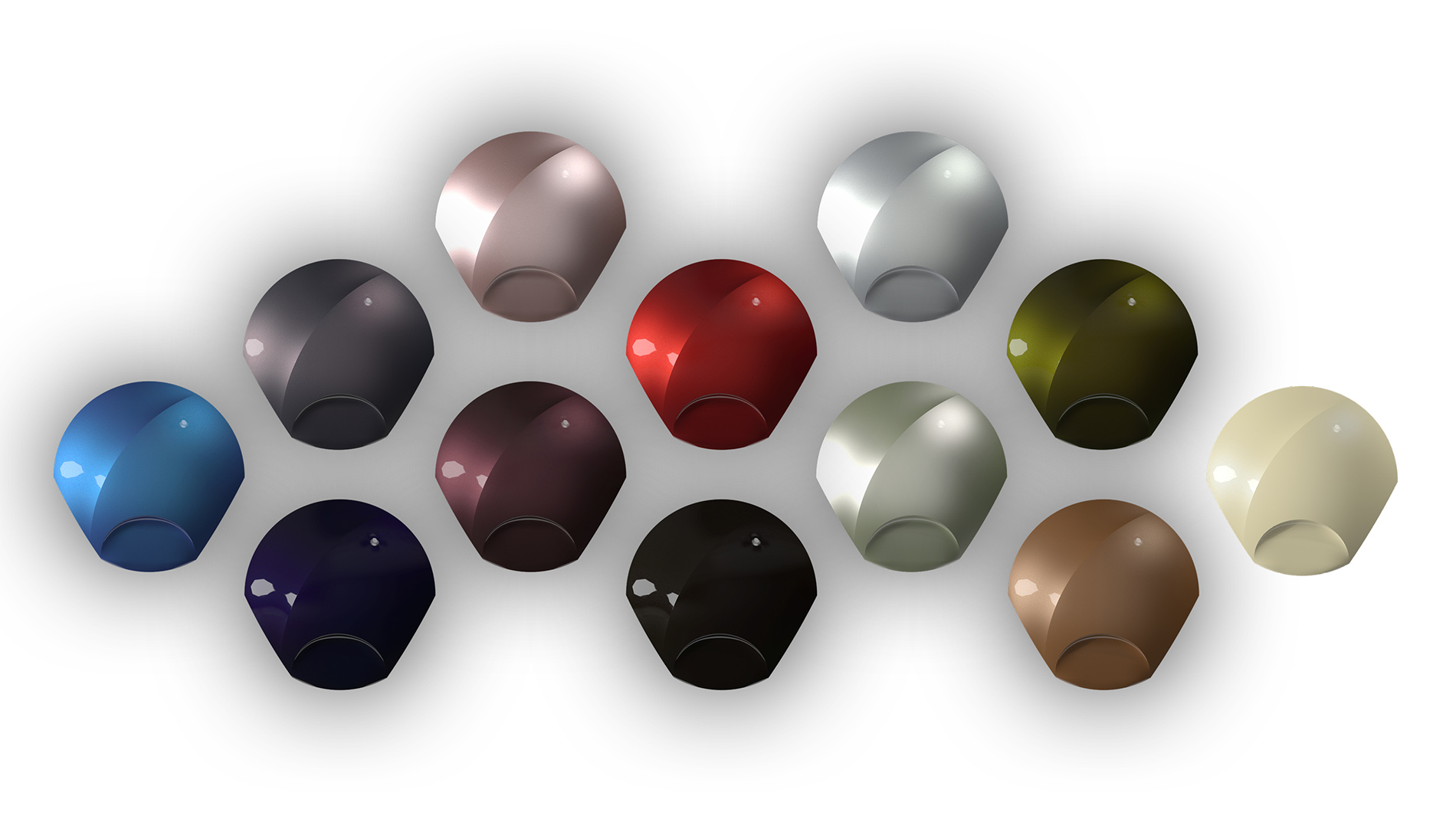
How can you identify long-lasting trends?
Car colours are developed years in advance. A colour whose development starts today will often only appear on the roads in three or four years’ time, and will then remain in the range for a long time. This is why it is not enough to respond to short-term fashions.
We closely analyse social developments, technological changes, and usage behaviour. What materials do people prefer? What surfaces do they find appealing? How is mobility evolving? The result is a colour that is sustainable and stands the test of time.
Our success lies in identifying these long-term trends early on and developing technical solutions for them in collaboration with our laboratories. A colour can only be created to work in the long term by considering design and technology together.
How does colour influence market success?
Colour is the first thing you notice. It creates recognition and emotional attachment. In markets with many emerging brands, such as in Asia, colour is a particularly important way of establishing a brand’s identity.
In Europe, the fleet market has long led to a limited colour palette. However, we are now seeing a counter-movement here: manufacturers and dealers are recognising once again that cars are bought emotionally, and that colour plays a crucial role in this decision.
Is the role of design becoming less important in the context of electric mobility?
On the contrary. As technology becomes more streamlined, design, materiality and user experience are taking centre stage. Colours, surfaces and interfaces are key distinguishing features. The same applies to interiors: how is the additional space being used, and what will the interfaces look like? All of this is design.
Today, design is one of the most important tools for creating brand identity and improving functionality. Design plays a key role in this process.