Reading time: 3 minutes
What distinguishes the Tianjin region from other comparable automotive regions in China?
Wen Jing Xu: The Chinese government has designated several key export hubs for automobiles, including Shanghai, Guangzhou, and Tianjin. Tianjin benefits from a highly developed logistics infrastructure and its coastal location, with direct access to a major seaport on the Bohai Bay.
In addition, Tianjin is home to some of China’s leading automotive technology development organizations. These institutions support both industry and government in developing and building advanced mobility infrastructure. One example is a state-of-the-art collision testing center, which plays an important role in vehicle development and homologation.
China’s automotive industry is considered extremely innovative. Is there any kind of ranking among Chinese regions? Which areas are regarded as the most innovative?
Wen Jing Xu: Tianjin has long been known as a major hub for industrial production in China, with a particularly strong and well-established automotive manufacturing base. Against this background, Tianjin — and especially the wider area around it — can be regarded as one of the most innovative automotive regions in the country. While China has several important manufacturing hubs, the Tianjin region stands out. As part of the Beijing–Tianjin–Hebei cluster, which includes Beijing, Tianjin Municipality, and Hebei Province, the region brings together companies covering the entire automotive value chain. Concerning our members, they represent a broad spectrum of industry segments, from advanced connected and automated driving technologies to established automotive components, collectively shaping a comprehensive automotive ecosystem in Tianjin.
From your perspective, what are the key differences between the Chinese and European automotive markets in terms of demand, challenges, and processes?
Wen Jing Xu: There are some clear differences. China is a large and highly diverse market, with demand ranging from high-end and mid-range to entry-level products. Our market supports this full spectrum. Europe is also important for Chinese manufacturers, but it comes with significantly higher requirements, driven by both regulation and consumer expectations. In particular, products for Europe must meet very high standards for quality, environmental performance, and sustainability — especially in the area of parts and components. For Chinese suppliers, regulatory compliance is therefore a key challenge. At the same time, when it comes to complete vehicles, China is arguably further advanced in electric mobility, particularly in terms of the overall goal of sustainable mobility.
What are the main challenges for the association and its member companies when entering the European or U.S. markets?
Wen Jing Xu: The two biggest challenges are ongoing trade tensions between China and the United States, including tariffs, and the intense level of competition in the global automotive market. At present, the number of automotive manufacturers — particularly in the EV sector — is very high, and market consolidation is likely. Our expectation is that Chinese manufacturers will continue to improve their products over time and become increasingly competitive in international markets.
As an association, do you also promote the Tianjin region internationally, for example by participating in trade fairs abroad?
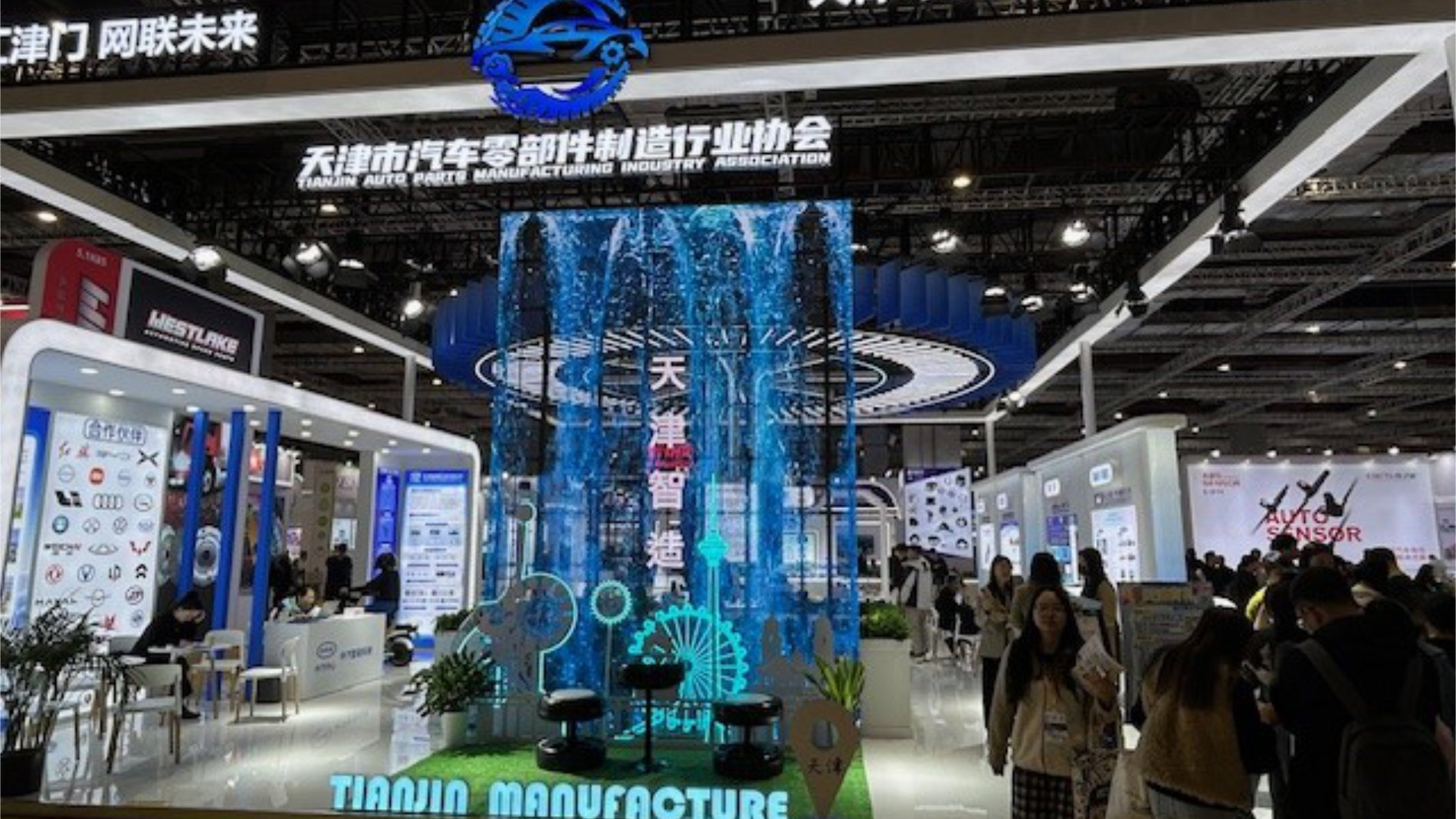
Wen Jing Xu: The association has been supporting the Tianjin automotive industry for 13 years. Alongside domestic promotion, we actively help our member companies expand into international markets. They regularly participate in overseas exhibitions and trade fairs, including events in the Americas, Egypt, Uzbekistan, the UAE, Vietnam, Indonesia, Korea, Germany, and Mongolia.