Reading time: 3 minutes
Which levers are the most effective for increasing the sustainability of paints and coatings in the automotive sector?
At BASF Coatings, our three key priorities are climate protection, eco-efficient solutions and safe chemicals. Climate protection is at the core of our strategy, shaping everything from our entire value chain to our energy-intensive painting process. We reduce CO₂ emissions by offering solutions such as our low-curing clearcoat. Innovation drives us forward: the Glasurit 100 Line reduces VOC emissions by 40 per cent compared to global standards, improves occupational safety, and lowers emission costs. In doing so, we are setting new sustainability standards and creating opportunities for a circular economy.
1. What are biomass-balanced products? How widely available and economical are they? To what extent are they already in use, and can this be quantified? Is a target of using 100 per cent renewable raw materials achievable?
We are currently conducting important pioneering work by using mass-balanced processes to reduce our long-term dependence on finite raw material sources. This approach will also be economically beneficial in the long term, as the scarcity of conventional raw materials will cause their prices to rise.
With our Glasurit Eco Balance product range, we offer a unique range of products that reduce the ecological footprint of the finished product. For example, the Glasurit A-C-24 Chemcycled® clear coat can reduce the CO₂ footprint by up to 40 per cent. Approximately two car tyres are recycled to produce five litres of clear coat. Our products are used by over 4,300 customers in more than 55 countries. Since their introduction, the use of our products has saved over 19,000 tonnes of CO₂, which is equivalent to more than 4,100 car journeys around the world.
2. How can CO₂ emissions be reduced in manufacturing? Reference projects, such as those at two locations in the USA, have achieved 100 per cent renewable energy since the beginning of 2025. But what about the broader picture? What determines the pace of this transformation?
We are driving the transformation not only to achieve our own CO₂ reduction targets, but also to support our customers in meeting their GHG goals by offering CO₂-reduced or CO₂-reducing products.
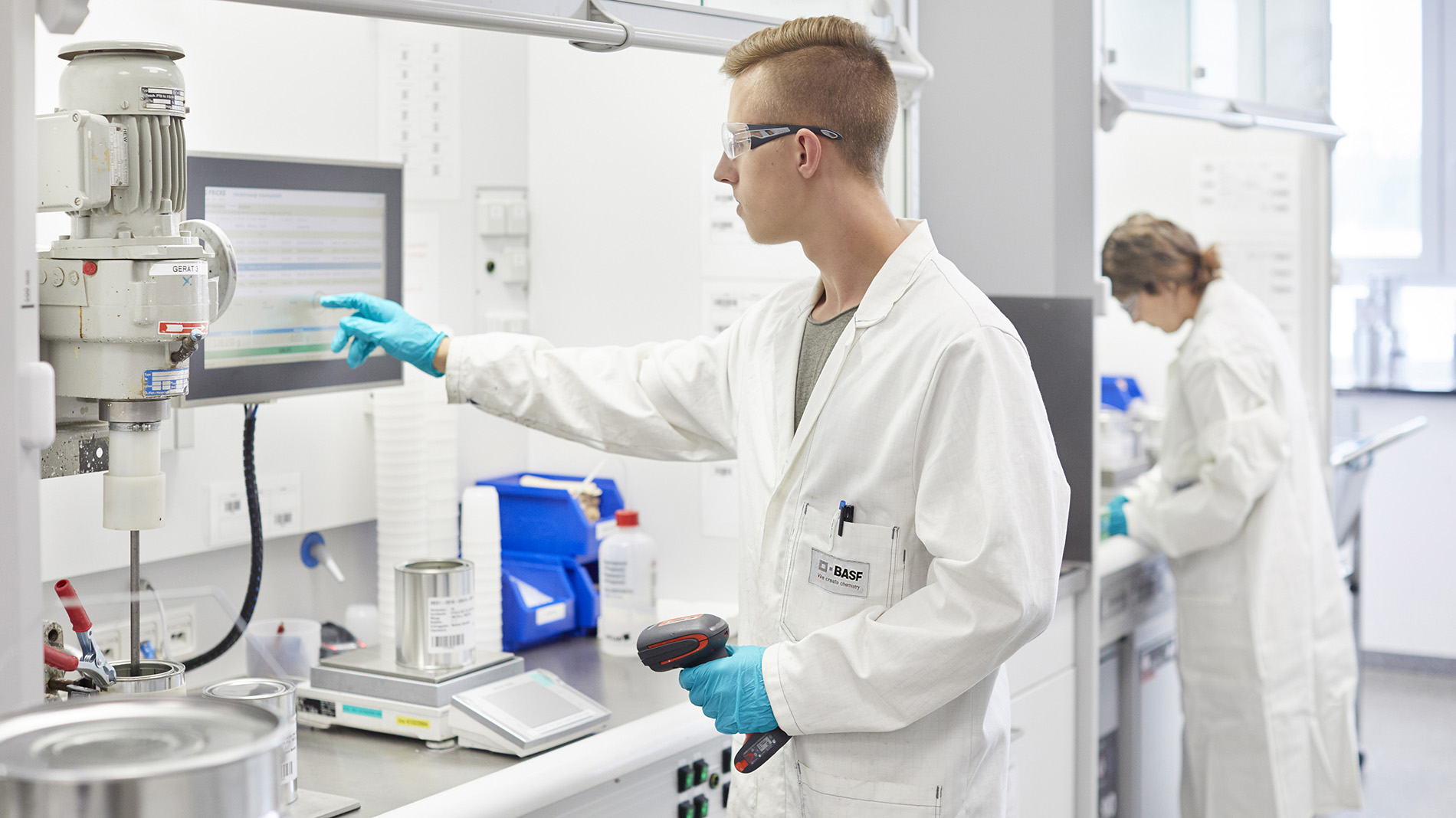
Accordingly, we are improving energy efficiency, promoting the transformation of all our sites, and optimising our use of resources as well as energy consumption. For instance, we have introduced recycling processes for methyl ethyl ketones (MEK) at our sites in Shanghai and Münster, thereby reducing CO₂ emissions.
At the same time, we are switching to renewable energy sources and innovative technologies. At BASF Coatings, almost 70 per cent of our global electricity requirements are now sourced from renewable energies.
3. What are sustainable design principles? What do they entail? Do they require compromises in design?
Sustainable design principles involve designing products that are ecologically and economically sound from the outset. In the circular economy, R strategies such as reuse, repair and recycling are central. For coatings, this means providing solutions that offer long-lasting protection and enable easy repairs (‘extend the loop’). However, recycling robust systems poses a challenge (‘close the loop’). Our goal is to balance durability, aesthetics and recyclability.
4. How does BASF help workshops to achieve their sustainability goals more quickly? With the digital platform ‘Refinity’, workshops can measure their individual carbon footprint. What have the initial experiences been like?
Earlier this year, we introduced the Refinity Eco Impact Assessment in selected markets. This tool enables the sustainability of workshops to be evaluated based on facts and figures. It analyses paint booth usage, electricity consumption, product use, waste generation and fleet emissions, using this data to calculate the carbon footprint in accordance with the GHG Protocol. Customers value the industry benchmarking and the specific improvement recommendations. This helps them to reduce costs, increase efficiency, and improve sustainability.
5. Durability and waste reduction? Is cooperation, partnership and customer involvement required to make progress towards a circular economy?
Improving value chains requires more than each player doing their ‘homework’ in isolation. Sustainable transformation can only be achieved through cooperation, as the most effective solutions are developed jointly. Our customers are our most important partners in this process; we work closely with them to drive innovation. At the same time, new roles and opportunities for collaboration are emerging throughout the ecosystem. For example, processes such as recycling at the end of a product’s life cycle are becoming increasingly important. Other stakeholders, such as insurance companies, are also playing an increasingly important role in this transformation.