
Reading time: 2 minutes
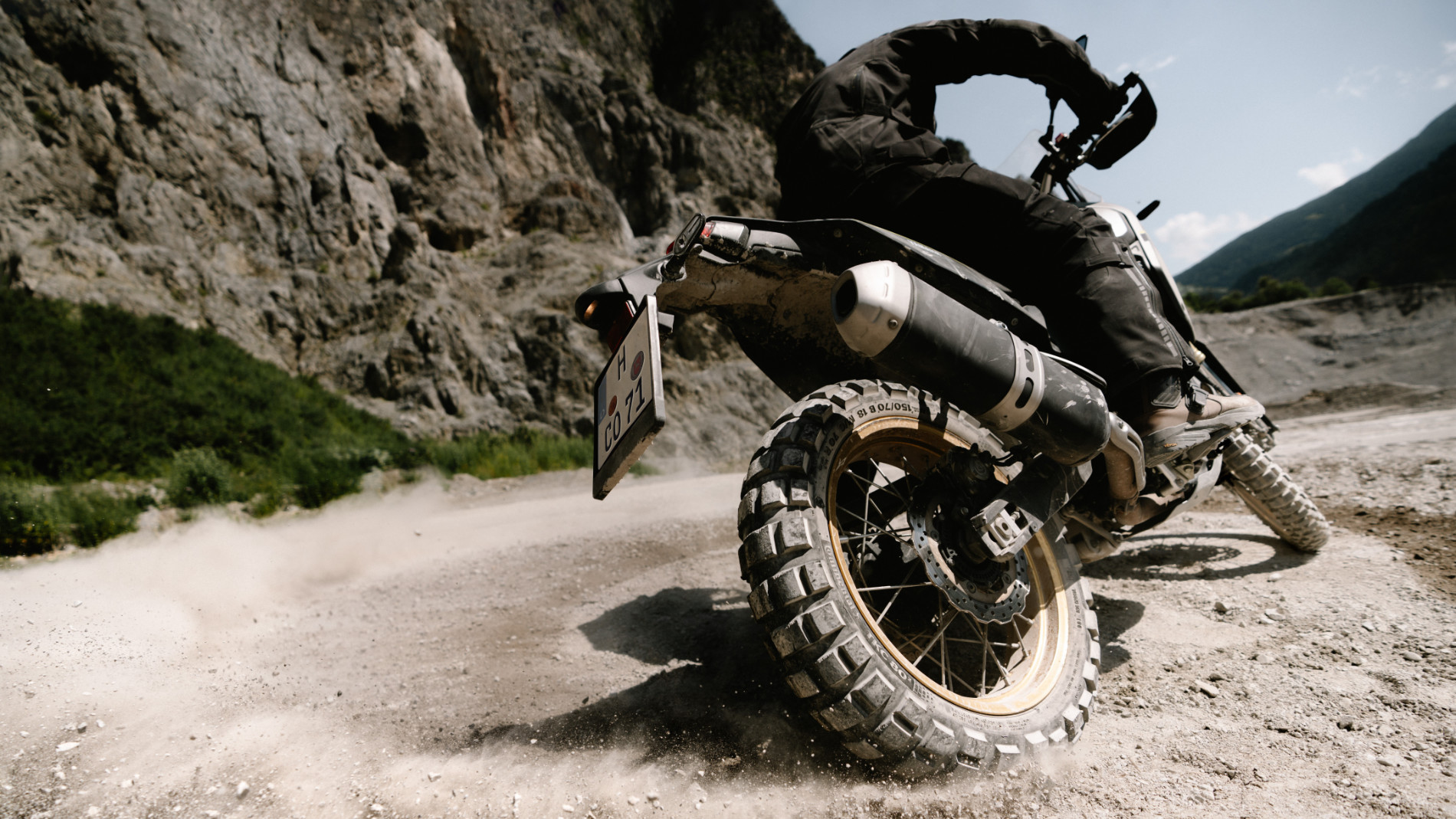
When the Germans introduced the first version of this tyre in 1985, the market for off-road motorbikes was still in its infancy. Forty years later, off-road motorbikes dominate the market and the TKC80 has become the benchmark for 50cc and 50-series tyres. To ensure it can last another 45 years, Continental has revamped its bestseller, and here is the TKC80². Over the last 40 years, the first version of the TKC80 has been modified several times. It could hardly be otherwise, as the motorbikes on which the tyre was fitted have changed radically.
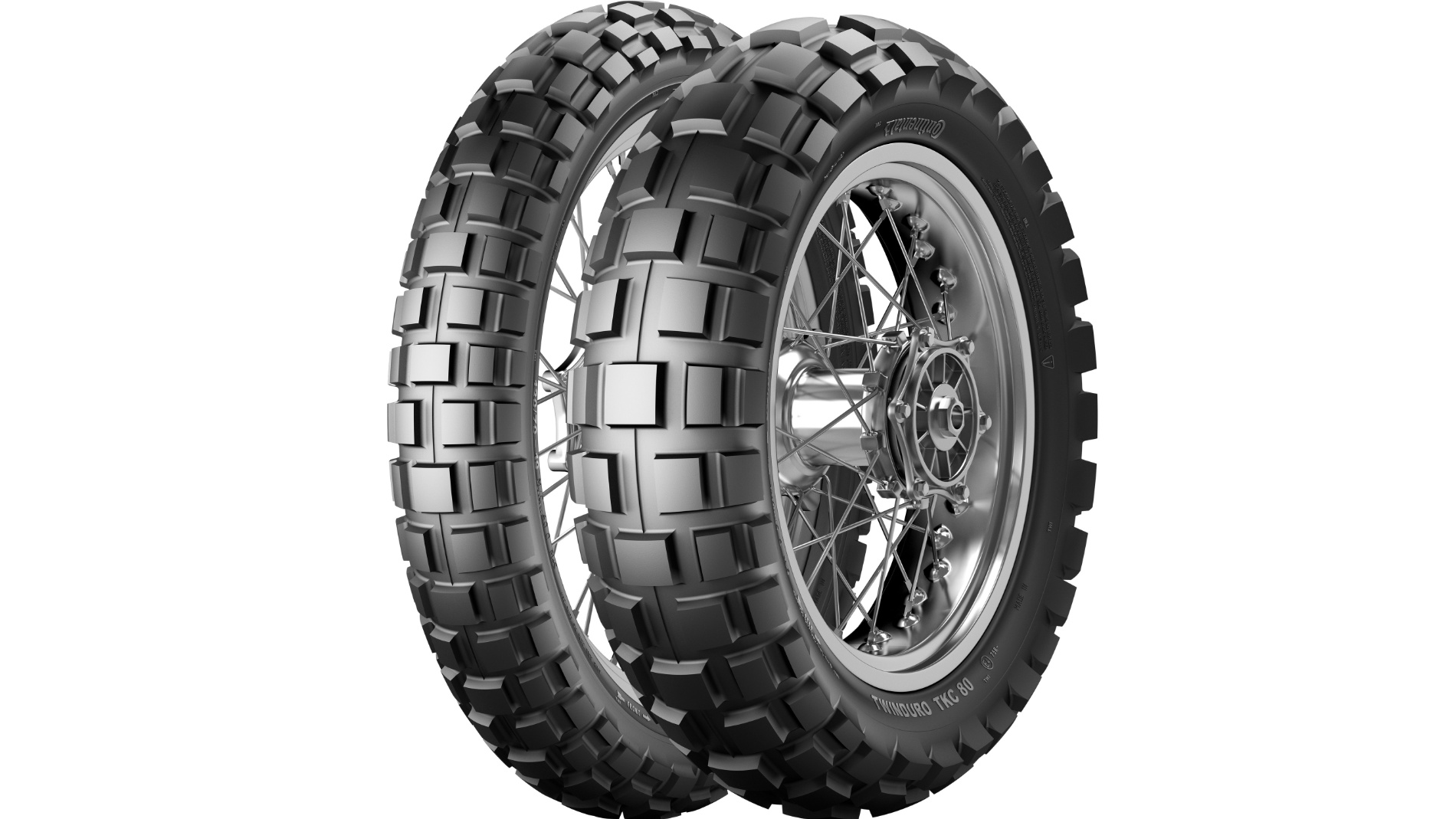
The first BMW R 80 G/S was fitted with an 800cc boxer engine that produced barely 50 hp and weighed 186 kg ready to ride, whilst the BMW R 1300 GS Ad “However, you can’t always just carry on with small changes and upgrades; sometimes you have to dare to start from scratch and completely redevelop the tyre. “That’s exactly what we did with the TKC80²; we started from scratch,” explains Raphael Michels, Product Manager.
However, the slate wasn’t entirely blank. The block tread pattern of the first TKC80 has been around for 40 years and has become an icon in the world of off-road riding. Changing the tyre’s appearance too drastically would be tantamount to shooting itself in the foot for Continental. The tread pattern of the TKC80² therefore continues to be based on square blocks, even though the pattern has been modified. “The central blocks have been significantly enlarged and are now arranged differently. This results in a 17% larger contact patch. The diagonally arranged lugs offer greater stability in sand and on loose ground whilst simultaneously improving the tyre’s responsiveness on the road. The staggered blocks also reduce rolling noise,” explains Michels.
To ensure a 50/50 tyre can be used both on the road and off-road, the manufacturer must always make compromises regarding the rubber compound. On the road, you want a soft compound for plenty of grip, whilst off-road you need a harder rubber compound to prevent the lugs from wearing out after just 100 km. “As we have developed a tread pattern with more and larger blocks, we were able to adapt the rubber compound,” explains Michels, without going into details.
Thicker rubber
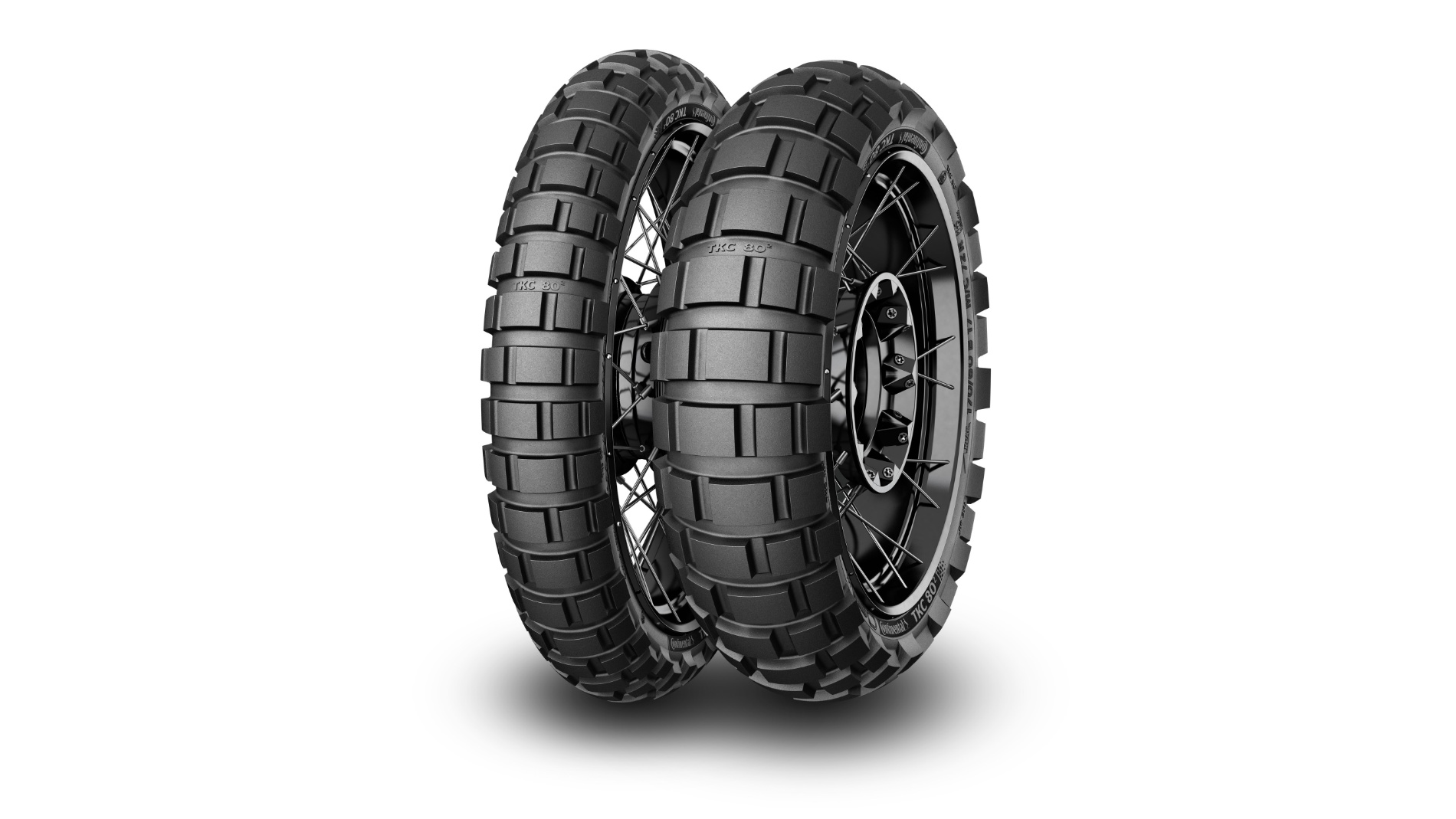
Between the tyre carcass and the rubber compound is a new protective layer that is more robust and offers greater comfort. The carcass has been reinforced for greater stability, and the rubber between the lugs has been increased to reduce the risk of punctures. The tyre’s contour has not been altered; the compound and tread pattern have been combined in such a way that the tyre wears more evenly than its predecessor whilst offering more predictable grip. Tyre life was not a priority during the development process, as the first TKC80 already delivered excellent performance in this area.
In the first quarter of 2026, 10 size combinations will be available (4 front tyres in 19 and 21 inches and 6 rear tyres in 17 and 18 inches), meaning the TKC80² covers 85% of the off-road market. It is worth noting that the original TKC80 is also available in its 25 size combinations. The TKC80 has always been a popular tyre among custom motorcycle builders looking to give their creations a slightly more rugged off-road look. Continental has not announced any recommended retail prices, but notes that the first-generation TKC80 will be slightly cheaper than its successor.