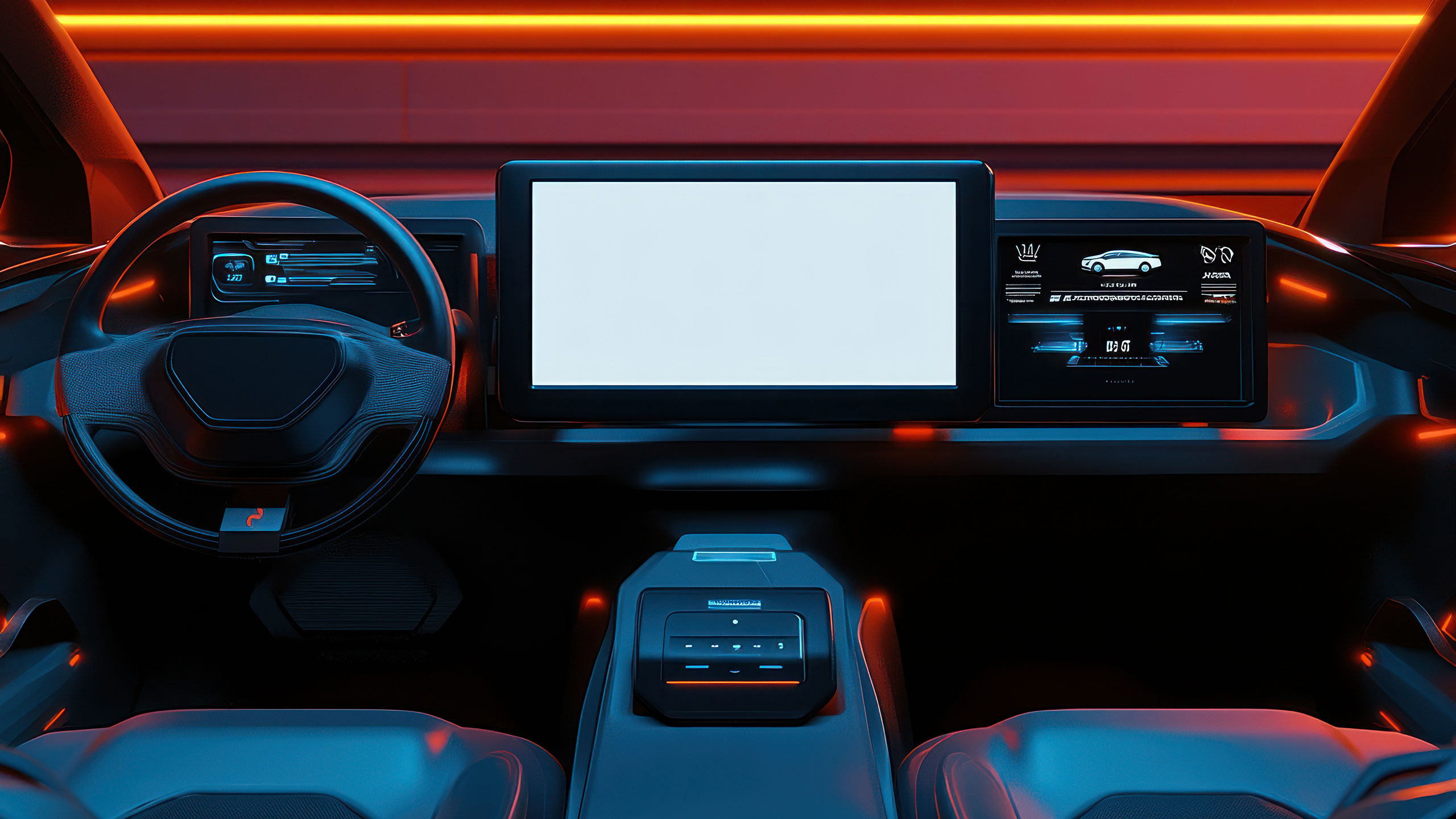
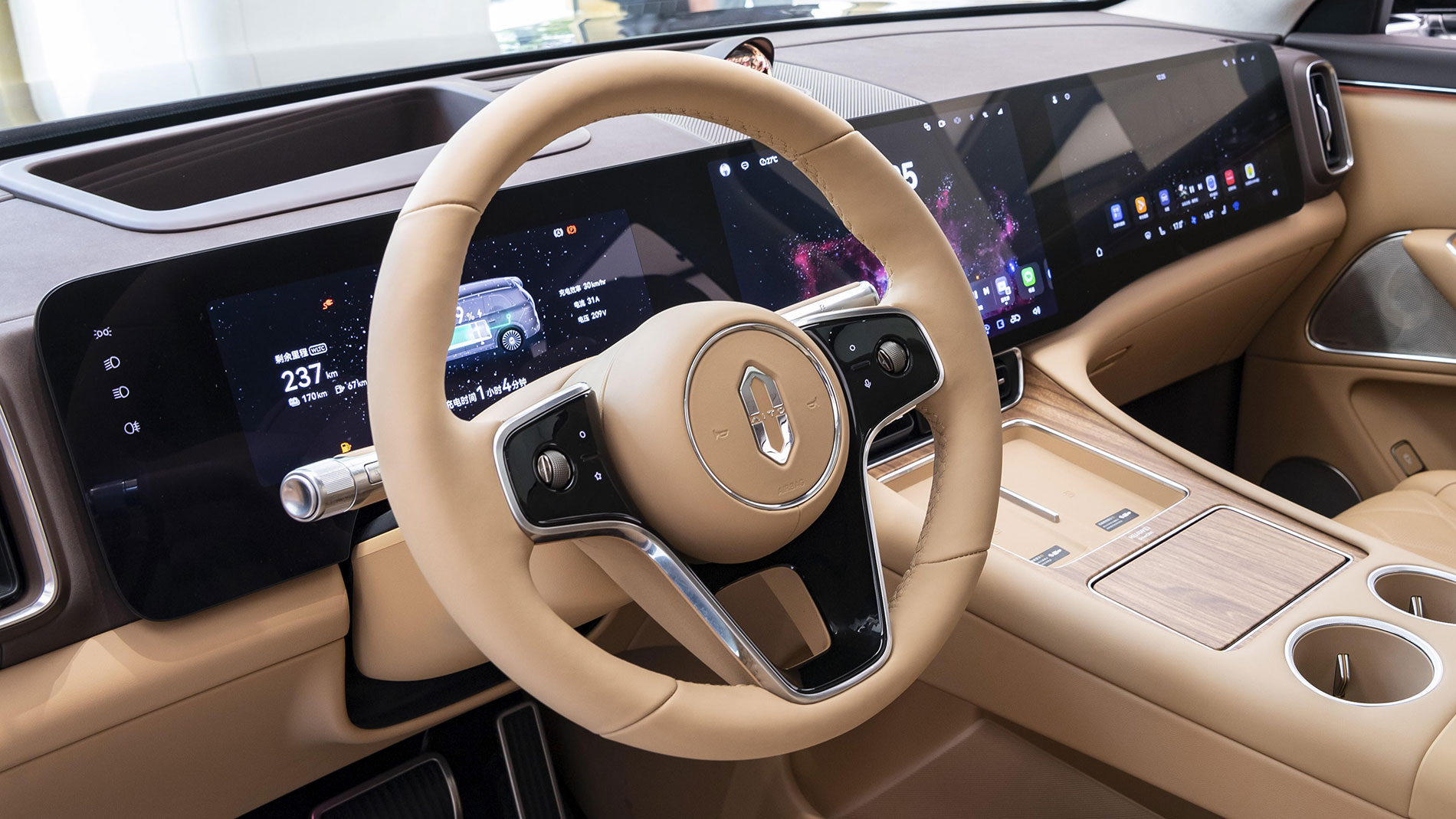
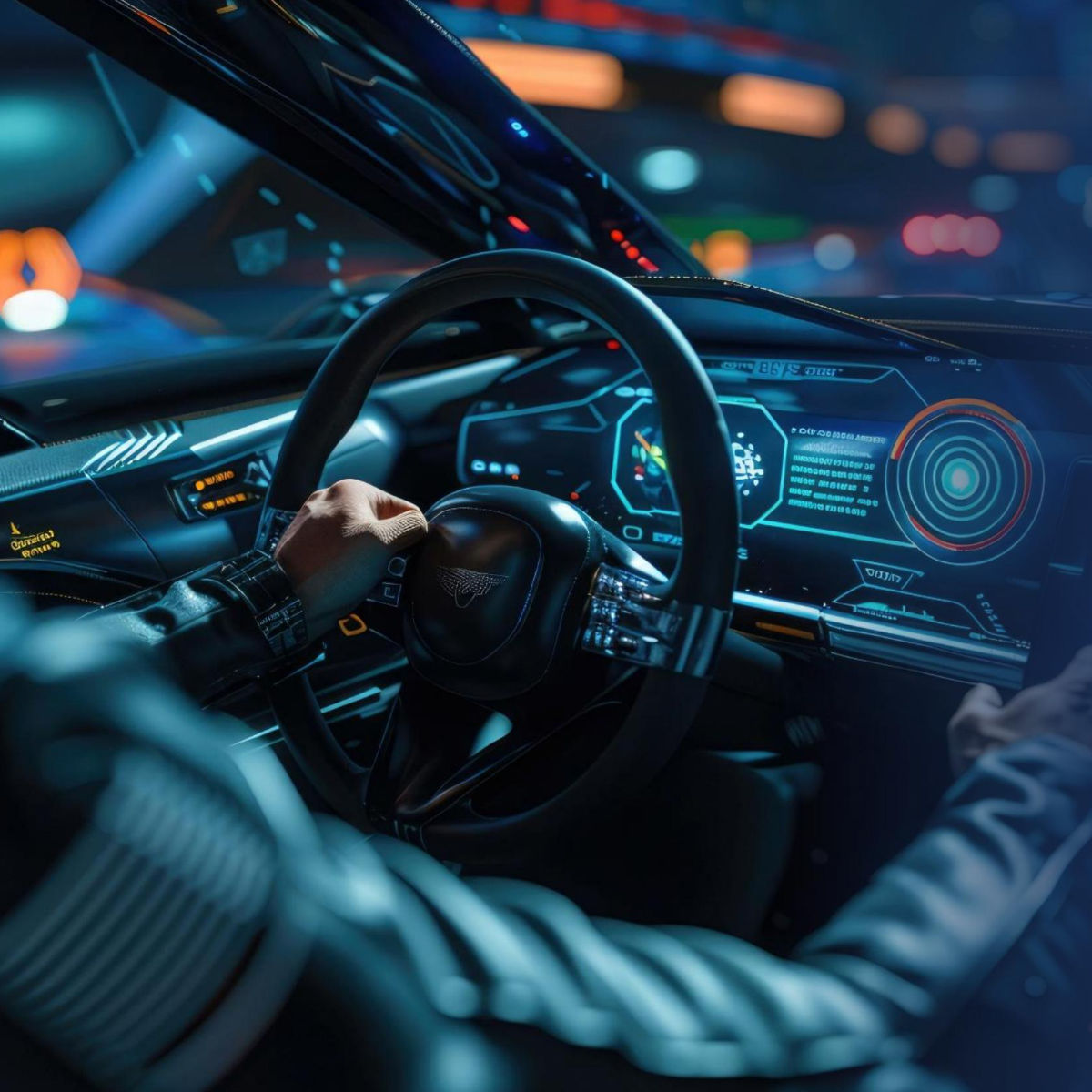
Anyone who visited an international motor show last autumn could have quickly noticed, that the car industry is undergoing a revolution, which is happing inside the car. As cars become evermore silent, the interior space is emerging as the focal point of innovation. Manufacturers are no longer talking about the cockpit, but the „third living space“.
The electric car is becoming a lounge, a retreat and a mobile office, and through that a projection screen for societal trends such as sustainability, digital integration and stress reduction.
The concept of mobility is thus transformed. Through the elimination of the engine, which opens up the interior to completely different materials, digital operating logics and comfort concepts primarily designed for user experience and storytelling. This fundamental change begins where a massive centre tunnel used to run through the car. Electric vehicles no longer need it. For Franziska Braun, a member of the Innovation Design team at the Fraunhofer Institute, this presents an opportunity to rethink interiors: „A flat, even floor is becoming the norm. This creates more space, allows for flexible seating arrangements and increases comfort through additional legroom and storage space.” This newly gained space makes the interior more modular, comfortable and more open than any previous generation before the ‚electric age’.
“The concept of sustainability has long been about more than just marketing.”
Holistic climate concepts
However, the new quietness comes with new challenges. Although electric cars run without engine noise, driving noises such as tire, wind and ambient noise become more prominent, says Braun. Manufacturers are responding by using sound-absorbing materials and implementing acoustic concepts, that were previously only of interest to specialists.
This is particularly noticeable in thermal management. While combustion engines generate heat as a by-product, electric cars have to generate every degree of temperature by other means. „Without engine waste heat, active heating and cooling systems are required, that have to operate as energy-efficiently as possible,” Braun explains. Key trends such as zonal air conditioning, additional insulation and integrated seat heating are now standards in car development.
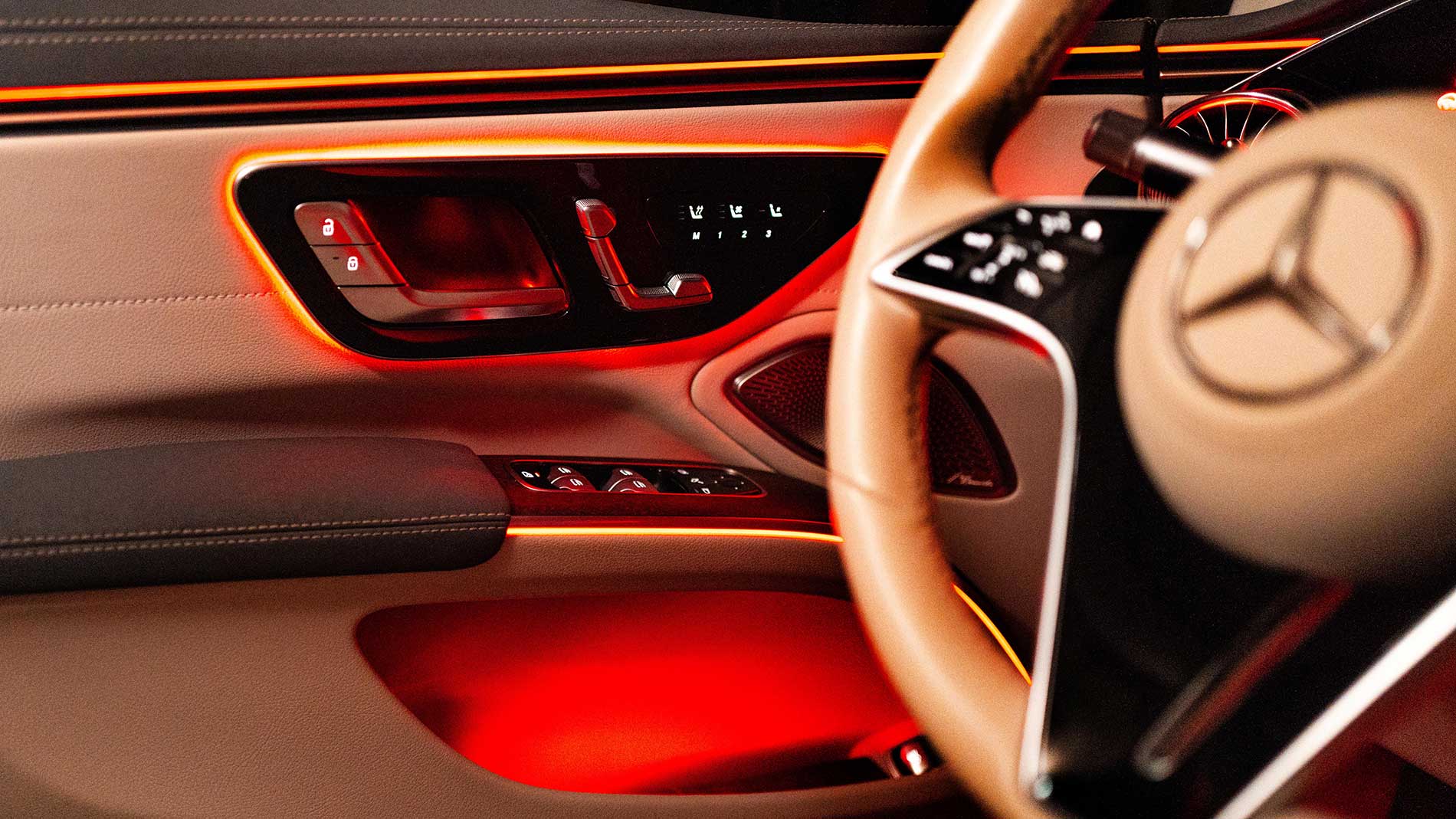
Braun refers to studies conducted by her team, in which coloured LED light zones were used to influence passengers’ perception of heat. „Targeted lighting can mask temperature differences of 1 to 1.5 degrees.” This may sound like a psychological trick, but it has concrete effects: less heating, but longer range.
Conventional cars have central climate control for the front and rear, providing warmth or coolness as required. Electric cars are breaking with this tradition. According to Braun, the future will be a personalised comfort landscape comprising heating and cooling zones in seats, armrests and surfaces, as well as radiant heat instead of airflow, and AI-controlled adjustments in real time.
„Zonal concepts lead to greater integration of functions into surfaces and a reduction in central controls,” he says. Visible technology is replaced by flat surfaces that simultaneously warm, act and are perceived. Comfort becomes quieter, more personalised and more energy-efficient.
Similar to electrification, digitalisation is changing the interior as well. The car is evolving into a platform for personalised interaction. „The question of how to design an intuitive user interface can never be definitively answered,” says Braun. The ever-increasing number of new functions, driver assistance systems and AI are making clarity more important than ever.
Current research approaches focus on smart surfaces, that only display buttons or touch zones when needed. In the ‚Cyclometric’ project, Braun’s team has woven conductive yarns to make control elements disappear from view. This means that products are designed and manufactured to be fully circular. Car manufacturers therefore know from the design stage on, how every single gram of material in a component will be returned into the cycle. At the same time, haptics are making a comeback. „Physical buttons are returning for safety-related functions,” explains Braun. Users want to be able to access these functions without looking.
Industry experts confirm this development. For example, Rolls-Royce design chief Domagoj Dukec explains that pure touch concepts quickly reach their limits, and that good haptics remain „an indispensable element of the brand experience”. The electric car is therefore not only a digital living space, but also a place where people want to be able to feel their surroundings.
At the same time, voice control is playing an increasingly important role and is becoming more natural thanks to adaptive assistants. In the future the operation of electric cars will be tailored more closely to the respective scenario, whether that be motorway driving, traffic jams or city traffic. Each scenario will then have different interface priorities.
Sustainable materials are, however, in the spotlight more than anything else. For Braun, one thing is clear: „Sustainability has long been more than just a marketing buzzword.” In fact, recycled plastics, marine PET yarns, and natural fibres such as flax and bamboo are being incorporated into vehicles. In projects such as ‚Future Flex Pro’, Braun’s team is working on fibre composite components made from natural materials combined with conductive yarns to reduce the need for electronics.
From fungal structures to leather alternatives
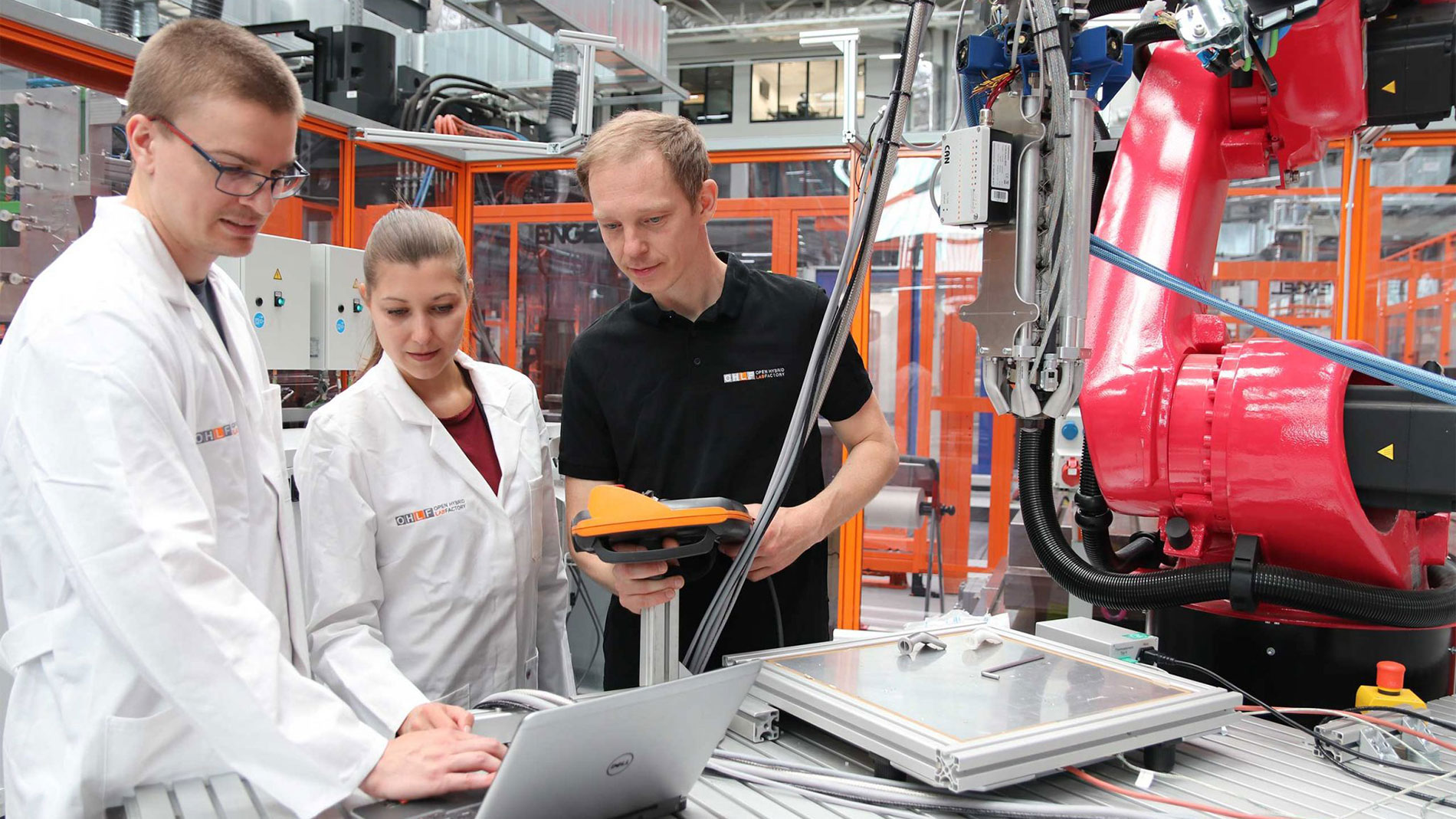
Picture: Open Hybrid LabFactory
The Fraunhofer Institute is not the only organisation involved in this development. The automotive industry itself is also following suit. Dr Martina Gottschling from Volkswagen Group Innovation views this as a significant opportunity: „The potential is substantial and could represent a pivotal step in optimising the ecological footprint of our ID electric fleet.”
In collaboration with the Open Hybrid LabFactory, VW is researching leather alternatives made from cellulose and fungal structures – completely animal-free materials that still meet the required quality standards for vehicles. Their research at the Open Hybrid LabFactory demonstrates how these alternatives could replace real animal skin, with the ultimate goal of developing recyclable interiors, that do not compromise on comfort or quality.
Evonik, a chemical company whose speciality plastics are used worldwide in the automotive industry, is even clearer. Dr Patrick Glöckner, head of the Circular Economy Programme, explains: „You need the right design from the beginning – design for circularity.” This means that the design concept for all products must ensure they remain in the material cycle permanently, never becoming waste. These external voices make it clear that sustainability is no longer just a research topic. It is moving to the heart of industrial value creation.
Comfort, climate and zonal intelligence
Heat pumps, conductive textiles and AI-supported climate control systems are transforming the concept of vehicle comfort. Braun describes how manufacturers are focusing more and more on personalised comfort zones, with features such as heated armrests, coolable seats and invisible radiant heating. However, heat pumps require additional components that must be considered in designing the interior.
The classic climate control knob could soon disappear, not to be replaced by a menu, but by automatic, predictive systems that recognise the user before they intervene.
With each new level of assistance, the focus shifts from driving to the user experience. Manufacturers are already planning reclining seats, entertainment screens and integrated workspaces. In future Level-4-vehicles, people could meditate, work or sleep, instead of having to concentrate on the traffic.
The car becomes a psychophysiological space
Picture: picture alliance | Eibner-Pressefoto
The role of light is even more important here. In Braun’s ‚Lightride’ project, various light stimuli were combined with breathing techniques to alleviate stress while driving. Initial results show that light can contribute specifically to either concentration or relaxation. The car thus becomes a psychophysiological space, at least in part. The electric revolution has arrived in the interior space. Electric cars are changing not only materials, spatial conditions, and operating systems, but also expectations regarding comfort, sustainability and user experience.
Franziska Braun demonstrates how research is uniting these areas through smart textiles, circular design, zonal climate control and light-based comfort strategies.
The interior of the electric car is at the heart of this transformation, not an afterthought. Architecture, acoustics, materials and comfort systems are all being redefined. Together they form an ecosystem that is far greater than the sum of its parts. The automotive industry is on the cusp of an interior revolution that is more sustainable, digital and intuitive than every generation before it.